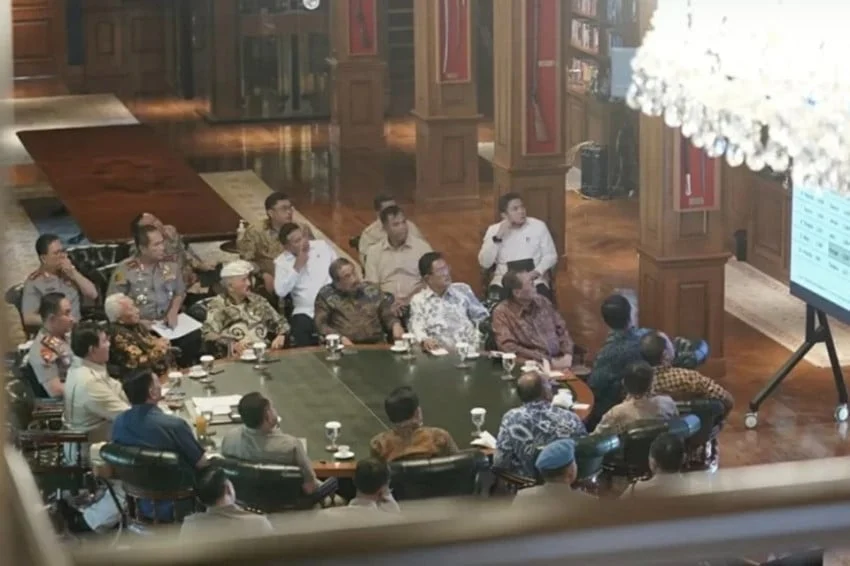
BOGOR — In a high-stakes meeting held at his private residence in Hambalang, Bogor, Indonesian President Prabowo Subianto addressed a gathering of former Chiefs of the Indonesian National Police (Kapolri) on Sunday, November 8, 2026. The closed-door gathering quickly drew intense public and media scrutiny after retired high-ranking officials confirmed that the discussions touched upon a deeply sensitive and unprecedented internal security crisis: the alleged wiretapping of the head of state.
The gathering, which brought together veteran figures of Indonesia’s law enforcement apparatus, served as a platform for open dialogue regarding institutional integrity, accountability, and the recent controversies plaguing the police force. Among the attendees was retired General Da’i Bachtiar, who offered a rare glimpse into the President’s personal frame of mind regarding the explosive allegations. According to Bachtiar, President Prabowo expressed genuine astonishment when he first discovered that he had allegedly been subjected to covert surveillance by elements within the National Police, allegedly spearheaded by figures connected to former Kapolri General Listyo Sigit Prabowo and several high-ranking high-profile officers.
The disclosure has sent shockwaves through Indonesia’s political and security establishments, raising critical questions about state security protocols, the boundaries of intelligence gathering, and the relationship between the executive branch and the nation’s primary law enforcement agency.
The Revelation in Hambalang: Shock and Disbelief at the Highest Level
The meeting in Hambalang was initially anticipated as a routine consultative session between the sitting president and his predecessors in the police leadership. However, the gravity of the situation overshadowed other agenda items. Speaking to journalists following the engagement, Da’i Bachtiar detailed the President’s immediate emotional and psychological reaction upon uncovering the alleged espionage plot.
"Yes, he said that ‘I was also shocked and stunned when this [wiretapping] happened,’" Bachtiar stated on Monday, November 9, 2026, recounting his conversation with President Prabowo. The phrase underscores the gravity of the breach, highlighting that a sitting head of state—a former military general himself—was caught off guard by vulnerabilities within his own administration’s security architecture.
Bachtiar did not shy away from describing the severity of the situation, characterizing the unfolding scandal as an unprecedented internal crisis for the law enforcement institution. "Coincidentally, we all know about it. I call it a disaster within the police force," Bachtiar remarked, reflecting the profound institutional embarrassment and operational turmoil rippling through the Bhayangkara Corps.
The scandal first began to unravel publicly following disclosures by senior legal and political figures. Earlier reports, including statements from Cabinet Secretary Yusril Ihza Mahendra, brought to light the initial discovery of the case and the sophisticated surveillance equipment allegedly utilized in the operation. The involvement of active-duty high-ranking police officers has transformed what could have been a routine security lapse into a full-blown constitutional and institutional crisis.
Background and Context: A Fragile Institutional Landscape
To understand the weight of the allegations involving the alleged wiretapping of President Prabowo, one must examine the complex dynamics between the executive branch and the Indonesian National Police over recent years. The National Police, operating directly under the authority of the president, holds sweeping powers encompassing internal security, law enforcement, and intelligence operations. However, the centralization of such vast authority has periodically sparked debates regarding civilian oversight and institutional autonomy.
Under previous administrations, the police force expanded its intelligence capabilities significantly, citing counter-terrorism, organized crime, and national security as primary justifications. Yet, the acquisition and deployment of advanced surveillance technology—often procured from international vendors specializing in interception software and hardware—have raised long-standing concerns among privacy advocates and political analysts alike.
The revelation that these capabilities may have been turned inward toward the nation’s highest elected official marks a critical turning point. It highlights potential vulnerabilities in the security protocols protecting the presidency and raises alarming questions about rogue elements operating within state apparatuses. Analysts note that intelligence-gathering tools meant to safeguard the state can become existential threats to democracy if democratic checks and balances are circumvented or ignored.

Chronology of Events: From Suspicion to Disclosure
While comprehensive details of the investigation remain classified or subject to strict legal scrutiny, a general timeline of the unfolding crisis has begun to emerge through statements from government officials, legal experts, and retired police generals:
- Mid-2026: Initial intelligence reports and internal security audits flag suspicious electronic signatures and unauthorized monitoring activities targeting secure communication channels associated with key government figures, including the presidency.
- Late October 2026: Technical experts confirm the presence of sophisticated interception devices and software traces. Preliminary findings point toward individuals within or closely linked to high-level police structures.
- Early November 2026: Legal experts and high-ranking state officials, including Yusril Ihza Mahendra, publicly acknowledge the genesis of the case, detailing how the wiretapping equipment was identified and secured.
- November 8, 2026: President Prabowo convenes a strategic meeting with former Chiefs of the National Police at his residence in Hambalang, Bogor. The discussions center on institutional reform, damage control, and addressing the fallout from the wiretapping scandal.
- November 9, 2026: Retired General Da’i Bachtiar speaks to the media, corroborating the discussions in Hambalang and revealing President Prabowo’s reaction of shock and disbelief upon learning of the alleged actions involving General Listyo Sigit Prabowo and associated officers.
Reactions and Official Stance
The unfolding scandal has prompted varied reactions from across the political spectrum, civil society, and legal institutions. Former police chiefs, who carry significant moral authority within the policing community, have expressed deep concern over the reputational damage inflicted on the institution. By engaging with retired leaders in Hambalang, President Prabowo appears to be pursuing a consultative approach, seeking institutional wisdom and stability while navigating the crisis.
Legal scholars have emphasized the need for absolute transparency and rigorous due process. The implication of active-duty officers, particularly those close to the former police leadership, necessitates an independent and thorough investigation led by trusted state bodies. Observers note that sweeping the matter under the rug or handling it purely through internal disciplinary channels could severely erode public trust in both the presidency and the National Police.
Furthermore, civil society organizations focusing on human rights and governance have seized the moment to demand comprehensive legislative reforms concerning state surveillance powers. Calls for stricter parliamentary oversight, judicial authorization requirements for any form of communication interception, and penalties for the unauthorized use of surveillance technology have grown increasingly vocal.
Broader Impact and Implications
The repercussions of the alleged wiretapping scandal extend far beyond the immediate political embarrassment for the individuals involved. Several key implications are anticipated to shape Indonesia’s political and security landscape in the months ahead:
1. Overhaul of Presidential Security Protocols
The ability of domestic actors to allegedly compromise the communications of a sitting president exposes critical vulnerabilities in executive security. The State Intelligence Agency (BIN), the Presidential Security Force (Paspampres), and the military’s intelligence units are expected to conduct rigorous sweeps and permanently upgrade encryption and communication security protocols to prevent future breaches.
2. Restructuring and Purging Within the National Police
The scandal serves as a major catalyst for internal cleansing within the National Police. Public pressure for accountability will likely force current leadership to expedite investigations, suspend implicated officers, and institute structural reforms to ensure that law enforcement agencies remain strictly subordinate to civilian democratic control.
3. Shift in Executive-Police Relations
President Prabowo’s relationship with the police leadership will undoubtedly undergo a period of recalibration. While the president relies heavily on the police to maintain public order and execute national policies, the breach of trust necessitates a firmer hand in appointing key personnel and monitoring institutional activities.
4. Legislative Reform on Surveillance
The incident provides lawmakers with undeniable momentum to push for a comprehensive legal framework governing electronic surveillance. Currently, the regulation of wiretapping across various state agencies lacks a unified, highly transparent judicial oversight mechanism. Establishing clear legal boundaries will be vital to safeguarding civil liberties while protecting national security.
As investigations progress, the nation watches closely to see how the Prabowo administration balances the imperatives of swift justice, institutional stability, and democratic accountability in the wake of what many are calling the most severe security breach in modern Indonesian policing history.