
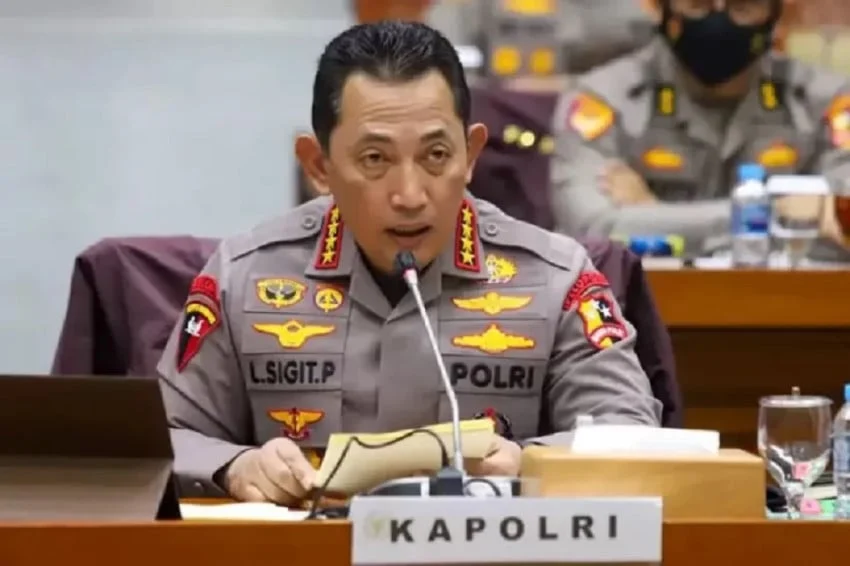
The recent intensification of efforts by the Indonesian National Police (Polri) to dismantle the illicit textile trade network has drawn significant attention from political analysts and economic observers. Karyono Wibowo, Director of the Indonesian Public Institute (IPI), has publicly lauded the commitment shown by Chief of National Police (Kapolri) General Listyo Sigit Prabowo. This strategic move is being interpreted as a critical intervention aimed at shielding the nation’s domestic textile industry from the destabilizing effects of unregulated imports that have plagued the market for years.
The Structural Threat of Illegal Textile Imports
The textile industry in Indonesia, historically a cornerstone of the nation’s manufacturing sector, has faced existential threats due to the influx of cheap, undocumented foreign goods. For decades, the domestic market has struggled to compete with textiles entering the country through clandestine channels, bypassing import duties, quality control standards, and regulatory oversight.
According to economic analysts, illegal imports are not merely a trade issue but a structural crisis. When non-compliant goods saturate the market at prices lower than the cost of domestic production, local manufacturers—ranging from large-scale factories to small and medium enterprises (SMEs)—are forced to scale back operations or shutter entirely. This leads to massive layoffs, decreased tax revenue for the state, and a stagnation in industrial technological investment. By prioritizing the crackdown on these illicit networks, the National Police are essentially acting as a safeguard for national economic stability.
Chronology of the Regulatory Crackdown
The momentum behind this enforcement effort has been building throughout 2026. The government, acknowledging the cries for help from the Indonesian Textile Association (API), empowered law enforcement agencies to conduct more rigorous investigations at major entry ports and distribution hubs.
The timeline of this escalation can be traced back to early 2026, when the Ministry of Trade, in coordination with the Ministry of Industry, identified a significant surge in "grey market" textile activities. By mid-year, the National Police established specialized task forces aimed at tracing the logistics of these illegal shipments. The establishment of the "Desk Ketenagakerjaan" (Labor Desk) within the Polri framework, mentioned in recent reports, serves as an institutional bridge between law enforcement and the labor sector, ensuring that illegal trade practices—which directly threaten job security—are met with a unified legal response.
Data and Economic Context
The necessity of this crackdown is underscored by empirical data regarding the textile sector’s performance. In the last three years, the utilization rate of domestic textile production capacity has hovered below 60%, a figure significantly impacted by the availability of low-cost imported alternatives.
Data from the Central Statistics Agency (BPS) and industry monitoring groups suggests that:
- Market Distortion: Illegal textiles often bypass Value Added Tax (VAT) and import tariffs, creating an artificial price gap of approximately 30-40% compared to legally imported or domestically produced goods.
- Employment Impact: The textile, clothing, and footwear industry employs millions of Indonesians. Industry data indicates that for every 10% increase in domestic market share captured by illegal imports, thousands of jobs are at risk in the garment manufacturing heartlands of West Java and Central Java.
- Fiscal Impact: Unrecorded imports result in significant losses to the state treasury, hindering the government’s ability to subsidize industrial growth or infrastructure development.
The Role of Law Enforcement in Economic Policy
The involvement of the National Police in trade regulation is often viewed as a "last resort" measure when administrative and customs oversight prove insufficient. Karyono Wibowo, a veteran political analyst and former 1998 activist, notes that the shift in the Polri’s mandate to include the protection of domestic industry is a positive evolution of its role in national development.

"The involvement of Polri in addressing illegal imports provides a fresh perspective that the state is truly serious about providing real protection to the domestic industry," Wibowo stated. He emphasized that the move is not just about law enforcement, but about creating a "level playing field." When the rule of law is enforced, fair competition can resume, allowing local producers to regain their footing without the constant pressure of shadow market forces.
Balancing Enforcement with Democratic Oversight
While the support for the crackdown is widespread, experts emphasize that the success of such operations relies on transparency and public accountability. Wibowo specifically pointed out that as the National Police take on a more proactive role in economic enforcement, the public must continue to monitor the process to ensure that it remains free from abuse of power.
This call for oversight is crucial for maintaining a healthy democratic climate. If the crackdown is perceived as selective or susceptible to corruption, its legitimacy will suffer. Therefore, the implementation of these measures must be characterized by strict adherence to the law, clear communication with the public, and institutional integrity. The use of digital tracking and transparent reporting mechanisms will be essential in convincing stakeholders that this is a sustained policy, rather than a temporary campaign.
Broader Implications for National Stability
The protection of the textile industry has implications that reach far beyond the factory floor. Stability in the manufacturing sector is a key indicator of national economic health. If the current efforts by General Listyo Sigit Prabowo prove successful in reducing the volume of illegal imports, the anticipated outcomes include:
- Revitalization of Industrial Capacity: With unfair competition removed, domestic manufacturers can focus on increasing capacity and upgrading machinery, which is vital for long-term competitiveness.
- Labor Protection: A secure industry translates to stable employment, reducing the social and economic volatility that often accompanies mass layoffs.
- Investment Confidence: Investors are more likely to inject capital into the Indonesian manufacturing sector if they are assured that the government is committed to enforcing fair trade practices and protecting intellectual property and market rights.
The Path Forward: Integrated Governance
Moving forward, the success of the initiative will depend on the synergy between various government bodies. The National Police cannot operate in a vacuum; they require real-time intelligence from the Directorate General of Customs and Excise, the Ministry of Trade, and the Ministry of Industry.
Industry leaders are hopeful that this collaborative approach will persist. There is a general consensus that the "Desk Ketenagakerjaan" (Labor Desk) initiative within the police force serves as an important precedent. By institutionalizing the protection of workers and the industries they serve, the government is signaling a shift toward a more interventionist and protective economic stance.
As the situation develops, the public and investors alike will be watching for tangible results. Indicators of success will include a decrease in illegal textile seizures at ports, an increase in legitimate tax receipts from textile imports, and, most importantly, a measurable rise in the production output of local textile hubs.
Conclusion
The appreciation expressed by observers like Karyono Wibowo reflects a broader societal desire for a stronger, more proactive state presence in regulating the economy. While the challenges of curbing illegal imports are immense, involving complex international supply chains and localized distribution networks, the commitment shown by the National Police leadership offers a roadmap for reform.
For Indonesia to achieve its industrial potential, the rule of law must extend to the marketplace. By addressing the structural barriers posed by illegal textile imports, the National Police are contributing to a safer, more stable, and more prosperous future for the domestic workforce and the Indonesian economy at large. As the program enters its next phase, the focus will remain on the efficacy of its implementation and the lasting impact it has on the livelihoods of millions of workers across the archipelago.
