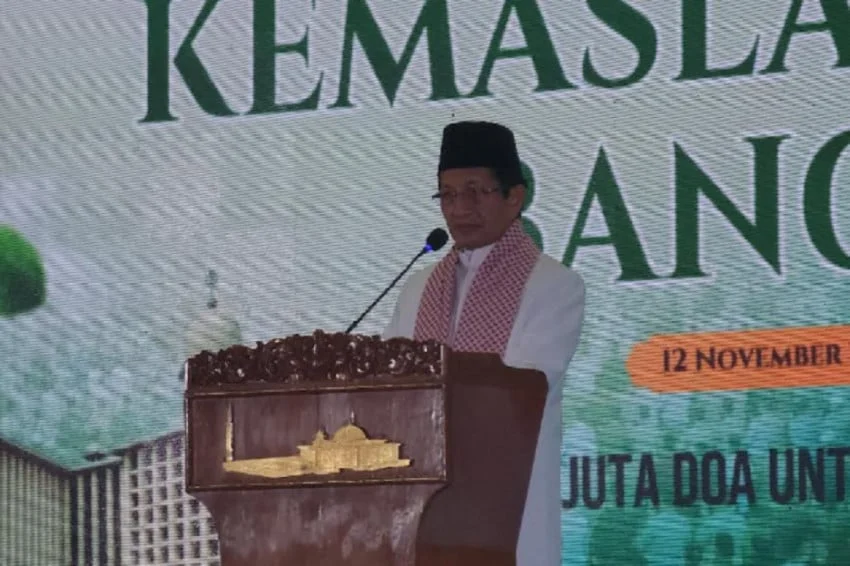
Jakarta—In a profound demonstration of national unity and spiritual solidarity, Minister of Religious Affairs Nasaruddin Umar gathered approximately 100 prominent interfaith leaders at the iconic Istiqlal Mosque in Jakarta on Thursday, November 12, 2026. The high-level gathering, structured as a comprehensive day of dialogue and joint prayer, was officially convened to pray for the welfare, safety, and continued prosperity of the Indonesian nation.
Amidst global geopolitical uncertainties and domestic socio-economic transitions, the event served as a powerful reminder of Indonesia’s foundational ethos of religious moderation and multicultural harmony. The convening of religious figures from diverse backgrounds underscores the critical role that faith-based leadership plays in fostering social cohesion, mitigating polarization, and guiding the public consciousness toward collective resilience.
Chronology and Sequence of Events
The carefully curated itinerary for the day-long program was designed to blend spiritual devotion with intellectual discourse, fostering an environment of deep reflection and cross-cultural understanding.
The proceedings commenced in the late afternoon with the congregational Asr prayer held within the vast main sanctuary of the Istiqlal Mosque. Following the prayer, the delegation of religious leaders transitioned to the exclusive VIP lounge of the mosque, where the core interfaith dialogue took place. Approximately 100 delegates, representing Indonesia’s officially recognized religions—including Islam, Protestantism, Catholicism, Hinduism, Buddhism, and Confucianism—assembled to discuss contemporary challenges facing the nation.
Addressing the assembly during the opening remarks, Minister Nasaruddin Umar emphasized the inclusivity of the gathering. "After that, we moved to another room to conduct an interfaith dialogue. Representatives from all religious communities were present in the VIP room of the Istiqlal Mosque, numbering approximately 100 people," stated the Minister, highlighting the enthusiastic participation and high-level representation from various religious boards and institutions.
Following the structured dialogue, the schedule transitioned into a series of communal spiritual observances. Attendees participated in the breaking of the voluntary Thursday fast, a traditional practice observed by many Muslims. This was followed by collective remembrance (zikir), invocations (doa), the devotional recital of Mahalul Qiyam, scriptural readings, and an intimate Quranic exegesis (kajian tafsir) session.
The spiritual cadence of the day culminated in the congregational Maghrib and Isha prayers. The entire sequence of events officially concluded with a solemn, multi-faith-endorsed session titled Prayer and Munajat for the Welfare of the Nation, sealing a day dedicated entirely to peace, introspection, and national stability.
Contextualizing Interfaith Diplomacy in Indonesia
The choice of the Istiqlal Mosque as the venue for this significant national event carries immense symbolic weight. As Southeast Asia’s largest mosque, Istiqlal has long transcended its architectural and religious boundaries to become a universal symbol of national tolerance. Notably, the mosque features the historic "Tunnel of Friendship," an underground passageway connecting Istiqlal directly to the Jakarta Cathedral across the street. This architectural marvel physicalizes the harmonious coexistence between Indonesia’s Muslim majority and Catholic minority, serving as an international benchmark for religious diplomacy.
Minister Nasaruddin Umar, a renowned Islamic scholar and former Grand Imam of Istiqlal Mosque, has consistently championed interfaith engagement throughout his academic and public service career. Since assuming office, he has prioritized institutionalizing spaces for interfaith dialogue to preemptively address sectarian tensions and build a united front against extremism.
The gathering on November 12, 2026, also coincided with a broader calendar of civic and religious observances, including events tied to the Solidarity Month for Palestine 2026. This temporal overlap highlighted how Indonesian religious communities frequently connect domestic prayers for national welfare with broader global humanitarian concerns, reinforcing the country’s constitutional mandate to participate in establishing a world order based on freedom, perpetual peace, and social justice.
Perspectives and Official Statements
During and after the event, participating leaders and ministry officials underscored the necessity of transcending sectarian divides to address complex modern challenges. Representatives from various faith traditions voiced their appreciation for the Ministry of Religious Affairs’ proactive stance in creating institutional frameworks for open communication.
In his comprehensive address to the press and the gathered delegates, Minister Nasaruddin underscored that joint prayer initiatives must extend beyond mere ritualistic exercises. He argued that public invocations for the nation function as a barometer of civic health and shared responsibility.
"Prayer gatherings should not be viewed solely as routine religious activities, but rather as an essential manifestation of public concern regarding the current conditions and the future trajectory of our nation," Nasaruddin articulated. He further issued a nationwide call to action, urging all Indonesian citizens—regardless of their doctrinal affiliations, theological differences, or ethnic backgrounds—to unite in spirit and purpose to safeguard the republic’s future.
Political analysts and civil society observers have noted that such high-profile gatherings reinforce the "Pancasila" state ideology, which places belief in the One Supreme God at its core while guaranteeing freedom of worship for all citizens in a pluralistic society.
Broader Societal Implications and Analysis
The implications of the Istiqlal interfaith dialogue extend far beyond the immediate spiritual exercises conducted on Thursday. In an era marked by digital polarization, rapid dissemination of misinformation, and the global resurgence of identity politics, state-sponsored or state-facilitated interfaith platforms serve as vital stabilizers.
- Mitigation of Social Friction: By bringing religious elites into direct, face-to-face dialogue, potential flashpoints regarding places of worship, religious education, or community outreach can be addressed through pre-emptive diplomacy rather than reactive crisis management.
- Reinforcement of Religious Moderation: Indonesia has actively promoted its model of Wasathiyah (religious moderation) on the global stage. Events held at Istiqlal provide empirical evidence of this policy in action, demonstrating that traditional religious values can successfully undergird a modern, democratic nation-state.
- Public Reassurance: When religious leaders of diverse creeds stand side-by-side to pray for economic stability, social justice, and national security, it projects a powerful psychological anchor to the broader populace. It reassures citizens that despite political or economic headwinds, the moral leadership of the country remains unified on fundamental humanitarian and national interests.
Ultimately, the gathering at Istiqlal Mosque on November 12, 2026, reiterates that Indonesia’s strength lies in its diversity. As the Ministry of Religious Affairs continues to institutionalize these collaborative dialogues, the nation moves forward with a reinforced structural framework capable of withstanding external pressures while preserving its rich cultural and spiritual tapestry.