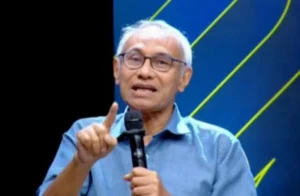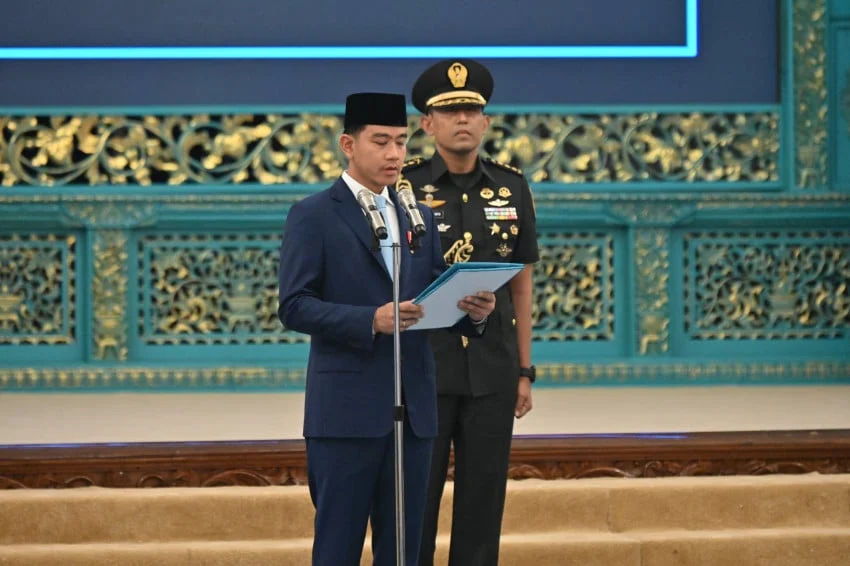
Constitutional law expert Denny Indrayana has issued a public caution to Vice President Gibran Rakabuming Raka, advising him against misinterpreting President Prabowo Subianto’s courteous response regarding his intention to resign as tacit permission to remain in office. The advisory comes in the wake of public statements made by Gibran, wherein he asserted his commitment to fight and legally substantiate his educational history, which has remained a subject of intense public scrutiny and debate across various political and social strata in Indonesia.
The controversy surrounding the Vice President’s academic background has evolved from an online discourse into a significant constitutional and political focal point. Speaking to the media, Denny emphasized the psychological and leadership demeanor of President Prabowo, warning that cordiality must not be confused with institutional validation or a formal refusal of a resignation bid. As political pressure mounts and legislative bodies begin to evaluate the broader implications of the situation, constitutional scholars and legal analysts continue to weigh in on the correct application of Indonesia’s state laws and administrative procedures.
Background Context of the Controversy and Educational Scrutiny
The roots of the current political friction trace back to persistent public questions regarding the authenticity and completion records of Vice President Gibran Rakabuming Raka’s educational credentials. While officials close to the administration have previously dismissed the allegations as politically motivated noise aimed at delegitimizing the executive branch, public demand for transparency has steadily grown. In an era where digital verification and institutional accountability are demanded by civil society organizations, the controversy escalated from mere social media discourse into formal legal and political inquiries.
Education credentials for high-ranking public officials in Indonesia are subject to rigorous public oversight, governed by both ethical standards and administrative law. The ongoing debate not only challenges the personal credentials of the Vice President but also touches upon the broader integrity of the vetting processes utilized during national elections. As civil society groups and legal advocates pressed for clarity, the pressure on the Vice President’s office intensified, ultimately leading to discussions regarding his potential resignation to preserve the stability and dignity of the executive branch.
Chronology of Events and the Resignation Intention
The timeline of the current political crisis accelerated over recent weeks as public scrutiny reached critical mass. The sequence of events unfolded through several key milestones:
- Intensification of Public Inquiry: Independent watchdogs and educational analysts raised questions concerning specific details of the Vice President’s overseas and domestic academic history.
- Announcement of Intent to Resign: Faced with mounting pressure and a desire to clear his name without dragging the broader administration into controversy, discussions regarding Gibran’s intention to step down emerged within political circles.
- President Prabowo’s Response: In addressing the developing situation, President Prabowo Subianto maintained a diplomatic and supportive posture, acknowledging the Vice President’s right to defend his reputation through legal avenues, such as the State Administrative Court (PTUN).
- Gibran’s Declaration to Fight: Following the President’s remarks, Vice President Gibran publicly stated his intention to stay and fight to prove the validity of his educational background, interpreting the administration’s supportive tone as an endorsement of his continued tenure.
- Expert Intervention: Constitutional law experts, led by figures like Denny Indrayana, stepped forward to correct what they perceived as a dangerous misinterpretation of executive politeness versus constitutional duty.
Deconstructing the Presidential Response and Legal Realities
According to Denny Indrayana, the nuance of President Prabowo’s leadership style must be accurately understood within the context of Javanese administrative culture and interpersonal diplomacy. Prabowo is widely characterized as a leader who prioritizes institutional harmony and avoids making subordinates or colleagues feel cornered or publicly humiliated in moments of personal crisis.
When President Prabowo remarked that Gibran was welcome to pursue legal routes—such as filing a case with the State Administrative Court (PTUN)—to test the validity of his credentials, it was an expression of personal courtesy and a recognition of due process rights. However, Denny argued that this interpersonal politeness should not be legally or politically misconstrued as an official executive decision rejecting a resignation or granting a mandate to ignore mounting constitutional pressures.
"So let there be no manipulation here, where the polite stance of President Prabowo is interpreted as an attitude permitting him not to step down and refusing his resignation," Denny stated emphatically. He further noted that if a high-ranking official expresses an intention to resign in the face of integrity-based controversies, the appropriate administrative and constitutional path is to follow through with the resignation rather than leveraging presidential courtesy as a shield to prolong tenure.
Legislative Reactions and Parliamentary Implications
The unfolding controversy has not remained confined to the executive branch; it has also sent ripples through the House of Representatives (DPR). Lawmakers from various factions have begun evaluating the legislative impacts of a potential vice-presidential vacancy or a prolonged legal battle over educational credentials.
Prominent legislative figures, such as Ahmad Doli Kurnia, have addressed the intersection between the Vice President’s personal political maneuvers and formal parliamentary initiatives. Doli emphasized that the evolving status of Gibran’s resignation intentions should not improperly influence ongoing parliamentary procedures, such as proposed inquiries or oversight mechanisms like the House Monitoring Right (HMP). The separation of powers dictates that legislative bodies must continue their constitutional duties of oversight independently of the internal personnel decisions or legal defenses mounted by executive officials.
The involvement of the DPR signals that the issue transcends a simple dispute over academic certificates. It touches upon the stability of the executive-legislative relationship and the mechanisms available to parliament when questions of executive integrity arise. Political parties represented in the legislature are currently calculating their long-term stances to align with public sentiment while safeguarding institutional stability.
Broader Impact and Constitutional Implications for Indonesia
The debate over Vice President Gibran’s position carries profound implications for Indonesia’s constitutional jurisprudence and political culture. At the core of the discussion is the principle of constitutional obedience and executive accountability. Denny Indrayana, a former Deputy Minister of Law and Human Rights, has consistently argued that holders of high public office must prioritize constitutional ethics above personal political survival.
When an official faces fundamental questions regarding their qualifications to hold office, stepping down to undergo legal verification without the protective shield of state power is seen by legal purists as the most honorable and constitutionally sound path. Clinging to office while engaging in protracted litigation at the State Administrative Court risks conflating personal legal defense with state administration, potentially paralyzing the vice-presidential office and distracting the government from pressing national priorities such as economic development and public welfare.
Furthermore, the episode serves as a stress test for Indonesian democratic institutions. It tests the resilience of administrative courts in handling high-stakes political disputes, the willingness of the legislature to exercise rigorous oversight without partisan bias, and the executive’s capacity to manage internal crises transparently.
As the situation continues to develop, public attention remains fixed on whether the Vice President will heed the counsel of constitutional experts and formally separate his personal legal battles from his executive responsibilities, or if the administration will face a prolonged period of institutional friction. Observers across the political spectrum agree that the resolution of this crisis will set a critical precedent for how future Indonesian governments handle challenges to leadership credentials and the ethics of state resignation.