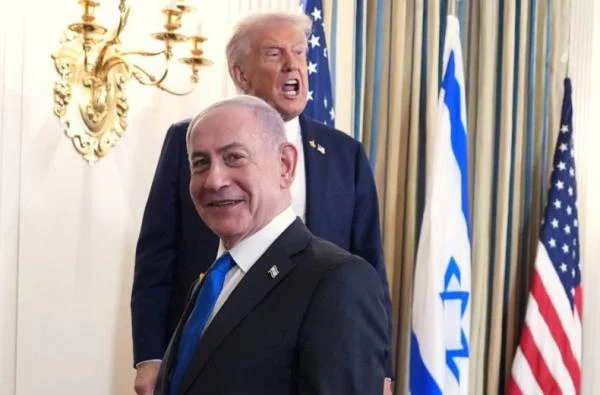
The diplomatic relationship between Israel and the United States, traditionally characterized by a bedrock of mutual strategic interest, appears to be facing a significant period of volatility. Reports emerging this week indicate that Prime Minister Benjamin Netanyahu and President Donald Trump engaged in an exceptionally heated telephone conversation over the past weekend. According to sources familiar with the matter, the core of the dispute centered on Israel’s urgent pressure for the United States to escalate its military posture against the Islamic Republic of Iran, a proposal that reportedly met with strong resistance from the White House.
The exchange, described by some officials as a "conversation from hell," underscores a widening rift in the strategic vision shared by Jerusalem and Washington regarding the Middle East. While both leaders have long positioned themselves as hawks concerning Tehran’s nuclear ambitions and regional influence, the disagreement highlights a fundamental divergence on the timing, scale, and necessity of direct military confrontation at this juncture.
The Anatomy of a Diplomatic Clash
The reports, initially published by the Israeli newspaper Yedioth Ahronoth, characterize the interaction as confrontational, with accusations of shouting and severe friction. For many observers, such an incident marks a departure from the public-facing image of the two leaders, who have historically maintained a strong working rapport.
The friction is rooted in Israel’s ongoing assessment of the Iranian threat. Prime Minister Netanyahu has consistently advocated for a doctrine of "maximum pressure," arguing that the current geopolitical climate provides a narrow window to neutralize Iran’s nuclear infrastructure and its proxy network across the region. Conversely, the Trump administration appears to be weighing the domestic and international repercussions of a full-scale conflict, particularly as the United States navigates its own complex array of global priorities and an increasingly weary public appetite for long-term military entanglements in the Middle East.

Historical Context and Strategic Alignment
To understand the weight of this reported rift, one must consider the historical trajectory of U.S.-Israel relations regarding Iran. For years, the Israeli security establishment has viewed Iran’s nuclear program as an existential threat. This perspective has been the primary driver of Israeli foreign policy, leading to various clandestine operations, cyber-attacks, and strategic lobbying efforts aimed at curbing Iranian expansion.
Under the current administration, Washington has maintained a stance of "strategic patience" and deterrence. While the U.S. has bolstered its military presence in the Persian Gulf and maintained a robust sanctions regime, it has historically stopped short of initiating an open-ended war. The reported pressure from Netanyahu suggests that Israel may feel its own deterrent capabilities are reaching a point of diminishing returns, necessitating a more direct and forceful intervention by its primary ally.
Chronology of Recent Regional Instability
The tension follows a series of incidents that have heightened regional anxieties. Throughout 2026, the Middle East has experienced a fragile security environment, characterized by:
- Early 2026: Increased activity by Iranian-backed proxies in neighboring territories, leading to localized skirmishes and heightened intelligence surveillance by Israeli forces.
- Mid-2026: A series of maritime security incidents in the Strait of Hormuz, which prompted the U.S. to reposition naval assets to secure energy supply routes.
- Late 2026: A notable surge in rhetoric from both Tehran and Jerusalem, with Israel conducting periodic surgical strikes against sensitive targets, and Iran threatening "decisive retaliation."
- November 2026: The reported telephone conversation, which occurred during a weekend of intense regional diplomatic maneuvering.
Official Responses and Damage Control
The Israeli Prime Minister’s Office (PMO) was swift to issue a categorical denial of the reports, labeling the narrative as "fake news" and "utter nonsense." This reaction is standard practice for a government attempting to preserve the optics of a stable alliance. However, the intensity of the denial—and the corroborating comments from other senior officials confirming that a call did take place—suggests that while the "shouting" narrative may be subject to interpretation, the policy disagreement is very real.
For the Trump administration, maintaining the appearance of a unified front is equally critical. A public split with Israel would likely invite criticism from domestic political opponents and potentially embolden regional adversaries who watch for any sign of daylight between the two nations.

Implications for the Middle East
The potential for a direct conflict between the U.S. and Iran, potentially spurred by Israeli pressure, has sent shockwaves through the Gulf Cooperation Council (GCC) and other regional powers. Many Arab nations have expressed profound concern that a full-scale war would destabilize global energy markets, trigger a massive humanitarian crisis, and provide a vacuum for extremist groups to re-emerge.
The economic implications are equally stark. Energy markets remain hypersensitive to developments in the Persian Gulf. Any significant escalation in hostilities would almost certainly lead to a spike in global oil prices, impacting economies worldwide. Furthermore, the diplomatic fallout would complicate efforts to build a broader regional coalition against Iranian influence, as many nations are wary of being perceived as partners in a U.S.-led war.
Strategic Analysis: The Limits of Pressure
From a geopolitical perspective, the disagreement highlights a classic tension between a regional actor and a global superpower. Israel’s security concerns are immediate and localized; the United States, however, must calculate the impact of military action on a global scale.
Analysts point to three main factors that may be influencing the White House’s hesitation:
- Domestic Political Climate: With elections or major policy shifts on the horizon, the U.S. administration is likely weighing the electoral risks of a major conflict.
- Military Readiness and Cost: Sustaining a high-intensity campaign against a nation as large and geographically complex as Iran would require an unprecedented mobilization of resources.
- Regional Alliance Dynamics: The U.S. is currently attempting to balance its commitments to Israel with the need to maintain stable relations with moderate Arab states that fear the fallout of a regional war.
The Path Forward
As of this week, the situation remains fluid. Both nations are likely to engage in high-level back-channel discussions to reconcile their strategies. Whether this incident represents a permanent fracture or merely a heated negotiation over the direction of Middle Eastern policy remains to be seen.

What is clear is that the current status quo—a mix of sanctions, limited strikes, and high-level brinkmanship—is under immense pressure. As the year draws to a close, the international community will be watching closely to see if the two leaders can find a common language, or if the internal strain of their disagreement will lead to a more profound shift in the strategic landscape of the Middle East.
Ultimately, the reported conflict serves as a reminder of the inherent complexities of the U.S.-Israel relationship. While the two countries are bound by deep historical, ideological, and strategic ties, their national interests are not always perfectly aligned. When those interests diverge, particularly on matters of war and peace, the resulting friction has the potential to reverberate far beyond the borders of Jerusalem or Washington.
For now, observers are looking for signs of a cooling-off period. Diplomatic visits, joint military exercises, and unified statements in the coming weeks will serve as the primary indicators of whether the "conversation from hell" was a temporary lapse in diplomatic decorum or a symptom of a deeper, more enduring strategic decoupling. Regardless, the incident has undoubtedly added a layer of complexity to an already volatile regional security environment, leaving policymakers and analysts to speculate on the potential for a new, more dangerous chapter in the long-running confrontation with Iran.