Universitas Gadjah Mada (UGM) has officially and firmly denounced the deployment of tear gas and tactical law enforcement vehicles near and within its academic grounds during recent demonstrations. The stance was underscored by university leadership following clashes and crowd-control operations that took place on November 10, prompting intense discussions surrounding the boundaries of security interventions, the sanctity of educational institutions, and the fundamental right to peaceful assembly in Indonesia.
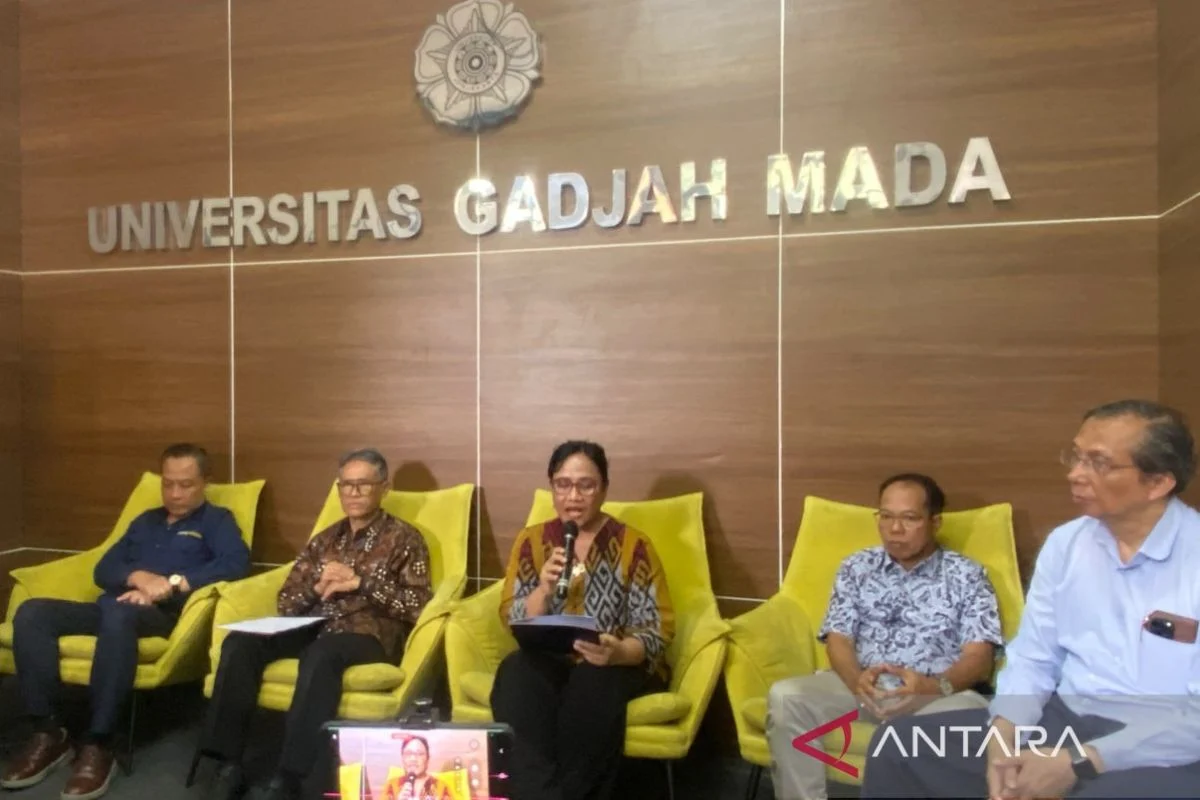
Speaking at a press conference held at the university’s Yogyakarta campus, UGM Vice Rector for Education and Teaching, Wening Udasmoro, articulated the institution’s uncompromising position. She stressed that academic sanctuaries must remain insulated from coercive force and aggressive security measures, highlighting the university’s commitment to fostering a safe environment for critical thought, debate, and peaceful expression.
The Core Controversy: Security Interventions on Academic Turf
The university administration’s strong reaction stems from escalating tensions on November 10, when security forces moved to disperse crowds participating in public demonstrations. While accounts regarding the exact trajectory and penetration of security personnel and tactical vehicles (known locally as rantis) remain a subject of verification, the mere proximity of such heavy-handed tactics near university boundaries has sparked widespread outcry among faculty, students, and civil society observers.
According to Wening, while the specifics of whether tactical units physically crossed property lines into UGM’s jurisdiction are still being investigated and remain somewhat ambiguous, the overarching principle is clear. Academic institutions are designated zones for intellectual pursuit, free speech, and personal safety, shielded from state-sanctioned violence.
"We strongly reject, and I believe all UGM residents also agree, that law enforcement personnel should not enter UGM territory equipped with tear gas and other such measures," Wening stated during the briefing. She emphasized that the rejection of violence against demonstrators is not merely a matter of geographic boundaries—whether an incident occurs strictly inside or just outside the campus gates—but a universal standard that must be upheld to protect citizens exercising their democratic rights.
Institutional Philosophy and the Value of Student Critique
UGM’s leadership framed the protection of protesters as an extension of the university’s core educational mission. As an institution dedicated to higher learning, UGM actively teaches its community conflict resolution, critical analysis, and non-violent discourse. Consequently, allowing external actors to bring violence onto or near the campus undermines the very educational framework the university seeks to build.
Furthermore, university officials underscored the vital role that student dissent and public protests play in a healthy democracy. Wening argued that authorities should view civic criticism not as a threat requiring suppression, but as a constructive feedback mechanism essential for democratic governance.
"The process by which students engage in forms of criticism and protest is actually something the state should be grateful for, because it means there are still parties providing input," Wening noted. She added a cautionary observation regarding environments devoid of critique, suggesting that absolute compliance should signal a warning to governing bodies rather than comfort.
This openness to critique is mirrored internally at UGM. The university administration maintained that it actively welcomes feedback, dissenting opinions, and policy challenges from its own student body and academic staff. Constructive dialogue, according to university leadership, remains the cornerstone of academic progress and institutional accountability.
Chronology of Events and Conflicting Accounts
The unrest that triggered UGM’s sharp response occurred during widespread demonstrations on November 10, a date historically significant in Indonesia as Heroes’ Day (Hari Pahlawan). Across various urban centers, including Yogyakarta, student groups and civil society elements mobilized to voice grievances concerning national policies, governance issues, and socio-economic concerns.
As demonstrations in Yogyakarta approached key civic and academic zones, police and security apparatus deployed standard crowd-control protocols. However, the use of chemical irritants, such as tear gas, and armored tactical vehicles near educational precincts generated immediate friction.
Eyewitness reports and circulating digital media accounts suggested that the impact of the security dispersal methods spilled over into areas frequented by students and academic staff. The proximity of the deployment led to immediate concerns regarding the safety of bystanders, residents, and university property.
In response to the unfolding situation, regional law enforcement authorities, including the Yogyakarta Regional Police (Polda DIY), addressed the public concerns. Polda DIY issued statements explicitly denying that police personnel intentionally entered university grounds during the security operations. Law enforcement representatives maintained that crowd-control measures were executed strictly within the parameters required to maintain public order and secure vital infrastructure, asserting that officers operated outside the direct perimeter of the university campus.
Despite these assurances from security forces, the physical and psychological fallout of the operations near university boundaries prompted UGM’s executive leadership to take a definitive public stance, culminating in the November press briefing.
Broader Implications for Academic Freedom and Civil Liberties
The friction between security forces and academic institutions in Indonesia highlights an ongoing tension regarding the limits of state power during public unrest. Universities in Indonesia hold a special status historically tied to the nation’s democratic transitions. Historically, student movements within campuses such as UGM have acted as catalysts for major political reforms, most notably during the fall of the New Order regime in 1998.
Legal and institutional protections usually safeguard university grounds as zones where freedom of academic inquiry and expression can flourish without undue intimidation. When security forces deploy high-intensity crowd control mechanisms near these zones, it revives historical anxieties regarding the infringement of campus autonomy and the suppression of legitimate political discourse.
Legal experts and civil rights advocates point out that the management of public assemblies is governed by strict standard operating procedures that emphasize proportionality, necessity, and the protection of fundamental human rights. The deployment of chemical agents and heavy tactical vehicles in densely populated urban environments—particularly near hospitals, residential areas, and educational institutions—frequently results in collateral harm to non-combatants, students, and academic staff who are not part of the active demonstrations.
By taking an unequivocal stance, UGM joins a chorus of academic institutions and civil rights organizations advocating for revised protocols in public order management. The university’s position serves as a reminder to both state authorities and institutional managers that the preservation of democratic spaces requires restraint, transparent communication, and respect for the constitutional rights of citizens to assemble and express dissent.
Moving Forward: Dialogue and Institutional Safeguards
As the dust settles from the November 10 demonstrations, UGM administration has emphasized the need for constructive engagement between educational institutions, government bodies, and law enforcement agencies. The university aims to establish clearer communication channels to prevent future misunderstandings and to ensure that the security apparatus respects the physical and symbolic boundaries of academic environments.
At the same time, the university remains committed to internal reviews of its campus security protocols, ensuring that the grounds remain secure, welcoming, and entirely free from external violence. By balancing the demands of public safety with the unyielding defense of academic freedom, UGM seeks to reinforce its role not only as a premier center of higher education in Indonesia, but also as a steadfast guardian of democratic values and civil liberties.