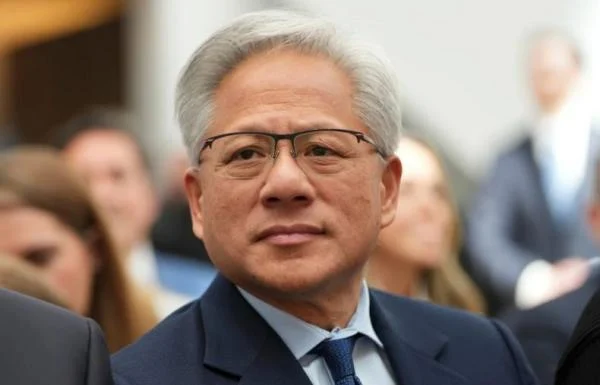
In a seismic shift for the global technology sector, Jensen Huang, the visionary founder and long-standing CEO of Nvidia, officially stepped down from his role on Thursday, November 12, 2026. The departure, which concludes a 33-year tenure at the helm of the world’s most influential artificial intelligence hardware company, follows the emergence of a dual-pronged scandal involving allegations of improper conduct and national security concerns. The Nvidia Board of Directors confirmed that the resignation is effective immediately and encompasses Huang’s positions as president, chief executive officer, and member of the board of directors.
The sudden vacancy at the top of the Santa Clara-based chip giant marks the end of an era for a company that, under Huang’s leadership, became the backbone of the modern AI revolution. Colette Kress, who has served as the executive vice president and chief financial officer (CFO) of Nvidia, has been appointed as the interim CEO while the board initiates a global search for a permanent successor. Kress will continue to fulfill her responsibilities as CFO during this transitional period, signaling a move toward fiscal stability as the company navigates one of the most turbulent weeks in its history.
A Chronology of a Corporate Collapse
The rapid unraveling of Huang’s leadership began to surface in the public domain earlier this week. Reports surfaced alleging that Huang had engaged in a personal relationship with a subordinate executive. As the internal investigation into the affair intensified, the company’s compliance department uncovered additional details suggesting that the individual involved may have had ties to foreign intelligence operations, specifically linked to China.
By November 10, internal inquiries at Nvidia had reached a critical mass. The discovery of potential security vulnerabilities prompted the board to engage external legal counsel to determine the extent to which proprietary technological data or trade secrets might have been compromised. On November 11, news of the internal investigation broke, casting a shadow over the company’s reputation. Within 24 hours of the public confirmation of the probe, Huang tendered his resignation.
The Strategic Importance of Nvidia
To understand the gravity of this resignation, one must consider Nvidia’s position in the global economy. Since its founding in 1993, the company has evolved from a manufacturer of high-end graphics cards for the gaming industry into the primary supplier of the high-performance computing power required for large language models and generative AI.
As of late 2026, Nvidia held an estimated 80% to 90% share of the market for AI-capable data center chips. Its hardware serves as the foundation for tech giants like Microsoft, Google, Meta, and Amazon, as well as the sovereign AI projects of multiple nations. The loss of a CEO who was synonymous with the company’s strategic direction creates immediate uncertainty regarding long-term research and development pipelines and the stability of global supply chains. Investors and stakeholders are now bracing for potential volatility as the company grapples with both a leadership vacuum and the looming specter of a government investigation into the alleged security breach.
Corporate Governance and the Role of the Board
The swift action taken by the Nvidia Board of Directors reflects the increasing pressure on corporations to maintain rigorous governance standards, particularly regarding cybersecurity and executive behavior. In recent years, the intersection of national security and private industry has become a focal point for regulators in the United States. Given the sensitive nature of Nvidia’s chip technology—which is subject to stringent export controls to prevent misuse by foreign adversaries—the allegations of a link to Chinese intelligence services are expected to draw immediate attention from federal authorities.

The appointment of Colette Kress as interim CEO is viewed by industry analysts as a move to reassure the financial markets. Kress, who joined Nvidia in 2013, has been credited with the company’s robust financial performance and capital allocation strategies. By elevating a seasoned executive with deep knowledge of the company’s operations, the board aims to maintain continuity for investors while the firm attempts to disentangle itself from the scandal.
Implications for the Artificial Intelligence Industry
The implications of this crisis extend far beyond the corporate headquarters in Santa Clara. The AI sector is currently in a "gold rush" phase, with hundreds of billions of dollars in capital expenditure flowing into infrastructure. Nvidia’s chips, particularly the Blackwell and successor architectures, are the lifeblood of this infrastructure.
Analysts suggest that if the investigation confirms that trade secrets were leaked, it could result in severe regulatory penalties and a fundamental shift in how the U.S. government regulates the AI hardware industry. Furthermore, the loss of Jensen Huang, who was instrumental in cultivating deep partnerships with global hyperscalers, could trigger a period of strategic realignment for many of these tech conglomerates.
Market Reactions and Future Outlook
In the immediate aftermath of the announcement, financial markets displayed signs of apprehension. While the company’s fundamental business remains strong, the uncertainty surrounding the investigation into the potential espionage case creates a "risk premium" for shareholders. The board of directors is expected to hold an emergency general meeting in the coming days to outline a path forward and to address concerns regarding data security protocols.

"The resignation of Jensen Huang is not merely a change in personnel; it is a fundamental shift in the landscape of high-tech," stated one industry analyst familiar with the matter. "The board’s priority now must be twofold: first, to cooperate fully with national security investigations to demonstrate transparency; and second, to reassure the market that the company’s intellectual property remains secure."
The Road Ahead
As the investigation into the conduct of the former CEO and the alleged security breach continues, the broader tech community is watching closely. The case serves as a stark reminder of the complexities of global leadership in an era of intense geopolitical rivalry. For Nvidia, the challenge of the next few months will be to prove that its organizational structure can withstand the departure of its most prominent figure and the potential fallout from a high-stakes security scandal.
The company has pledged to maintain its commitment to innovation and customer service, with the interim leadership focusing on stabilizing internal morale and addressing the inquiries of government agencies. As of the time of this writing, no official statement has been issued by federal authorities regarding potential criminal charges, but legal experts suggest that a thorough federal review of the company’s security infrastructure is all but inevitable.
Nvidia’s journey from a niche graphics company to the engine of the AI age has been defined by Huang’s leadership. Whether the firm can maintain its market dominance in his absence remains the defining question for the technology industry as it enters this period of profound uncertainty. For now, the focus remains on the transition of power and the containment of the security crisis that has brought one of the world’s most valuable companies to this critical juncture.