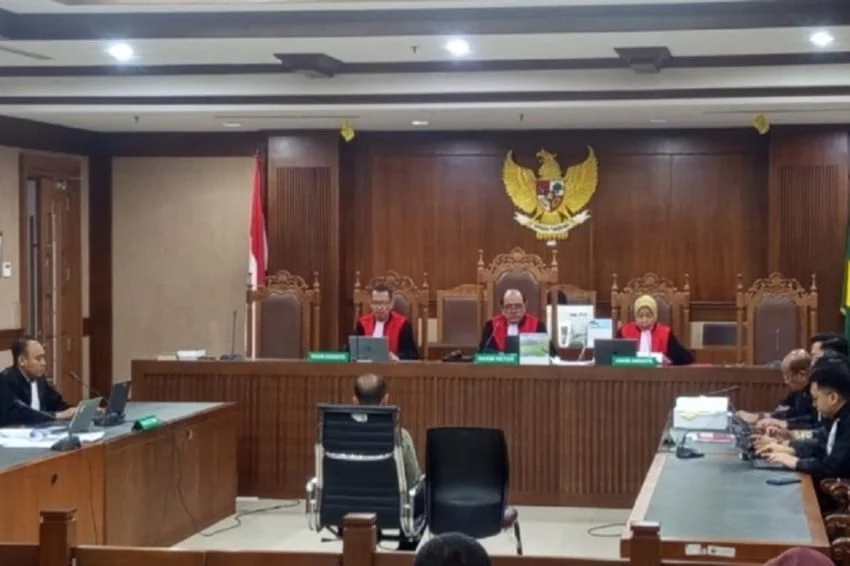
Former Director of Enforcement and Investigation (P2) at the Directorate General of Customs and Excise (DJBC), identified as Rizal, was sentenced to nine years in prison by the Central Jakarta District Court on Thursday, November 12, 2026. The verdict marks a significant milestone in the ongoing crackdown on corruption within Indonesia’s customs and excise apparatus, an institution that has recently faced intense public scrutiny regarding systemic integrity and administrative accountability.
Presiding Judge Brelly Yuniar Dian Wardi Haskori delivered the verdict, stating that the defendant was legally and convincingly proven to have committed the crimes of bribery and receiving gratifications related to the importation of goods. Beyond the custodial sentence, the court imposed a fine of Rp1 billion, which, if unpaid, will be substituted with an additional 190 days of imprisonment. Furthermore, the court mandated that the defendant pay restitution in the form of a replacement payment amounting to Rp15.7 billion, representing the illicit gains acquired through his misuse of office.
The Core Charges and Legal Findings
The legal proceedings centered on the manipulation of import procedures, a domain where the Director of Enforcement and Investigation holds considerable discretionary power. According to the court’s findings, Rizal exploited his position to facilitate the smooth passage of specific imported goods, effectively bypassing standard regulatory scrutiny in exchange for significant financial rewards.
The prosecution successfully argued that the defendant systematically accepted bribes and gratuities from various stakeholders involved in international trade. These actions not only violated the bureaucratic code of conduct but also caused substantial financial losses to the state, as the circumvention of customs duties and taxes directly impacts national revenue. The verdict underscores the judiciary’s stance on "white-collar" crime within high-level government agencies, emphasizing that the misuse of authority for private gain warrants severe legal consequences.
Chronology of the Investigation
The downfall of the high-ranking customs official did not occur in a vacuum. It was the culmination of a broader investigative sweep targeting systemic corruption within the P2 division. Prior to this verdict, several other officials and subordinates within the same directorate had come under the scrutiny of anti-corruption investigators.
In the months leading up to the trial, the investigation uncovered a network of illicit arrangements involving customs intelligence officers and private sector players, including cigarette entrepreneurs and logistics firms. The case against Rizal was bolstered by forensic evidence, financial transaction audits, and testimonies from witnesses who detailed the "transactional culture" that had permeated certain segments of the department.
The trial process, which spanned several months, saw a series of testimonies highlighting how the defendant utilized intermediaries to receive payments, attempting to obscure the source of the funds. Despite the defense’s efforts to characterize the payments as legitimate business consultancies or unrelated gifts, the panel of judges concluded that the pattern of payments consistently correlated with official acts of omission or facilitation of import activities.
Contextualizing Corruption in Customs and Excise
The Directorate General of Customs and Excise is one of Indonesia’s most vital state institutions, responsible for securing borders against illegal trade and collecting vital import duties. However, the agency has historically been perceived as high-risk for corruption due to the immense discretion held by officials at ports and border crossings.
This case is part of a series of high-profile legal actions targeting the DJBC. Analysts suggest that the government’s current aggressive posture toward customs officials is intended to restore public trust. The sheer scale of the restitution—Rp15.7 billion—serves as a clear indicator of the massive scope of the financial improprieties involved. When compared to the salary structures of civil servants, such sums highlight the lucrative nature of the "shadow economy" that some officials have allegedly managed to cultivate.
The Broader Impact on Trade and Policy
The implications of this verdict extend beyond the individual. For the business community, particularly importers, the conviction sends a chilling message regarding the consequences of engaging in bribery to expedite goods. For years, the "cost of doing business" in Indonesia has been inflated by illegal fees paid to corrupt officials. The removal of key figures involved in these schemes is a necessary, albeit painful, step toward creating a more transparent and competitive logistics environment.

Economic analysts note that while such crackdowns are essential, they must be accompanied by structural reforms. Digitization of customs processes, such as the National Single Window (NSW) initiative, is aimed at reducing direct human contact between customs officers and importers. However, as this case demonstrates, even advanced digital systems can be subverted if the leadership at the highest levels is compromised.
Official Responses and Internal Reforms
The Ministry of Finance and the leadership of the DJBC have faced immense pressure to clean up the institution. Following the sentencing, internal discussions have intensified regarding the implementation of more rigorous "wealth profiling" for officials in sensitive positions.
While the institution has publicly maintained a stance of "zero tolerance" for corruption, critics argue that the internal disciplinary mechanisms were too slow to detect the activities of someone at the Director level. The fact that an official of Rizal’s rank could operate with such impunity for a significant period suggests that existing whistleblower systems and internal audits may have been bypassed or suppressed.
There have been calls for the Financial Transaction Reports and Analysis Center (PPATK) to be given more direct powers to flag suspicious transactions involving high-ranking state officials in real-time. The goal is to move from reactive investigations—which occur only after the damage is done—to proactive prevention.
Future Legal Challenges
While the nine-year sentence is significant, legal observers are watching to see if the prosecution will appeal for a longer sentence or if the defense will seek a reduction through a higher court. The recovery of the Rp15.7 billion in state losses remains a critical benchmark for the success of this prosecution. If the defendant fails to pay, the state will be tasked with seizing assets, a process that can often be complicated by the transfer of property to third parties or shell companies.
Furthermore, this case has triggered a "domino effect" of investigations. The mention of other ongoing cases involving former intelligence officers within the P2 division indicates that the judiciary is peeling back layers of a much larger, institutionalized problem. The public, represented by various civil society organizations, continues to demand that these trials be transparent and that the recovery of state assets is prioritized to ensure that the corruption does not pay.
Analysis: A Turning Point for Accountability
The sentencing of a former Director at the DJBC represents a critical shift in how the Indonesian judiciary treats institutional corruption. Historically, high-level officials often received lighter sentences or were acquitted due to the complexity of proving the "quid pro quo" nature of bribery. The court’s willingness to hand down a nine-year term, combined with a hefty financial penalty, signals a transition toward a more punitive approach.
However, the effectiveness of this verdict as a deterrent remains to be seen. True systemic change requires more than the removal of a few "bad actors." It requires a fundamental shift in the culture of the bureaucracy, where meritocracy and ethical performance are rewarded over rent-seeking behavior.
As Indonesia continues to integrate further into the global economy, the efficiency and integrity of its customs processes are paramount. Every billion rupiah stolen through bribery is a billion rupiah that is not available for national infrastructure or public services. By holding high-ranking officials accountable, the state is attempting to signal to international investors that Indonesia is serious about creating a fair playing field.
The case of the former P2 Director will likely be cited in future legal arguments and academic studies as a landmark example of how corruption in state-owned or state-managed institutions is investigated and prosecuted. It serves as a reminder that the reach of the law, while sometimes slow, is increasingly capable of piercing the protective layers of institutional power.
Moving forward, the focus will shift to how the Directorate General of Customs and Excise implements the lessons learned from this case. Whether through enhanced technological safeguards, stricter financial disclosure requirements, or a total overhaul of the internal oversight committee, the pressure is on the agency to demonstrate that it can operate with the integrity the public demands. The nine-year prison sentence is not just a punishment for one man; it is a declaration that the era of impunity for customs officials is facing its most significant challenge yet.