The resignation of a Vice President in Indonesia triggers a complex and strictly regulated constitutional process that prevents the accumulation of unilateral power by the executive branch. Contrary to common misconceptions that a President can independently appoint a successor, the 1945 Constitution of the Republic of Indonesia mandates a legislative-led procedure to fill such a vacancy. This process underscores the system of checks and balances inherent in the Indonesian democratic framework, ensuring that the selection of the nation’s second-in-command remains a collective parliamentary decision.
The Constitutional Mandate: Article 8 Clause 2
The bedrock of this procedure is Article 8, Clause 2 of the 1945 Constitution, which states: "In the event of a vacancy in the office of Vice President, the President shall submit two candidates to the People’s Consultative Assembly (MPR) for election as Vice President no later than sixty days after the vacancy occurs."
This provision is critical because it explicitly shifts the power of final selection from the executive to the legislature. While the President holds the prerogative to nominate two candidates, the MPR, representing the broader political consensus of the nation, serves as the arbiter. This ensures that the Vice President possesses the legitimacy required to assume the office, particularly given that the Vice President is a heartbeat away from the presidency.
Chronology of the Vacancy Process
When a Vice President formally tenders their resignation, a time-bound sequence of events is initiated to maintain administrative continuity. The timeline is as follows:
- Formal Resignation: The Vice President submits a formal letter of resignation to the President, who then notifies the MPR.
- Declaration of Vacancy: Once the resignation is accepted and effective, the position is declared vacant.
- The 60-Day Window: Under the constitutional mandate, the President must submit two names for consideration to the MPR. This period is strictly capped at 60 days to ensure the government is not paralyzed by a prolonged absence in the executive hierarchy.
- MPR Plenary Session: Upon receipt of the nominations, the MPR leadership convenes a plenary session to evaluate the candidates.
- Parliamentary Election: The MPR members vote on the two candidates. The nominee who secures a majority vote from the members present becomes the new Vice President.
Historical Context and Political Precedents
Indonesia has experienced executive vacancies before, most notably during the tumultuous political transition in 1998. The resignation of President Soeharto led to B.J. Habibie ascending to the presidency, which left the office of the Vice President vacant. At that time, the political environment was significantly different, yet it established the necessity for a clear, constitutionally sound procedure for filling executive vacancies.
In the contemporary context, discussions regarding the potential vacancy of the Vice Presidency—often sparked by political discourse surrounding the current administration—have highlighted the importance of adhering to these established legal frameworks. Recent debates regarding the status of Vice President Gibran Rakabuming Raka have brought these constitutional articles back to the forefront of national dialogue. While rumors circulate regarding potential resignations or impeachment motions, legal experts emphasize that any transition must follow the precise letter of the law to prevent constitutional crises.
Data on Parliamentary Procedures and Legislative Oversight
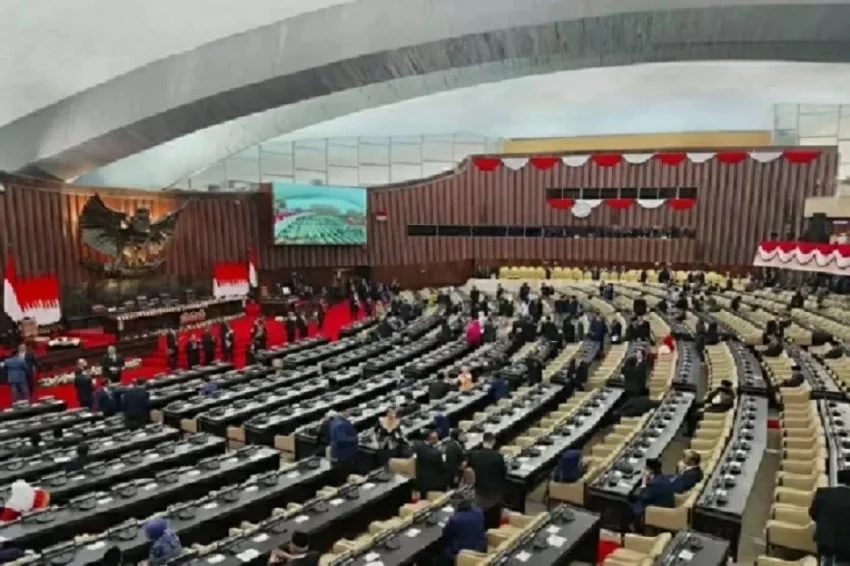
The MPR is composed of the members of the House of Representatives (DPR) and the Regional Representative Council (DPD). As of the current legislative session, the MPR consists of 580 DPR members and 152 DPD members. This body serves as the sole authority for this election. The involvement of such a large, diverse group of representatives is designed to ensure that the replacement Vice President enjoys broad-based political support, mitigating potential factional conflicts within the executive branch.
Furthermore, the requirement for the President to nominate "two candidates" is a specific check on executive power. It prevents the President from "hand-picking" a successor without legislative scrutiny. By requiring a choice between two individuals, the MPR retains the power of selection, thereby acting as a filter for the quality and suitability of the candidates presented.
Official Responses and Political Stakeholder Analysis
Political analysts note that the process is inherently political rather than merely administrative. The nomination phase requires the President to engage in intense lobbying with political parties represented in the MPR. A nominee who is unacceptable to the majority of the MPR faces a high risk of rejection, which would force the President to restart the consultation process, potentially threatening the stability of the government.
Official statements from government spokespeople, such as Budi Arie, have sought to maintain a tone of stability. During recent inquiries into the status of the Vice Presidency, the focus has remained on verifying the authenticity of resignation claims, with officials emphasizing that the government continues to function according to the existing legal framework. Analysts suggest that the government is acutely aware of the potential for market volatility and public anxiety, and thus any official communication is carefully calibrated to emphasize constitutional adherence.
Implications for Governance and Stability
The resignation of a Vice President is not merely a staffing issue; it is a major constitutional event. If a vacancy persists beyond the 60-day limit, the nation could face a crisis of legitimacy. However, the Indonesian constitutional framework is robust enough to accommodate this. The primary implication is that the executive branch is forced to reconcile its preferences with the legislative majority.
There are three key impacts of this mechanism:
- Maintenance of Executive Legitimacy: Because the Vice President is elected by the people alongside the President, replacing them through an appointment would be a violation of the democratic mandate. The MPR election serves as a proxy for the people’s will.
- Political Bargaining: The nomination process forces the President to negotiate with coalition partners. This can lead to shifts in the political landscape as parties bargain for their preferred candidates.
- Preventing Autocracy: The requirement for a parliamentary vote ensures that the legislative branch maintains a degree of oversight over the executive office, preventing a President from unilaterally deciding who should be their successor.
Fact-Based Analysis of Future Scenarios
If a vacancy were to occur today, the legislative landscape would play a decisive role. Given the current composition of the DPR, any candidate nominated by the President would need to navigate the existing power blocs. The 120 members of the DPR who have previously been involved in motions related to the impeachment or critical review of the Vice Presidency represent a significant faction that would likely demand transparency and rigorous vetting of any new nominee.
In this scenario, the MPR would likely conduct a series of hearings or "fit-and-proper tests" for the two nominees. This would elevate the transition from a backroom deal to a public, transparent democratic event. The transparency of this process is essential for maintaining public trust. If the process is perceived as rigged or overly exclusionary, it could trigger widespread civil unrest, particularly in a climate where public trust in institutions is already a subject of intense debate.
Conclusion
The Indonesian constitution provides a clear, albeit rigorous, pathway for replacing a Vice President. By necessitating the involvement of the MPR and requiring a 60-day window, the law ensures that the transition is orderly, transparent, and grounded in the democratic process. While the President initiates the process by naming candidates, the ultimate authority rests with the elected representatives of the people.
As the country navigates potential political shifts, the resilience of these constitutional mechanisms remains the ultimate safeguard for the nation’s political stability. Any deviation from these steps would not only violate the 1945 Constitution but would also undermine the integrity of the presidency itself, highlighting why strict adherence to Article 8 is essential for the continued health of the Indonesian democratic system. Whether in times of crisis or routine transition, the reliance on the MPR acts as the definitive mechanism to preserve the continuity of the state and the legitimacy of its leadership.