
The meteoric rise of Jensen Huang, the face of the artificial intelligence boom and the chief executive officer of Nvidia, has hit a sharp, sudden correction. Over the course of two consecutive trading sessions, Huang’s net worth has eroded by approximately 16 billion dollars, a staggering sum equivalent to roughly 290.65 trillion Indonesian rupiah. This sharp decline has effectively pushed the technology mogul out of the exclusive circle of the world’s ten wealthiest individuals, marking a significant shift in the fortunes of one of the most closely watched figures in the semiconductor industry.
According to data compiled by Forbes, the erosion of wealth began in earnest earlier this week. On Tuesday, November 10, 2026, Huang’s personal fortune saw a single-day reduction of 8.6 billion dollars. This followed a preceding day of losses amounting to 7.4 billion dollars. The cumulative effect of this downward pressure has recalibrated his standing in global wealth rankings, moving him from the upper echelon of the world’s billionaires to the 12th position, with an estimated net worth of 146.8 billion dollars.
The Chronology of the Market Slide
The recent volatility surrounding Nvidia’s stock price does not exist in a vacuum. For months, Nvidia has served as the primary bellwether for the global artificial intelligence sector. As the demand for H100 and subsequent generation chips surged, so too did the company’s valuation, propelling Huang into the ranks of the top five richest people on the planet. However, the current decline represents a confluence of both market corrections and internal corporate pressures.
On Monday, the initial decline in share price allowed industry titans such as Warren Buffett of Berkshire Hathaway and Larry Ellison of Oracle to surpass Huang in total net worth. By the close of trading on Tuesday, the downward trajectory deepened, resulting in Huang falling further behind other industrial leaders, including Amancio Ortega of Inditex and the Walton family, heirs to the Walmart retail empire.
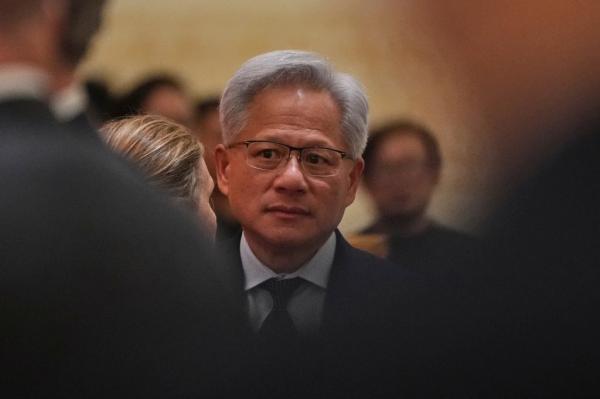
Market analysts observe that the volatility is not merely a reflection of broader market trends but is deeply intertwined with recent reports regarding the company’s internal stability. Nvidia is currently navigating a period of intense scrutiny, with reports emerging regarding an internal investigation into the CEO’s personal conduct and alleged connections to external entities.
Internal Scrutiny and Corporate Governance
The financial market’s reaction has been exacerbated by ongoing investigations into allegations involving Jensen Huang and a woman reportedly linked to intelligence activities. While Nvidia has not released a comprehensive public statement detailing the internal findings, the mere existence of a high-level corporate probe has introduced a "governance premium" risk into the stock price. Institutional investors are notoriously sensitive to leadership volatility, and the intersection of personal scandal with the professional responsibilities of a CEO overseeing a trillion-dollar enterprise often leads to rapid capital flight.
The investigation, which gained significant media attention earlier this month, has prompted questions regarding the company’s risk management protocols. In the world of high-stakes technology, where intellectual property security is paramount, any suggestion of a compromise in leadership integrity can lead to a swift reassessment of a company’s risk profile by shareholders.
Broader Implications for the Semiconductor Sector
Nvidia’s dominance in the AI hardware market—commanding an estimated 80% to 90% of the market share for data center AI chips—means that any movement in its stock price has a disproportionate impact on the broader technology indices, including the S&P 500 and the Nasdaq-100. The recent 16 billion dollar contraction in Huang’s net worth is a microcosm of a larger, systemic volatility currently gripping the semiconductor sector.
Investors are increasingly questioning whether the current valuation of AI-heavy tech firms is sustainable in the long term. While demand for generative AI remains high, the capital expenditure cycle of major clients—such as Microsoft, Meta, and Google—is being scrutinized for signs of saturation. If these major players begin to temper their infrastructure spending, Nvidia’s revenue growth could face deceleration, a scenario that the current stock price dip suggests the market is beginning to price in.

Financial Analysis and Wealth Management
Jensen Huang’s wealth is almost exclusively tied to his equity holdings in Nvidia. Unlike diversified billionaires who hold vast portfolios of real estate, commodities, or various private equity interests, Huang’s fortune is highly sensitive to the daily fluctuations of the Nasdaq. This concentration of wealth, while advantageous during the hyper-growth phase of the AI boom, creates significant vulnerability during market corrections.
When a stock experiences a decline of this magnitude, it often triggers a cycle of margin calls or programmatic selling by institutional funds that rebalance their holdings based on volatility targets. This technical selling pressure can compound the losses, turning a standard market correction into a sharper decline. For Huang, the transition from being among the top 10 to the 12th position is a sobering reminder of the volatility inherent in the tech-wealth sector.
The Road Ahead: Transparency and Recovery
The path forward for Nvidia and Jensen Huang depends heavily on two fronts: the resolution of the ongoing internal investigation and the maintenance of the company’s competitive advantage in the chip market. Should the internal investigation conclude without evidence of significant wrongdoing, analysts expect the stock price to regain its footing, provided that the company continues to report strong quarterly earnings.
However, the reputation of a CEO is a critical asset. In the coming weeks, market participants will be looking for signs of stability within the C-suite. If Nvidia can demonstrate that its operational integrity remains intact, the current market dip may be viewed by some institutional investors as a "buy the dip" opportunity. Conversely, if further damaging information emerges, the stock may face sustained downward pressure, potentially pushing Huang even further down the wealth rankings.
For now, the technology sector remains in a state of watchful waiting. The events of the past 48 hours have served as a stark reminder that even the most successful companies and their leaders are subject to the unforgiving nature of global financial markets. Whether this is a temporary blip in the broader narrative of the AI revolution or the beginning of a more profound reassessment of the industry’s leaders remains to be seen.

Investor Sentiment and Future Outlook
The broader market reaction highlights a shift in investor sentiment. For the past two years, the narrative surrounding Nvidia was one of unstoppable momentum. The current period of reflection suggests that the "AI frenzy" is maturing into a more critical, data-driven assessment of corporate value. Investors are no longer looking solely at top-line revenue growth; they are examining governance, leadership stability, and the long-term sustainability of the AI infrastructure build-out.
As the situation develops, stakeholders will be monitoring official communications from Nvidia’s board of directors. The board’s ability to communicate clearly and address the concerns regarding the CEO’s situation will be essential to restoring investor confidence. For Jensen Huang, the challenge lies in decoupling his personal narrative from the company’s performance, a difficult task when his personal identity has become so inextricably linked to the Nvidia brand.
Ultimately, the loss of 16 billion dollars in net worth is more than just a headline-grabbing figure; it is a signal that the market is recalibrating its expectations. As the world watches, Nvidia must prove that it can navigate both technical challenges and internal turmoil without losing the leadership position it has worked so hard to establish. The coming fiscal quarter will be decisive, not only for the stock price but for the legacy of the man who has defined the current era of artificial intelligence.