
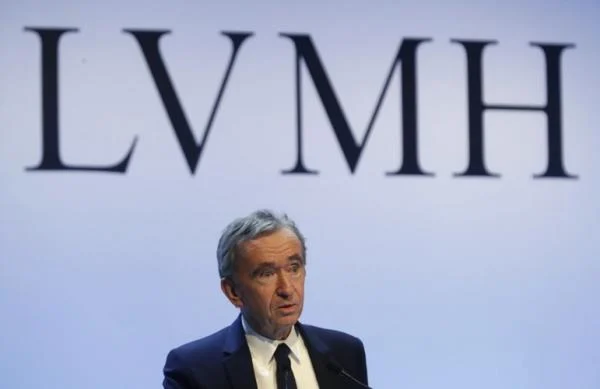
The global financial landscape has witnessed a seismic shift as Bernard Arnault, the chairman and chief executive officer of LVMH Moët Hennessy Louis Vuitton, experiences an unprecedented decline in his personal net worth. According to the Bloomberg Billionaires Index, Arnault’s fortune has evaporated by approximately 65 billion dollars throughout the current calendar year. This staggering loss, equivalent to roughly 1.149 trillion Indonesian rupiah, represents the most significant drawdown among the world’s 500 wealthiest individuals. Consequently, the French luxury tycoon has fallen out of the top ten list of the world’s richest people for the first time since March 2017, settling into the eleventh position with a net worth of 143 billion dollars as of the most recent market closing.
A Staggering Reversal of Fortune
For several years, Bernard Arnault stood as a titan of global commerce, frequently oscillating between the first and second spots on the list of the world’s wealthiest individuals. His wealth was intrinsically linked to the meteoric rise of LVMH, the conglomerate housing prestigious brands such as Louis Vuitton, Christian Dior, Tiffany & Co., and Moët & Chandon. At the height of the post-pandemic luxury boom, Arnault’s net worth surged, at one point exceeding 250 billion dollars. During that period, the "revenge spending" phenomenon—where consumers unleashed pent-up demand for high-end goods following COVID-19 lockdowns—propelled LVMH stock to record highs.
However, the tide has turned dramatically. The cooling of the luxury market, particularly in key regions like China, has fundamentally altered the valuation of the LVMH group. As consumer sentiment shifts and the global economy faces inflationary pressures and tightened monetary policies, the appetite for luxury items has waned. Investors have responded by recalibrating their expectations for LVMH’s growth, leading to a sustained decline in the company’s share price, which directly eroded Arnault’s net worth.
The Chronology of Decline
The trajectory of Arnault’s wealth decline reflects the broader volatility of the luxury sector. Throughout 2023 and into early 2024, warning signs emerged as LVMH reported slowing sales growth in the Asia-Pacific region. Analysts pointed to a deceleration in Chinese consumer spending, which had previously been the primary engine driving LVMH’s revenue.
By mid-2024, the situation intensified. As global markets adjusted to the reality of high interest rates and geopolitical uncertainty, LVMH shares began a period of sustained volatility. The cumulative effect of these market pressures became evident by late 2024, when the Bloomberg Billionaires Index recorded a consistent downward trend in Arnault’s valuation. By Thursday of last week, the data confirmed that his fortune had dropped to 143 billion dollars, placing him behind Warren Buffett and narrowly ahead of Walmart heir Jim Walton. This exit from the top ten is a milestone event, signaling that the era of aggressive, uninterrupted growth for luxury conglomerates may be entering a more difficult, consolidation phase.
US Dominance in the Billionaires Index
Perhaps the most striking development alongside Arnault’s fall is the complete reconfiguration of the upper echelon of the global wealth rankings. For the first time since the inception of the Bloomberg Billionaires Index in 2012, the top ten list is now occupied exclusively by citizens of the United States. This reflects a broader trend of American tech companies and large-scale domestic conglomerates outperforming European counterparts in terms of market capitalization and growth prospects.
Leading the charge is Elon Musk, whose net worth has surged to approximately 918.8 billion dollars. Musk’s wealth is heavily tied to the valuation of Tesla and his broader ventures in space exploration and artificial intelligence. Following Musk are other American technology stalwarts, including Larry Page, Jeff Bezos, Sergey Brin, and Michael Dell. The prominence of these figures highlights the market’s current obsession with artificial intelligence, cloud computing, and digital transformation—sectors where American firms currently hold a distinct competitive advantage over the traditional European luxury model.

Implications for the Luxury Sector
The decline of Bernard Arnault’s fortune serves as a proxy for the current state of the luxury industry. During the pandemic, luxury goods were viewed as "safe-haven" assets, with brands possessing high pricing power capable of passing on costs to consumers. However, the current economic climate is proving that even the most prestigious brands are not immune to macroeconomic headwinds.
Market analysts observe that the luxury sector is undergoing a necessary "normalization" period. After years of double-digit growth, the industry is seeing a return to more modest figures. For LVMH, this means navigating a complex landscape where aspirational shoppers—those who drive mass-market luxury sales—are pulling back, while ultra-high-net-worth individuals remain more resilient. The pressure on Arnault is not merely personal; it is a signal to investors that the luxury segment, once considered invincible, is now subject to the same cyclical pressures as any other consumer-facing industry.
Official Responses and Market Analysis
While LVMH has not issued a specific statement regarding the personal net worth of its chairman, the company has consistently emphasized its long-term strategy in quarterly investor calls. Management has underscored the resilience of its portfolio and its ability to weather economic cycles through a strategy of "desirability and exclusivity." Despite the current market turbulence, LVMH maintains a robust balance sheet and continues to invest heavily in its core brands.
Financial analysts remain divided on the speed of a potential recovery. Some experts argue that the luxury sector is currently undervalued and that the market has overreacted to short-term data points in China. Others, however, suggest that the "Golden Age" of luxury growth has hit a ceiling, and that companies like LVMH must now focus on operational efficiency rather than relying on global expansion to drive stock prices.

Broader Economic Impact
The concentration of wealth in the hands of American tech entrepreneurs, as highlighted by the new top ten list, carries broader implications for global economic influence. As capital continues to flow into the United States, the disparity between European and American wealth creation becomes more pronounced. This trend may influence future regulatory discussions in the European Union, particularly regarding the taxation of high-net-worth individuals and the competitive landscape for major corporations.
Furthermore, the shift in the rankings serves as a reminder of the volatility inherent in wealth based on equity markets. Because the fortunes of individuals like Arnault and Musk are largely tied to the share prices of their companies, these lists are highly sensitive to daily market fluctuations. While Arnault has lost significant wealth this year, his status as one of the world’s most influential business leaders remains intact. His ability to navigate this downturn will likely be a case study for business students and investors alike for years to come.
As the financial world looks toward the end of 2024 and into 2025, the focus will be on whether the luxury market can regain its momentum. If the global economy achieves a "soft landing," with inflation stabilizing and consumer confidence recovering, the LVMH stock may see a rebound. However, for now, the data is clear: the global wealth hierarchy has undergone a profound transformation, placing the spotlight firmly on the American tech sector while marking a historic moment of vulnerability for Europe’s most prominent billionaire.
