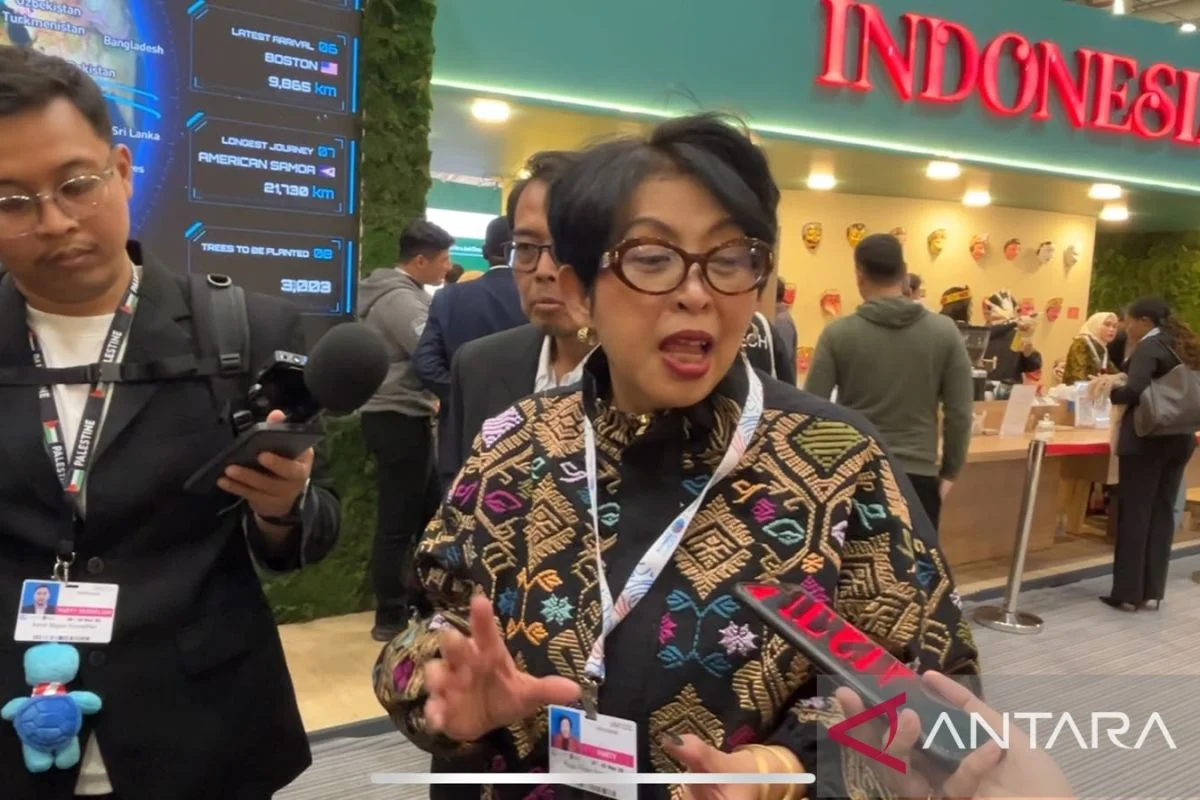
The Indonesian Ministry of Environment (KLH) has officially announced that a new Ministerial Regulation mandating Extended Producer Responsibility (EPR) will be enacted by December 2026. This landmark policy shift marks a significant move in Indonesia’s environmental strategy, compelling manufacturers to take full accountability for the lifecycle of their packaging and products. The announcement was made by the Ministry’s Chief Secretary, Rosa Vivien Ratnawati, on the sidelines of the 31st United Nations Climate Change Conference (COP31) held in Antalya, Turkey.
Under the forthcoming regulation, businesses will no longer be solely responsible for the manufacturing phase of their operations. Instead, they will be legally mandated to implement "take-back" programs, ensuring that post-consumer packaging is retrieved and managed through sustainable waste streams. This framework is designed to move the national industrial landscape away from the traditional "take-make-dispose" linear model and toward a robust circular economy.
Chronology and Regulatory Progress
The development of this regulation is the culmination of years of policy discourse and inter-ministerial coordination. Following the introduction of Law No. 18 of 2008 concerning Waste Management and subsequent government regulations regarding waste reduction, the Ministry of Environment has spent the past several years drafting the specific technical provisions for EPR.
In 2026, the regulatory process entered its final phase, involving rigorous harmonization efforts with the Ministry of Law and Human Rights. According to Ministry officials, these sessions were crucial to ensure that the regulation aligns with existing industrial policies and trade laws. The Ministry of Environment has held extensive negotiations with the Ministry of Industry to strike a balance between environmental enforcement and industrial competitiveness. By December 2026, the government expects to have cleared all legal hurdles, providing a clear roadmap for businesses to adjust their supply chain and packaging strategies.
The Mechanism of Extended Producer Responsibility
The core of the EPR regulation lies in the "polluter pays" principle. Traditionally, the burden of municipal solid waste management has fallen exclusively on local governments and taxpayers. With the implementation of the new regulation, the financial and operational responsibility for the collection, sorting, and recycling of post-consumer materials will shift partially toward the producers.
"The Ministry is currently finalizing the Ministerial Regulation for this EPR. Within this framework, we will define the specific requirements for companies to manage their waste footprint. It is a mandatory requirement," stated Rosa Vivien Ratnawati during the Antalya summit.
The regulation is expected to mandate that companies document their waste output and provide evidence of recovery efforts. This will likely involve partnerships with existing waste management infrastructure, such as waste banks (bank sampah), recycling facilities, and informal sector collectors who play a critical role in Indonesia’s current waste management ecosystem.
Supporting Data and Environmental Urgency
Indonesia, as the world’s fourth most populous nation, faces significant challenges regarding waste management, particularly in coastal regions and urban centers. According to recent data from the National Waste Management Information System (SIPSN), Indonesia produces approximately 38 million tons of waste annually, with a significant percentage consisting of non-biodegradable plastic packaging.
Global trends suggest that EPR policies are effective in reducing environmental degradation. In the European Union, similar EPR directives have increased collection rates for packaging by over 60% in the last decade. By adopting a similar framework, Indonesia aims to reduce the volume of waste ending up in landfills and mitigate the leakage of plastic waste into the ocean—a goal that aligns with the nation’s commitments under the Paris Agreement and subsequent climate summits.
Incentives and Economic Implications
The Ministry is not only focusing on the mandatory aspects of the regulation but also creating an incentive-based structure to encourage proactive participation. Recognizing that some industries may face higher transition costs, the government intends to offer fiscal or regulatory incentives for companies that utilize high percentages of reusable materials in their packaging.
This dual approach—mandatory compliance combined with market-based incentives—is intended to foster innovation in sustainable packaging design. Companies that proactively reduce their reliance on single-use plastics or adopt circular design principles will find it easier to comply with the upcoming regulations while potentially reducing their long-term operational costs associated with raw material procurement.
Challenges: Culture, Infrastructure, and Integration
While the policy intent is clear, the implementation phase faces structural hurdles. A critical challenge remains the integration of the informal waste sector. In many Indonesian cities, the separation of waste at the household level is rarely maintained, leading to contamination of recyclables.
"It is not just about changing the culture. We must also build the necessary infrastructure. We can force citizens to sort their waste, but if the waste collector mixes it all back together at the final destination, the effort is in vain. Therefore, we must strengthen facilities, such as waste banks and sorting centers, in tandem with these regulations," Ratnawati explained.
The government’s plan involves a holistic approach:
- Infrastructure Development: Scaling up the capacity of community-based waste banks to handle the influx of separated materials.
- Standardization: Creating unified national standards for waste sorting to ensure that the downstream collection process is efficient.
- Public Awareness: Conducting large-scale education campaigns to ensure households understand the importance of source-separated waste collection.
Official Responses and Industry Reactions
The industrial sector has generally expressed a cautious interest in the regulation. Industry associations have emphasized that for EPR to be successful, there must be a level playing field. Manufacturers are calling for clear definitions of "producer responsibility" to ensure that the regulation does not inadvertently create a competitive disadvantage for domestic producers compared to importers.
Analysts note that the success of the December 2026 rollout will depend heavily on the clarity of the technical guidelines (Juknis). If the regulations are too rigid, they may stifle production; if they are too loose, the environmental impact will be negligible. Experts suggest that the Ministry’s ongoing dialogue with the Ministry of Industry is the most vital component in ensuring that the regulation acts as a catalyst for growth rather than a bureaucratic burden.
Broader Implications for Indonesia’s Circular Economy
The transition to a circular economy is a strategic pillar for Indonesia’s 2045 vision. By moving away from a linear model, the government hopes to create new jobs in the recycling and waste-to-energy sectors. The EPR policy is seen as the engine that will drive demand for recycled materials, thereby making recycled plastic and paper more economically viable than virgin materials.
Furthermore, as global markets—particularly in the EU and North America—increasingly require sustainable supply chain disclosures, Indonesian manufacturers who adopt these standards early will be better positioned to compete globally. This regulation, therefore, serves a dual purpose: fulfilling domestic environmental mandates and enhancing the global marketability of Indonesian products.
Conclusion
The commitment to implement an Extended Producer Responsibility regulation by December 2026 represents a watershed moment for environmental governance in Indonesia. By formalizing the responsibilities of the private sector, the Ministry of Environment is setting a precedent that waste management is a shared duty rather than a purely municipal concern.
As the implementation date approaches, the focus will shift from the legal drafting process to the practical execution of the policy. The success of this endeavor will rely on the government’s ability to coordinate with local administrations, incentivize private investment in waste infrastructure, and foster a genuine shift in public behavior. If executed correctly, the regulation will provide a scalable model for other emerging economies facing similar waste management crises, proving that industrial growth and environmental stewardship can be reconciled through robust, transparent, and collaborative policy frameworks.