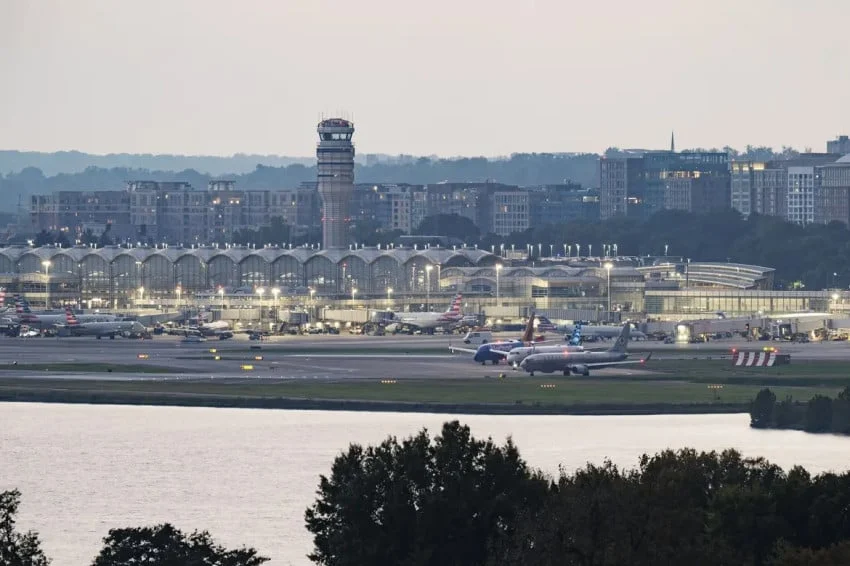
WASHINGTON — In a rare and deeply disruptive development for global aviation, the United States Federal Aviation Administration (FAA) issued an unprecedented nationwide ground stop that brought air traffic across the United States to an abrupt halt. The sweeping directive, implemented to address an unfolding technical crisis, immediately threw domestic and international travel schedules into chaos. According to aviation tracking platform FlightAware, approximately 7,000 flights suffered severe delays or outright cancellations as airports from coast to coast emptied of moving aircraft and filled instead with stranded, frustrated passengers.
The federal aviation regulator ordered all aircraft scheduled for departure to remain grounded indefinitely. Meanwhile, incoming international flights were subjected to individual evaluations and handled on a strictly case-by-case basis. In official statements released shortly after the crisis began, the FAA cited "extraordinary circumstances and safety reasons" as the driving force behind the drastic containment measure. Aviation historians and industry veterans quickly noted the profound gravity of the situation, as this marked only the second time since the tragic events of September 11, 2001, that the United States government has enforced a nationwide ground stop of this magnitude.
Anatomy of a Crisis: The Breakdown in Air Route Traffic Control
As airports ground to a halt and airline executives scrambled to assess the financial and operational fallout, federal officials faced intense pressure to explain how the world’s most sophisticated airspace management system could experience such a catastrophic failure. US Transportation Secretary Sean Duffy held a press briefing to address the unfolding emergency, attributing the nationwide shutdown to a severe "communication breakdown" that crippled the operational capability of the nation’s air traffic control infrastructure.
According to Secretary Duffy, the technical failure directly impacted all 22 Air Route Traffic Control Centers (ARTCCs) across the United States. These critical facilities serve as the backbone of the American civil aviation network, responsible for monitoring, sequencing, and safely guiding high-altitude aircraft—particularly those descending toward major metropolitan airports—within their designated regional jurisdictions. When communication lines between these vital nerve centers and local terminal radar control facilities experienced simultaneous degradation or failure, the FAA was left with virtually no safe alternative other than to order a complete operational freeze.
The sudden vulnerability of the US air traffic network has reignited long-standing debates regarding the modernization of federal infrastructure. While the nation’s skies remain among the safest in the world, the heavy reliance on legacy communication networks has consistently drawn scrutiny from aviation safety advocates and congressional oversight committees.
The Scale of Disruption: By the Numbers
The economic and logistical shockwaves of the nationwide ground stop rippled rapidly through the global supply chain and the commercial airline industry. FlightAware metrics confirmed that the ripple effects extended well beyond the immediate duration of the ground stop, as aircraft and flight crews were thrown entirely out of position.
Major air carriers, including United Airlines, Delta Air Lines, American Airlines, and Southwest Airlines, issued comprehensive travel waivers, allowing passengers to rebook flights without penalty as congestion mounted at primary aviation hubs. Key facilities—such as Ronald Reagan Washington National Airport, Hartsfield-Jackson Atlanta International Airport, O’Hare International Airport in Chicago, and Los Angeles International Airport—witnessed terminal congestion reminiscent of the worst weather-related disruptions or holiday travel surges.
For international carriers, the disruption forced mid-flight diversions, holding patterns over oceanic airspace, and prolonged delays at international gateways. Passengers destined for the United States found themselves stranded at European, Asian, and Latin American hubs as foreign civil aviation authorities cooperated with the FAA to manage the inbound traffic flow safely.
Historical Parallels and Regulatory Precedents
To fully comprehend the weight of the FAA’s decision, one must look back at the modern history of American aviation security and operational resilience. Prior to this incident, a nationwide ground stop of this scale had only been ordered once outside of extreme weather emergencies or national security directives: on the morning of September 11, 2001, when the FAA ordered all airborne civil aircraft to land immediately following terrorist attacks.
While the September 11 ground stop was driven by an active security threat and lasted for several days, the recent technical crisis highlights a different kind of modern vulnerability: systemic fragility driven by technological dependency. Over the past two decades, the FAA has steadily worked to transition its communication protocols from aging analog systems to the Next Generation Air Transportation System (NextGen). However, the sheer size, complexity, and interconnectedness of the United States airspace mean that localized communication failures can still cascade into national emergencies if redundancy protocols fail.
Official Responses and Stakeholder Reactions
In the wake of the emergency, lawmakers, industry associations, and passenger advocacy groups demanded transparency and immediate accountability from federal regulators. Congressional committees with jurisdiction over transportation and infrastructure announced plans to launch formal inquiries into the root causes of the communication failure at the Air Route Traffic Control Centers.
Airlines for America (A4A), the trade organization representing major US air carriers, issued a cautious statement emphasizing that safety remains the absolute priority of the commercial aviation sector, while acknowledging the severe commercial and operational toll exacted by the ground stop. Meanwhile, passenger rights advocates renewed calls for stronger federal mandates concerning airline accountability, automatic cash compensation for lengthy technical delays, and enhanced transparency regarding infrastructure reliability.
Economists and supply chain analysts also pointed out the broader implications of the disruption. Beyond passenger inconvenience, the temporary freeze on domestic air cargo—which carries high-value medical supplies, perishable goods, and time-sensitive commercial freight—demonstrated how deeply integrated the aviation network is with the broader American economy.
Broader Implications for the Future of US Airspace
As the FAA gradually restored communication systems and cleared the backlog of grounded aircraft, aviation experts turned their attention to the long-term lessons of the incident. The crisis served as a stark reminder that as commercial air traffic volumes continue to return to and exceed pre-pandemic highs, the infrastructure supporting air navigation must evolve at an equivalent pace.
The incident is expected to accelerate federal funding discussions surrounding the complete overhaul of air traffic control software, hardware redundancies, and cybersecurity frameworks. Ensuring that the 22 Air Route Traffic Control Centers possess robust, unassailable backup communication channels is no longer viewed merely as an operational preference, but as an urgent national security and economic imperative.
For travelers, the historic ground stop stands as a jarring illustration of the delicate balance underlying modern mass transit—where millions of lives and billions of dollars depend on the seamless, uninterrupted flow of digital and voice communication across the skies.