The political landscape in Jakarta has entered a period of intense uncertainty following the formal resignation of Vice President Gibran Rakabuming Raka on March 12, 2026. As the executive branch navigates the void left by this unexpected departure, the National Awakening Party (PKB) has emerged as a key player clarifying its stance amid rampant speculation regarding potential successors. Muhammad Khozin, the Head of the PKB Faction at the House of Representatives (DPR) Commission II, officially stated that the party has no intention of nominating its chairman, Abdul Muhaimin Iskandar—widely known as Cak Imin—for the vacant vice-presidential position.
The resignation of Gibran Rakabuming Raka has triggered a scramble within the ruling coalition to find a replacement capable of maintaining government stability. However, Khozin emphasized that PKB’s focus remains firmly fixed on legal and constitutional integrity rather than the pursuit of executive power. According to the party leadership, the mandate to propose a candidate for the vice presidency rests solely with the President, and PKB has chosen to maintain a detached position regarding the political jockeying that has consumed other coalition partners.
Chronology of the Political Shift
The vacuum at the top of the executive hierarchy did not occur in a vacuum; it was the culmination of months of mounting political and legal pressure. The timeline leading to the current crisis began late in 2025, characterized by deepening skepticism regarding the administrative credentials of the former vice president.
- Late 2025 – Early 2026: Growing parliamentary scrutiny regarding the academic documentation of key government figures begins to gain momentum. Opposition factions and civil society groups demand transparency.
- February 2026: The House of Representatives initiates preliminary discussions regarding the "Right of Inquiry" (Hak Angket) and the "Right to Express Opinion" (Hak Menyatakan Pendapat), focusing on administrative irregularities.
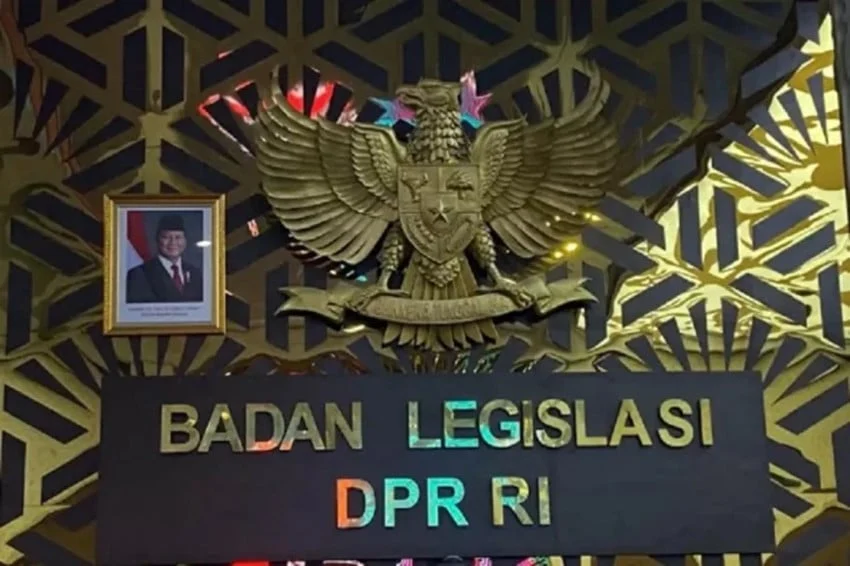
- March 12, 2026: Gibran Rakabuming Raka officially resigns from his position as Vice President of the Republic of Indonesia. The immediate aftermath sees the removal of his official portrait from parliamentary chambers and administrative offices.
- March 14, 2026: President Prabowo Subianto issues a directive to coalition party chairmen, requesting the submission of potential vice-presidential candidates within a one-week timeframe.
The Stance of PKB: Prioritizing Institutional Integrity
In his statement on Saturday, November 14, 2026, Muhammad Khozin sought to dispel rumors that PKB was positioning itself to capture the vice-presidential seat. He underscored that throughout the entire trajectory of the controversy—from the initial debates in the House to the eventual resignation—the party had not formulated any plans to propose a replacement candidate.
"We have been intensely involved from the beginning of this issue, starting with the Right of Inquiry, the Right to Express Opinion, and the subsequent resignation of Mr. Gibran. At no point was the idea of a replacement vice president ever considered within our ranks. We did not even think about it, let alone propose a candidate," Khozin stated.
This assertion serves a dual purpose for PKB. First, it distances the party from the perception of opportunistic maneuvering during a national crisis. Second, it reaffirms the party’s alignment with the judiciary’s role in resolving the underlying issues that sparked the instability, specifically the polemics surrounding the validity of official academic documents. By anchoring its political strategy in the rulings of the Constitutional Court (MK) and the Supreme Court (MA), PKB aims to position itself as a guardian of constitutional process rather than a participant in transactional politics.
The Polemic of Academic Credentials
The "polemic of the diploma" has been a significant catalyst in the current political climate. For months, the veracity of documents submitted by high-ranking officials became a focal point for legislative oversight. While the debate often veered into partisan territory, the legal ramifications were significant.
PKB’s insistence on ending this polemic suggests a desire to restore public trust in the administrative vetting processes of the Indonesian government. By prioritizing the finality of judicial rulings over the immediate political question of who succeeds the former vice president, the party is effectively signaling to the public that the legitimacy of the office is more important than the identity of the person holding it.
Implications for the Prabowo Administration
The pressure on President Prabowo Subianto to appoint a successor is mounting. With the one-week deadline set by the President for coalition leaders to submit names, the political environment in Jakarta is currently defined by intense closed-door negotiations.
The absence of a vice president creates a significant functional challenge for the executive branch. Under the Indonesian Constitution, the vice president plays a vital role in coordinating state agencies and overseeing specific national development projects. A prolonged vacancy could potentially stall key policy initiatives, particularly those related to the 2027 fiscal budget and ongoing infrastructure projects.
Analysts suggest that the President’s request for nominations is an attempt to maintain the cohesion of the ruling coalition. If the coalition fails to reach a consensus, the government risks fragmentation, which could lead to legislative gridlock. However, PKB’s refusal to engage in the nomination process introduces a new variable. By opting out, PKB is essentially granting the President a freer hand to choose a candidate who might be more aligned with his personal vision, or perhaps signaling that the party is more interested in its legislative agenda than in executive appointments.
Broader Political Analysis
The current situation highlights the inherent tensions in Indonesia’s presidential system when a vice-presidential vacancy occurs. The process of selection is inherently political, yet it requires a high degree of constitutional scrutiny.
- Legislative Power vs. Executive Prerogative: The tension between the DPR’s oversight functions and the President’s right to appoint a successor is at the heart of the current discourse. PKB’s strategy of deferring to the President while focusing on judicial resolution is a tactical move to avoid being held accountable for the failures of the previous executive administration.
- Coalition Dynamics: The "Prabowo-led" coalition is currently under stress. The demand for a replacement within seven days is an aggressive timeline, suggesting an urgent need for the President to consolidate his administration.
- Public Perception: The rapid removal of portraits and the administrative shift following the resignation reflect a state apparatus attempting to move on as quickly as possible. The public’s reaction to these events remains mixed, with significant segments of the population demanding greater transparency regarding the reasons for the vacancy.
Future Outlook
As the one-week deadline approaches, all eyes remain on the presidential palace. The selection of a new vice president will likely be a barometer for the stability of the Prabowo administration for the remainder of his term.
For PKB, the objective is clear: to emerge from this transition with its reputation as a principled party intact. By focusing on the "conclusion of the polemic" rather than the "acquisition of the seat," the party is betting that voters will appreciate a focus on governance and legality over the traditional pursuit of high-level positions.
The coming days will be critical. If other coalition parties follow PKB’s lead—either by declining to propose names or by offering candidates who prioritize institutional stability over partisan gain—the transition could be orderly. However, should the nomination process devolve into a struggle for influence, the vacancy could deepen, posing a significant challenge to the stability of the executive branch and, by extension, the national economy.
In conclusion, the statement by Muhammad Khozin is more than just a denial of interest in the vice-presidency; it is a declaration of a political strategy that seeks to capitalize on the desire for institutional stability. As the nation waits for the President’s announcement, the role of parties like PKB will be to determine whether this transition becomes a moment of reform or a continuation of the same political dynamics that led to the vacancy in the first place. The government’s ability to navigate this period will depend on its capacity to satisfy both the legal requirements for a replacement and the public’s demand for accountability.