The Constitutional Court of the Republic of Indonesia officially convened an evidentiary hearing on Wednesday night, September 30, 2026, to address a high-profile petition concerning the General Election Results Dispute (PHPU) for the President and Vice President. Specifically, the proceedings at the Main Building of the Constitutional Court (MKRI 1) in Jakarta centered on the legality and authenticity of the educational credentials and diploma of Vice President Gibran Rakabuming Raka.
Presided over by a panel of constitutional justices, the session drew significant public attention and media scrutiny as it marked a critical procedural phase in a protracted legal challenge initiated by petitioner Denny Indrayana and his legal team. The evidentiary hearing was designed to systematically review the validity of the submitted evidence, hear sworn testimonies from designated expert witnesses, and evaluate factual assertions put forward by the plaintiffs regarding the eligibility and qualifications of the sitting vice president.
Chronology and Context of the Legal Challenge
The roots of this constitutional dispute extend back to the tumultuous legal battles surrounding the 2024 Indonesian Presidential Election. Following the official announcement of the election results by the General Elections Commission (KPU)—which confirmed the victory of the ticket comprising Prabowo Subianto and Gibran Rakabuming Raka—numerous legal challenges were brought before the Constitutional Court by opposing camps. While initial post-election disputes primarily focused on alleged systemic electoral fraud, administrative violations, and the ethical controversies surrounding Gibran’s candidacy eligibility following a controversial Constitutional Court ruling on age limits, subsequent legal maneuvers have drilled down into specific documentation requirements.
The petition led by prominent legal scholar and former Deputy Minister of Law and Human Rights, Denny Indrayana, specifically targeted the administrative legitimacy of Gibran’s educational background. The petitioners argued that discrepancies surrounding the academic credentials presented during the candidate registration process warrant a thorough judicial review by the nation’s highest constitutional tribunal. After months of preliminary motions, administrative checks, and preliminary hearings, the court transitioned to the evidentiary phase on the evening of September 30, 2026, allowing the petitioners to substantiate their claims with formal testimonies and corroborating documentation.
Expert Witnesses and Testimonies Presented
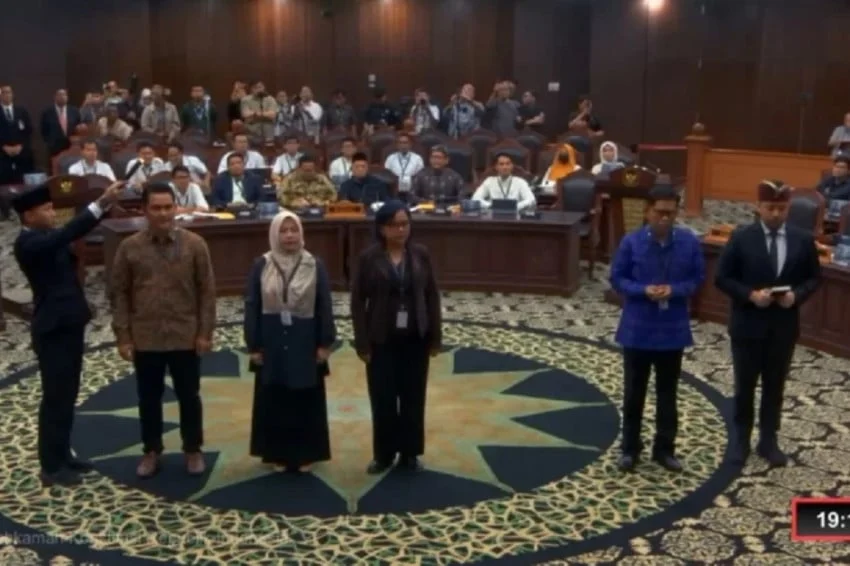
During the Wednesday night session, held on the second floor of the MKRI 1 Building, the legal team for the petitioners presented a carefully curated panel of academic experts and political observers to bolster their arguments. The proceedings commenced with the formal swearing-in of the witnesses and experts, a mandatory legal procedure ensuring the integrity of their testimonies before the constitutional bench.
Constitutional Court Justice Saldi Isra, presiding over the session, outlined the parameters of the hearing and verified the attendance of the summoned individuals. "Tonight, the petitioners have proposed three experts and one witness. Originally, two witnesses were slated to appear, but one was unable to attend and an alternate was proposed," Justice Saldi stated during the hearing.
The distinguished panel of experts presented by Denny Indrayana’s team included:
- Yance Arizona, a prominent legal scholar specializing in constitutional law and governance.
- Titi Anggraini, a leading election law expert and former executive director of the Association for Elections and Democracy (Perludem).
- Bivitri Susanti, a well-known constitutional law expert from the Indonesia Jentera School of Law (STH Indonesia Jentera).
In addition to the academic experts, the petitioners presented I Gusti Putu Artha, a former member of the General Elections Commission (KPU), who served as a factual witness to provide insights into election administration standards, candidate verification protocols, and documentary compliance.
The inclusion of such high-profile legal experts signaled the petitioners’ intent to frame the dispute not merely as a localized administrative grievance, but as a fundamental question concerning constitutional integrity, the rule of law, and the strict enforcement of electoral candidacy requirements under Indonesian law.
Procedural Directives and Court Stance
As the hearing progressed, the constitutional panel maintained strict adherence to courtroom procedures and evidentiary timelines. Justice Saldi Isra emphasized the court’s commitment to due process while ensuring that the proceedings were not unduly delayed by logistical hurdles regarding witness attendance.
Addressing the absence of one of the originally planned witnesses, the court ruled that while an absent witness would be granted the opportunity to submit their testimony in writing to preserve the record, no further additions or substitutions of witnesses would be permitted at this advanced stage of the trial. This ruling underscored the court’s desire to maintain procedural efficiency and bring a definitive resolution to the long-standing controversy.
Furthermore, exchanges between the bench and the legal representatives highlighted the rigorous scrutiny being applied to the evidentiary standards required in election disputes. Justice Saldi prompted the legal teams to clearly establish whether prior administrative avenues regarding the disputed credentials had been exhaustively pursued and resolved by relevant educational authorities before being elevated to a constitutional dispute of this magnitude.
Broader Implications and Reactions
The continuation of the PHPU hearings regarding the vice president’s diploma carries profound implications for the political landscape of Indonesia. While the current administration under President Prabowo Subianto and Vice President Gibran Rakabuming Raka remains firmly in power, ongoing legal challenges of this nature serve as a constant point of friction between the government and various civil society elements, legal watchdogs, and opposition factions.
Legal analysts point out that even if the evidentiary hurdle is exceptionally high in post-election constitutional disputes—particularly given the strict legal thresholds required to overturn certified election results or unseat a sitting official—the proceedings themselves play a vital role in public transparency and accountability. The involvement of respected legal academics like Titi Anggraini and Bivitri Susanti ensures that the legal arguments are subjected to rigorous scholarly debate, resonating far beyond the courtroom walls.
Supporters of the administration have consistently dismissed the challenges as politically motivated maneuvers designed to undermine the legitimacy of a democratically elected government. They argue that all administrative requirements, including educational verifications, were thoroughly vetted and approved by the KPU prior to the election, rendering subsequent judicial challenges legally redundant.
Conversely, the petitioners maintain that constitutional oversight must remain uncompromising, asserting that transparency regarding the educational qualifications of the nation’s highest leaders is a non-negotiable pillar of democratic accountability. They contend that the court must independently verify the authenticity of the documents to uphold public trust in state institutions.
Next Steps in the Constitutional Court
With the conclusion of this crucial evidentiary session, the Constitutional Court is expected to deliberate on the testimonies and additional documentary evidence submitted by Denny Indrayana’s team. Subsequent hearings will likely involve responses from the KPU as the respondent, as well as legal representatives from the Prabowo-Gibran camp acting as relevant parties, who will be given the opportunity to present counter-evidence and their own expert witnesses.
As the legal battle unfolds in the coming weeks, all eyes remain fixed on the Constitutional Court. The final ruling in this case will not only determine the specific outcome of this particular petition but will also set a crucial legal precedent regarding the depth of judicial review applicable to candidate qualifications in future Indonesian electoral cycles.