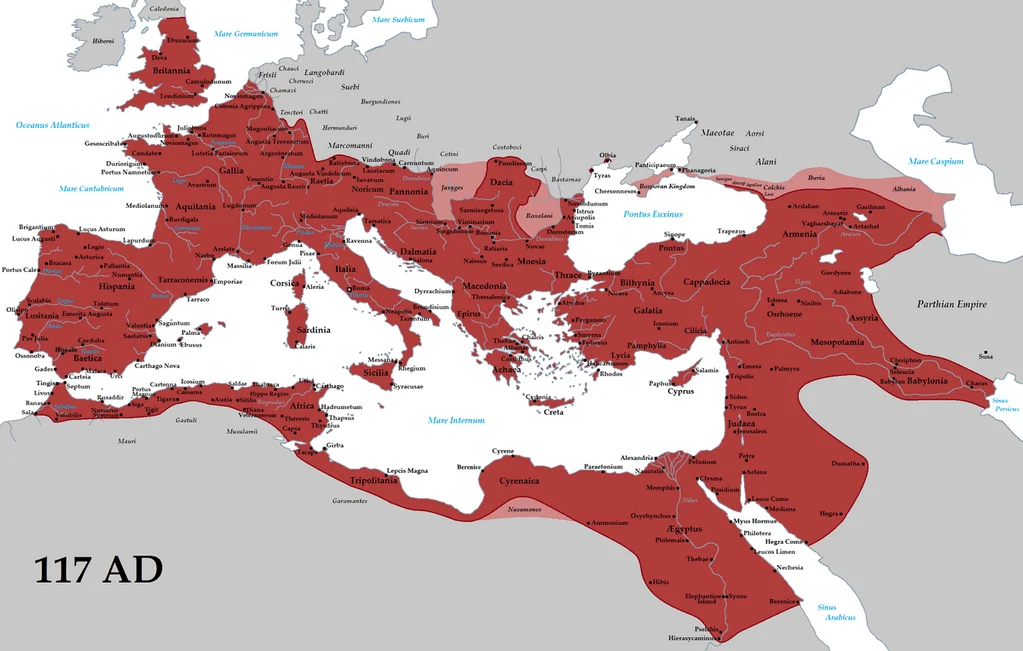
The history of Ancient Rome stands as a testament to the enduring power of human organization, engineering, and political evolution, transforming from a small collection of huts on the Palatine Hill into a sprawling empire that dictated the course of Western history for over a millennium. At its zenith, the Roman Empire was not merely a military juggernaut but a sophisticated cultural engine that standardized law, language, and architecture across three continents. Today, the remnants of this civilization—from the ruins of the Colosseum to the Latin roots of modern languages—continue to serve as the bedrock of contemporary society, influencing everything from the legal systems of Europe to the democratic structures of the Americas.
The Geographical and Ethnic Foundations of the Latin People
The story of Rome begins in the Latium region of central Italy, a fertile plain situated south of the Tiber River. This area was inhabited by the Latins, an Italic tribe that settled in the region during the late Bronze Age, approximately 1000 BCE. The geography of Latium was uniquely suited for the birth of a superpower. Nestled between the Apennine Mountains and the Tyrrhenian Sea, the region benefited from volcanic soil that was exceptionally fertile, supporting a robust agricultural economy. The proximity to the Tiber River provided a reliable source of fresh water and a navigable route for inland trade, while the surrounding Seven Hills offered natural defensive positions against rival tribes.
Historical records and archaeological evidence suggest that the early Latins were primarily farmers and herders. However, their strategic location soon made them a target for the more advanced Etruscan civilization to the north. This constant threat of encroachment forced the early Roman communities to prioritize military readiness and defensive fortifications. This existential pressure is often cited by historians as the catalyst that forged the disciplined, martial character of the Roman people. Furthermore, Rome’s position in the center of the Mediterranean Sea eventually allowed it to dominate maritime trade routes, linking the markets of Africa, the Levant, and Europe.
From Legend to Monarchy: The Birth of the Roman State
According to Roman mythology, the city was founded in 753 BCE by Romulus and Remus, twin brothers allegedly fathered by the god Mars and raised by a she-wolf. While historians view this tale as a foundation myth designed to instill a sense of divine destiny in the Roman populace, the legend reflects the violent and competitive nature of early Roman politics. Romulus, after slaying his brother in a dispute over the city’s boundaries, became the first king of Rome.
The Roman Monarchy (753–509 BCE) saw the city grow under the rule of seven legendary kings. During this period, the basic structures of Roman society were established, including the Senate—a council of elders—and the division of the population into social classes. However, the monarchy eventually devolved into tyranny. The final king, Lucius Tarquinius Superbus (Tarquin the Proud), was characterized by his cruelty and disregard for the Roman nobility. Following a public uprising sparked by a royal scandal involving the violation of the noblewoman Lucretia, the Roman people expelled the king and vowed never to be ruled by a monarch again. This transition marked the birth of the Roman Republic.
The Roman Republic: A Model of Tripartite Governance
In 509 BCE, Rome established a "Res Publica" (public matter), a system of government designed to prevent the concentration of power in a single individual. This era, lasting nearly five centuries, saw Rome expand from a regional power to the master of the Mediterranean. The Republic’s political system was a complex arrangement of checks and balances, divided into three primary branches:
- The Magistrates: Serving as the executive branch, these elected officials managed the daily affairs of the state. The most powerful were the two Consuls, who commanded the army and presided over the Senate. To prevent tyranny, Consuls served only one-year terms and held the power to veto one another.
- The Senate: Composed of approximately 300 to 600 members of the aristocracy (Patricians), the Senate acted as an advisory body. While they did not technically pass laws, their "senatus consultum" (decrees) carried immense weight in foreign policy and financial management.
- The Assemblies and Tribunes: Representing the common people (Plebeians), these bodies had the power to elect magistrates and vote on legislation. The Tribunes of the Plebs were particularly significant, as they held the power to veto the actions of the Consuls and the Senate to protect the rights of common citizens.
This system proved remarkably resilient, allowing Rome to navigate internal social conflicts—known as the Conflict of the Orders—and external threats, such as the Punic Wars against Carthage. By the 2nd century BCE, Rome had defeated Hannibal, destroyed Carthage, and annexed Greece, effectively becoming the dominant power in the ancient world.

The Transition to Empire and the Rise of the Caesars
The very success of the Republic led to its downfall. The influx of wealth and slaves from conquered territories created vast economic inequality, while the military grew more loyal to individual generals than to the state. The 1st century BCE was marked by civil wars and political instability, culminating in the rise of Julius Caesar.
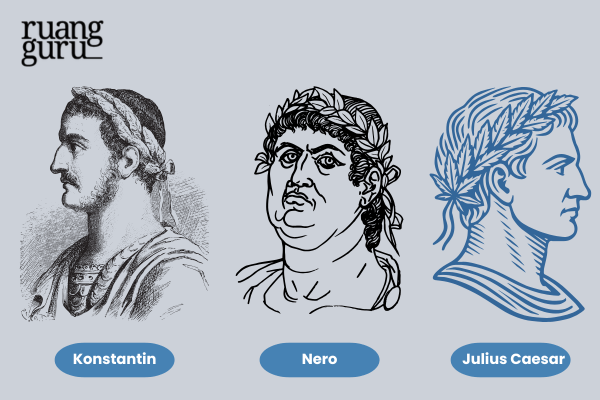
Julius Caesar, a brilliant general who conquered Gaul (modern-day France), used his military might to challenge the Senate. In 49 BCE, he crossed the Rubicon River, sparking a civil war that ended with his appointment as "Dictator Perpetuo" (Dictator for Life). While Caesar enacted popular reforms, such as the implementation of the Julian Calendar, his "iron-fisted" rule alienated the Senate. In 44 BCE, a group of conspirators led by Brutus and Cassius assassinated Caesar on the Ides of March, hoping to restore the Republic.
Instead, the assassination triggered further chaos, leading to the rise of Caesar’s grandnephew, Octavian. After defeating his rivals Mark Antony and Cleopatra, Octavian was granted the title "Augustus" by the Senate in 27 BCE. While he maintained the facade of Republican institutions, Augustus became the first Emperor of Rome, marking the beginning of the Roman Empire and the "Pax Romana"—a 200-year period of relative peace and stability.
Chronology of Major Roman Milestones
- 753 BCE: Legendary founding of Rome by Romulus.
- 509 BCE: Expulsion of Tarquin the Proud; establishment of the Republic.
- 264–146 BCE: The Punic Wars; Rome defeats Carthage to dominate the Mediterranean.
- 44 BCE: Assassination of Julius Caesar.
- 27 BCE: Augustus becomes the first Emperor; start of the Pax Romana.
- 80 CE: Completion of the Flavian Amphitheatre (Colosseum) under Emperor Titus.
- 313 CE: Emperor Constantine issues the Edict of Milan, legalizing Christianity.
- 330 CE: Constantine moves the capital to Byzantium (Constantinople).
- 476 CE: The fall of the Western Roman Empire to Germanic tribes.
Technological Prowess: Concrete, Aqueducts, and Roads
One of the most significant reasons for Rome’s longevity was its mastery of engineering. Roman engineers developed a form of volcanic concrete (opus caementicium) that was far more durable than modern equivalents, allowing them to build massive structures like the Pantheon and the Colosseum. The use of the arch and the dome revolutionized architecture, enabling the construction of wide, open interior spaces without the need for excessive pillars.
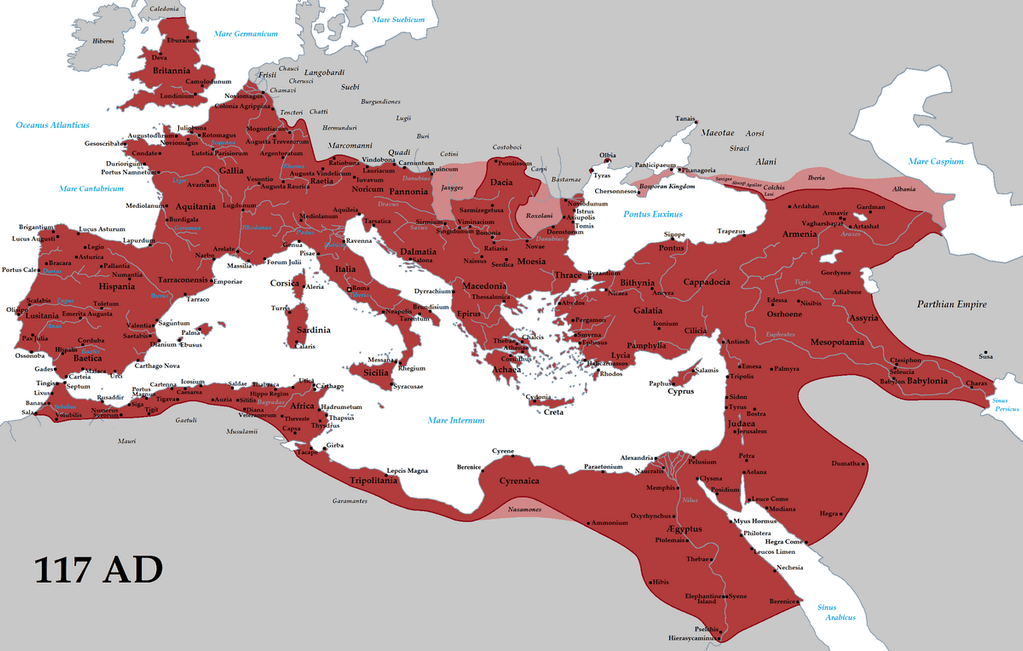
Furthermore, the Roman infrastructure was designed for efficiency. They constructed over 400,000 kilometers of roads, including 80,000 kilometers of stone-paved highways, to facilitate the rapid movement of legions and trade goods. The phrase "all roads lead to Rome" was a literal reality. To sustain their growing urban populations, they built sophisticated aqueducts that used gravity to transport millions of gallons of water daily into cities for public baths, fountains, and private homes.
Religion and the Christian Transformation
Initially, Roman religion was a polytheistic system heavily influenced by the Greeks. They worshipped a pantheon of gods who governed various aspects of life: Jupiter (the king of gods), Mars (war), Venus (love), and Neptune (the sea). Religious life was deeply intertwined with the state, and the "Pontifex Maximus" (High Priest) was a vital political office.
However, the 1st century CE saw the emergence of Christianity in the province of Judea. Despite early persecutions under emperors like Nero—who used Christians as scapegoats for the Great Fire of Rome in 64 CE—the faith spread rapidly through the empire’s road networks. By the 4th century, Emperor Constantine’s conversion and the subsequent Edict of Milan transformed Christianity from a persecuted sect into the official state religion. This shift ensured that even after the political collapse of the Western Empire, the Roman Catholic Church would remain the dominant cultural and moral authority in Europe for the next millennium.
Historical Implications and Modern Influence
The fall of the Western Roman Empire in 476 CE did not mean the end of Roman influence. The Eastern Roman Empire, or the Byzantine Empire, survived for another thousand years until 1453. More importantly, the "Roman idea" persisted. The Latin language evolved into the Romance languages (Italian, French, Spanish, Portuguese, and Romanian) and remains the foundation of scientific and legal terminology.
Roman law, particularly the "Corpus Juris Civilis" compiled under Emperor Justinian, forms the basis of the civil law systems used in most of Europe and Latin America today. The concept of a representative republic, the use of a senate, and the principle of "veto" power are all direct inheritances from the Roman political experiment.
In summary, Ancient Rome was more than just a period in history; it was a blueprint for modern civilization. Its ability to integrate diverse cultures into a single administrative framework, combined with its advancements in law and technology, created a legacy that remains unsurpassed. As modern societies navigate the complexities of governance and globalization, the rise and fall of Rome continue to offer essential lessons in power, pragmatism, and the enduring human drive for order and progress.