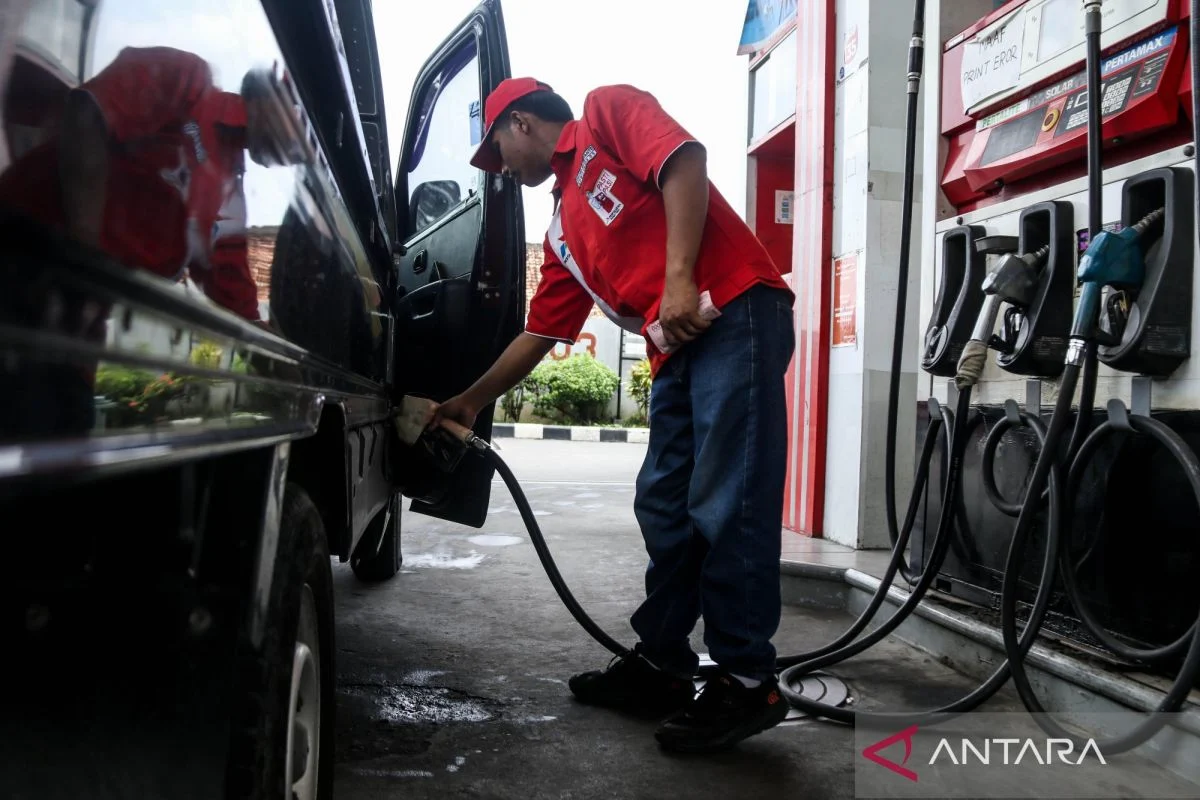
Vehicle maintenance and fuel selection remain critical considerations for motorists navigating Indonesia’s dynamic transportation landscape. Among the myriad options available at local filling stations, Pertamax and Pertalite stand out as the two most widely consumed gasoline products distributed by state-owned energy enterprise PT Pertamina (Persero). Despite their ubiquitous presence across archipelago fuel pumps, distinguishing between these two fuel grades requires a careful examination of engine compression ratios, manufacturer specifications, and the fundamental properties of chemical octane ratings, formally known as Research Octane Number (RON).
Understanding the technical divergence between Pertamax, which boasts an octane rating of RON 92, and Pertalite, rated at RON 90, is essential for optimal vehicle performance. The octane rating fundamentally measures a fuel’s capacity to withstand uncontrolled ignition, a phenomenon colloquially and technically known as engine knocking or detonation. When combustion occurs prematurely or unevenly inside the cylinder chambers, it creates shockwaves that can compromise mechanical efficiency and ultimately lead to catastrophic engine failure if left unmitigated. Consequently, automotive engineers consistently advise vehicle owners to align their fuel choices strictly with factory-prescribed specifications rather than relying on generalized assumptions about higher-octane performance.
The Technical Mechanics of Octane Ratings and Engine Knocking
To fully comprehend why fuel selection matters, one must examine the thermodynamic processes occurring within internal combustion engines. Modern automotive powerplants operate under varying compression ratios, where air and fuel mixtures are compressed before being ignited by a spark plug. Engines designed with higher compression ratios require fuels with superior resistance to pre-ignition to ensure that the flame front propagates smoothly and uniformly across the combustion chamber.
When a lower-octane fuel like Pertalite (RON 90) is introduced into a high-compression engine engineered specifically for RON 92 or higher, the fuel-air mixture can ignite prematurely under intense heat and pressure. This premature detonation generates the characteristic metallic pinging or knocking sound associated with engine stress. Over time, persistent knocking degrades piston rings, erodes cylinder walls, and diminishes overall thermal efficiency. Conversely, utilizing a higher-octane fuel like Pertamax in an engine explicitly designed for lower-grade fuel does not inherently yield miraculous performance boosts. If an older or simpler engine layout specifies RON 90, switching to RON 92 offers minimal tangible benefit, as the mechanical parameters of the motor cannot leverage the enhanced anti-knock properties.
Chronological Evolution of Fuel Standards and Market Adoption in Indonesia
The commercial bifurcation of Indonesia’s subsidized and non-subsidized retail fuel markets has evolved significantly over the past decades. Historically, Indonesian motorists relied heavily on lower-octane formulations, but tightening environmental regulations, vehicular modernization, and the influx of advanced automotive technologies from global manufacturers necessitated a transition toward cleaner, higher-octane fuels.
In response to shifting industrial standards, Pertamina introduced and progressively expanded the distribution of Pertamax to cater to modern fuel-injected and turbo-charged engines equipped with sophisticated emission control systems. Meanwhile, Pertalite was positioned to replace older subsidized formulations, serving as a transitional bridge for millions of motorcycles and older passenger cars populating Indonesian roads. As global crude oil prices fluctuated and international pricing for RON 92 derivatives experienced volatility—reaching heights reported at macroeconomic equivalents exceeding Rp21,000 per liter in global markets—the domestic pricing and subsidy policies implemented by the Indonesian government frequently sparked public discourse regarding consumer expenditure and household budgeting.
Comparative Advantages of Pertamax (RON 92) Over Pertalite (RON 90)
Evaluating the distinct advantages of Pertamax over Pertalite requires a nuanced look at mechanical compatibility rather than a simplistic presumption of superiority. Automotive experts and fuel technologists generally categorize the benefits of RON 92 fuel into five primary domains:
-
Enhanced Resistance to Engine Knocking
By virtue of its RON 92 rating, Pertamax exhibits superior threshold limits against uncontrolled auto-ignition. For vehicles with high-compression powerplants or forced-induction systems (such as turbochargers), Pertamax ensures that the combustion cycle adheres strictly to the electronic control unit’s (ECU) ignition timing maps. This alignment prevents destructive detonation and preserves structural integrity over hundreds of thousands of kilometers of operation. -
Precise Alignment with Modern Engine Specifications
Automotive manufacturers expend countless hours testing engine durability under specific laboratory environments using standardized fuel grades. Utilizing Pertamax for vehicles explicitly calibrated for RON 92 ensures that the combustion dynamics match the design blueprint. Conversely, operating high-performance machinery on sub-optimal octane ratings forces the engine’s knock sensors to retard ignition timing, which sacrifices power delivery and increases thermal stress. -
Optimization of Power Delivery and Throttle Response
While switching to a higher octane rating does not magically elevate horsepower beyond factory specifications, using the correct fuel prevents the power losses associated with spark retardation. In vehicles requiring RON 92, Pertamax allows the engine to deliver smooth, uninterrupted acceleration. The elimination of micro-detonations ensures a more linear power band, resulting in a responsive driving experience across urban commutes and highway cruising alike. -
Potential for Improved Fuel Economy Under Specific Conditions
The relationship between fuel grade and fuel efficiency is frequently misunderstood. Pertamax can contribute to enhanced fuel economy, but strictly within the context of compatible engines. When an engine operates at peak thermal efficiency without ECU-induced power throttling, less fuel is wasted maintaining stoichiometric ratios. However, motorists must account for external variables. Driving habits, tire pressure, vehicular payload, road topography, and sustained air conditioning usage exert massive influences on real-world fuel consumption, meaning Pertamax is not universally more economical than Pertalite across every vehicle type. -
Proprietary Additive Packages for Engine Cleanliness
Modern premium fuels are rarely composed of base hydrocarbons alone. Pertamina incorporates specialized detergent and protective additive packages into Pertamax formulations. These chemical agents are engineered to actively clean carbon deposits from fuel injectors, intake valves, and combustion chambers, while simultaneously providing anti-corrosion protection for metallic fuel system components. Nevertheless, industry professionals emphasize that fuel additives serve as a maintenance aid rather than a substitute for routine mechanical servicing, such as timely oil changes and filter replacements.
Official Perspectives, Expert Analyses, and Industry Insights
Engineering academics from institutions such as the Bandung Institute of Technology (ITB) have frequently underscored the importance of accurate fuel measurement and quality assurance. Utilizing advanced diagnostic instruments, such as the Oktis-2 measurement device, researchers continuously monitor fuel characteristics to ensure that commercial products meet declared specifications.
Furthermore, representatives from PT Pertamina (Persero) emphasize that retail pricing structures for RON 92 are heavily influenced by international benchmark indices and foreign exchange movements. When global refined product prices surge, domestic adjustments reflect broader macroeconomic realities. Energy analysts note that consumer awareness campaigns remain vital in educating the public. Motorists are consistently urged to consult their vehicle owner manuals—where manufacturer recommendations are explicitly detailed—rather than falling prey to marketing myths or unverified social media claims regarding fuel grades.
Broader Economic Implications and Consumer Decision-Making
The ongoing dialogue surrounding Pertamax and Pertalite extends far beyond technical engineering; it touches upon household economics and national energy consumption patterns. For everyday vehicle owners, the decision to purchase RON 92 or RON 90 involves balancing immediate budgetary constraints against long-term mechanical durability.
From a macroeconomic perspective, encouraging vehicle owners to use the correct fuel grade optimizes national energy efficiency, reduces premature component replacement waste, and lowers vehicular emissions in densely populated metropolitan centers like Jakarta. However, disparities in purchasing power mean that economic considerations remain paramount for a significant segment of the populace. Consequently, financial advisors recommend that motorists calculate their total operational costs—factoring in distance traveled, maintenance frequency, and genuine fuel efficiency gains—to make informed, cost-effective purchasing decisions.
Ultimately, the choice between Pertamax and Pertalite should be dictated by objective mechanical requirements rather than generalized perceptions. By adhering to manufacturer guidelines, understanding the science of octane ratings, and maintaining disciplined vehicle servicing schedules, Indonesian motorists can protect their automotive investments, ensure optimal road performance, and navigate fuel choices with confidence and clarity.