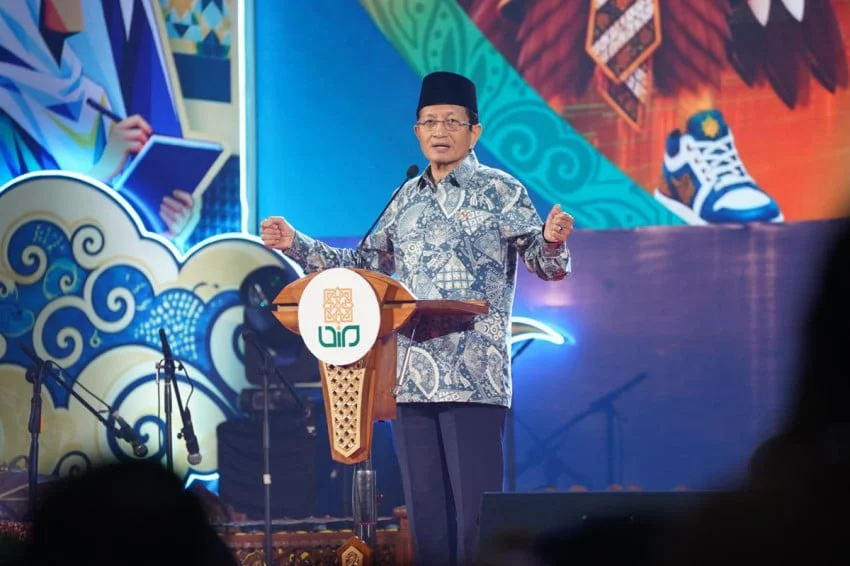
Minister of Religious Affairs Nasaruddin Umar officially inaugurated the 3rd Olympiad on Religion, Science, and Research (OASE) for State Islamic Religious Universities (PTKIN) on Wednesday, November 4, 2026. The prestigious academic event, hosted by the State Islamic University (UIN) Sunan Kalijaga in Yogyakarta, serves as a strategic platform for students across Indonesia’s Islamic higher education institutions to showcase their intellectual prowess, research capabilities, and commitment to scientific advancement. Bringing together representatives from 54 PTKINs nationwide, the event is designed to bridge the gap between traditional theological studies and modern scientific inquiry, fostering a new generation of Muslim scholars who are as technically proficient as they are morally grounded.
A Strategic Vision for Islamic Higher Education
During his keynote address, Minister Nasaruddin Umar emphasized that the resurgence of the Islamic world’s historical contributions to science—often referred to as the Islamic Golden Age—is contingent upon the contemporary mastery of science and technology. He challenged the academic community within the PTKIN ecosystem to transition from passive consumers of technology to active developers and innovators.
"If we are to reclaim the glory of scientific advancement in Islamic history, we must master modern knowledge. Mastery of science and technology is no longer optional; it is a fundamental requirement for the progress of the Ummah," the Minister stated. He underscored that the integration of rigorous research with a strong moral and ethical framework is what distinguishes Islamic higher education. By encouraging students to question, investigate, and apply their findings to solve real-world problems, the Ministry aims to position PTKINs as centers of excellence that contribute to national development.
Contextualizing OASE PTKIN: A Brief History
The OASE PTKIN initiative was established as a multi-year effort to modernize the curriculum and extracurricular focus of Indonesia’s Islamic universities. The inaugural event, OASE I, laid the foundation by introducing competitive categories in mathematics, physics, and chemistry alongside traditional Islamic studies. By the second iteration, the scope had expanded to include social sciences and humanitarian research.
The 2026 edition in Yogyakarta represents a significant milestone in this progression, featuring a more robust integration of interdisciplinary research. The event aims to standardize academic excellence across the 54 participating institutions, which range from Islamic Institutes (IAIN) to State Islamic Universities (UIN). This year’s competition includes categories such as sustainable energy, digital innovation, robotic engineering, and socio-religious research, reflecting the changing demands of the global workforce and the Indonesian government’s focus on technological hilirisasi (downstreaming).
Chronology of the 3rd OASE PTKIN 2026
The lead-up to the event involved a rigorous selection process that began in early 2026.
- January – March 2026: Internal institutional selections were conducted across the 54 participating PTKINs to identify the brightest research teams and individual competitors.
- April – June 2026: Regional qualification rounds were held to ensure a diverse representation of research themes, ranging from environmental sustainability to Islamic fintech solutions.
- August 2026: Announcement of the finalists and submission of research papers for expert panel review.
- November 4, 2026: The grand opening ceremony at UIN Sunan Kalijaga, marking the commencement of the final competition rounds, which will run through November 7.
- November 8, 2026: Closing ceremony and the awarding of the Minister of Religious Affairs’ Trophy.
The Intersection of Theology and Scientific Inquiry
The Minister’s remarks regarding the historical relationship between religion and science hold deep significance in the context of Indonesian education. Historically, figures such as Ibn al-Haytham, Al-Khwarizmi, and Avicenna demonstrated that scientific discovery was often driven by the pursuit of knowledge for the benefit of humanity—a concept deeply rooted in Islamic values.
Minister Nasaruddin noted that the modern PTKIN must recapture this spirit. The scientific focus of the 2026 OASE is not merely about competition; it is about addressing the practical needs of the Indonesian populace. Research presented at this year’s event includes projects on water purification technologies, healthcare delivery in rural areas, and the use of artificial intelligence to optimize agricultural yields—all of which align with the government’s broader goals for national prosperity.
Data-Driven Impact: PTKIN’s Growing Influence
Data from the Ministry of Religious Affairs indicates a steady increase in the enrollment and research output of PTKINs. Over the last five years, the number of academic publications originating from these institutions has seen a 22% year-on-year increase. Furthermore, the popularity of STEM-related programs within Islamic universities has grown as institutions modernize their laboratory facilities and forge international partnerships.
The shift toward science and research is a strategic response to the changing labor market. With the rapid digitization of the Indonesian economy, PTKIN graduates are increasingly being recognized for their ability to blend critical thinking with ethical decision-making. This unique value proposition has led to an increase in public interest in Islamic higher education, as noted by various ministry officials throughout the year.
Official Responses and Academic Perspectives
The hosting of the event at UIN Sunan Kalijaga has been met with positive reception from the academic community. The Rector of UIN Sunan Kalijaga expressed that the university is committed to providing a space where "tradition and modernization coexist." He noted that the influx of students from across the country facilitates a critical exchange of ideas, helping to break down geographic and socio-cultural barriers.
"The students arriving here are not just competitors; they are future policymakers and researchers," the Rector remarked. "By providing them with a platform like OASE, we are creating a network of intellectual cooperation that will define the future of Islamic scholarship in Indonesia."
Implications for National Development
The emphasis on "hilirisasi" or downstreaming, as mentioned by Minister Nasaruddin, is a crucial component of the current government’s economic agenda. In the context of higher education, this refers to the process of ensuring that academic research does not simply remain on library shelves but is translated into commercial or practical applications that add value to Indonesia’s natural resources and industries.
By directing PTKINs to focus on this area, the Ministry of Religious Affairs is signaling a departure from the purely theoretical research model. Instead, they are advocating for an innovation ecosystem where universities collaborate with the private sector to develop sustainable technologies. This could have profound implications for the Indonesian economy, particularly in sectors such as sustainable mining, bio-agriculture, and Islamic economic services.
Addressing Future Challenges
Despite the enthusiasm surrounding OASE 2026, the Minister acknowledged the challenges that remain. Funding for high-level research, access to cutting-edge laboratory equipment, and the need for more collaborative research between Islamic universities and general public universities remain primary hurdles.
The Ministry’s long-term plan involves a tiered investment strategy to improve the research infrastructure of PTKINs. This includes:
- Investment in Digital Infrastructure: Expanding high-speed internet and access to international research databases.
- Global Academic Networking: Facilitating fellowships and collaborative grants with universities in the Middle East, Europe, and Southeast Asia.
- Cross-Disciplinary Curriculum Reform: Encouraging students to take elective modules in data science, sustainability, and entrepreneurial management alongside their primary studies.
Conclusion: A Legacy of Inquiry
As the 3rd OASE PTKIN continues in Yogyakarta, the event stands as a testament to the evolving identity of Islamic higher education in Indonesia. It represents a bold attempt to reconcile the preservation of spiritual values with the relentless demands of scientific advancement. Minister Nasaruddin Umar’s message to the students—that they must be brave enough to ask questions and diligent enough to find answers—sets a new standard for the next academic year.
The success of this event will be measured not just by the medals awarded or the prestige of the winning institutions, but by the tangible impact of the research presented. As Indonesia moves toward 2030, the contribution of these young scholars will be instrumental in ensuring that the nation remains both religiously grounded and scientifically competitive in an increasingly complex global landscape. The 2026 OASE serves as a catalyst for this transformation, ensuring that the halls of PTKIN remain vibrant centers of discovery and progress for generations to come.