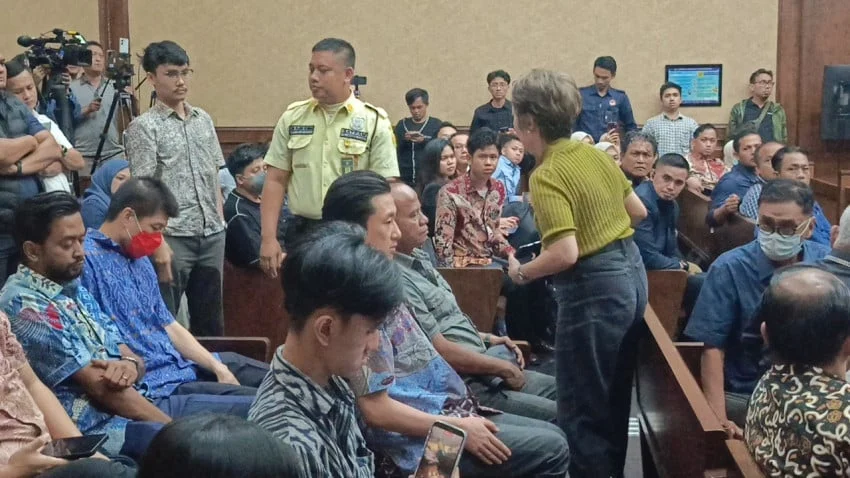
The corruption trial involving former Junior Attorney General for Special Crimes (Jampidsus) Febrie Adriansyah witnessed a tense disruption at the Corruption Court (Tipikor) in Jakarta on Monday, November 2, 2026. During the ongoing proceedings, two individuals were forcibly removed from the courtroom following allegations that they were acting as informants for witnesses scheduled to testify later in the trial. The incident highlights the high-stakes atmosphere surrounding the case, which involves serious charges of extortion and money laundering (TPPU) leveled against the high-profile former prosecutor.
The disruption occurred shortly before the continuation of the testimony of Ferry Yanto Hongkiriwang, commonly referred to as Ferry Boboho. The request for the removal of the two individuals was initiated by the defense team, led by attorney Febri Diansyah, who brought the matter to the attention of the presiding judges before the evening session commenced at 19:28 WIB.
The Allegations and Courtroom Confrontation
The defense team alleged that the two individuals had been systematically recording the proceedings and relaying specific details of the courtroom testimony to external parties—specifically to individuals who were slated to provide testimony in subsequent sessions. By monitoring the trial in real-time and communicating with prospective witnesses, these individuals were accused of undermining the integrity of the evidentiary process, a move the defense characterized as an attempt to synchronize witness statements or influence the course of the testimony.
Febri Diansyah presented what he claimed to be digital evidence during the hearing. This included logs from the WhatsApp messaging application, which allegedly demonstrated a direct line of communication between one of the expelled individuals and a witness identified as Lustje Dewi Kusuma. The defense argued that such coordination is a direct violation of standard judicial conduct and poses a significant risk to the veracity of the trial.
"There is an individual inside this courtroom who is reporting and recording every word spoken by the witness to another witness who is scheduled to be examined later," Febri Diansyah stated firmly during the session. The court responded promptly to the request to maintain the sanctity of the proceedings, leading to the immediate removal of the two individuals from the courtroom.
Background and Context of the Febrie Adriansyah Case
The trial of Febrie Adriansyah has become one of the most closely watched legal sagas in Indonesia’s recent history. The case revolves around allegations of systemic extortion and money laundering during his tenure as the Jampidsus at the Attorney General’s Office (AGO). Since the investigation began, the case has been marked by intense public scrutiny and debates regarding the impartiality of the judicial process.
The charges against Adriansyah, a former top-ranking official, have sparked significant discourse regarding the internal integrity of Indonesia’s law enforcement agencies. Supporters of the former official, as well as several legal observers, have previously voiced concerns that the charges against him are not only unfounded but potentially motivated by political interests or internal institutional rivalries. Recent headlines have suggested that some segments of the public and legal experts believe the indictment against Adriansyah is "forced," pointing to potential procedural irregularities in the investigation phase.
Chronology of the Legal Proceedings
The investigation into the alleged misconduct gained momentum early in 2026, leading to a formal indictment that shocked the legal establishment. Since the trial moved into the evidentiary phase, the court has heard from a variety of witnesses, including business figures and former subordinates.
The testimony of Ferry Yanto Hongkiriwang (Ferry Boboho) is considered a critical component of the prosecution’s strategy. As a witness central to the allegations of extortion, his testimony is expected to bridge the gap between the alleged financial transactions and the official actions taken by the defendant during his time in office. The disruption caused by the alleged "informants" on Monday evening underscores the sensitivity of this specific testimony and the pressure felt by both the prosecution and the defense as they navigate the complexities of the TPPU charges.

Judicial Integrity and Witness Tampering
The removal of the two individuals from the courtroom serves as a reminder of the strict protocols governing criminal trials in the Indonesian justice system. Under the Indonesian Criminal Procedure Code (KUHAP), the court has the authority to ensure that the environment remains free from outside interference. Witness tampering or the coordination of testimony is a serious offense that can lead to contempt of court charges or the disqualification of witness statements.
Legal analysts observing the trial noted that such disruptions are rare but not unprecedented in high-profile corruption cases. The defense’s decision to proactively identify and remove these individuals serves a dual purpose: it protects the integrity of their own cross-examination strategy and signals to the court that the defense is vigilant against any attempts to manipulate the narrative.
However, the incident also raises questions regarding the security and transparency of the trial. While the court must remain open to the public, the balance between public access and the prevention of witness coaching remains a delicate issue. The court’s decision to remove the individuals confirms that the judiciary recognizes the gravity of the defense’s claims and is committed to preventing external influence on the witnesses.
Implications for the Prosecution and Defense
The fallout from this incident may have long-term implications for the remainder of the trial. By exposing the alleged communication between the observers and future witnesses, the defense has effectively placed the prosecution’s remaining witnesses under a microscope. Should it be proven that other witnesses were coached or informed of the proceedings in real-time, the credibility of the entire prosecution case could be severely compromised.
For the prosecution, the challenge will be to demonstrate that their witnesses remain independent and that their statements are consistent with the objective evidence gathered during the investigation. For the defense, the incident provides a strategic opportunity to argue that the prosecution’s case relies on orchestrated or coerced testimonies rather than verified facts.
As the trial progresses, the court will likely implement stricter monitoring of the gallery to prevent further disruptions. The incident on Monday evening has added another layer of complexity to an already convoluted legal battle, further intensifying the anticipation for the upcoming testimony of Lustje Dewi Kusuma and other key witnesses.
Broader Impact on the Legal System
The case of Febrie Adriansyah serves as a litmus test for the independence of the Indonesian judiciary. As the country continues to reform its legal institutions, the transparency and fairness of trials involving high-level government officials are paramount to public trust. The allegations of "forced" indictments, coupled with the recent courtroom disruption, reflect the deep divisions and high stakes surrounding the fight against corruption in the country.
Observers expect that the court will continue to hold sessions with heightened security measures. Whether the incident on November 2 will result in formal charges against the two expelled individuals remains to be seen. In the meantime, the legal team for the defense has vowed to continue its efforts to ensure that the trial remains a fair and unbiased process, free from the influence of external actors.
The trial is expected to continue throughout the coming weeks, with further witnesses expected to testify regarding the financial flows and administrative decisions that underpin the extortion and TPPU charges. As the court moves closer to the deliberation phase, the focus will remain on the reliability of the evidence presented and the ability of the legal system to withstand the pressures of public and political scrutiny.
The events of this past Monday have underscored that in the realm of high-stakes litigation, the courtroom is not merely a place for the presentation of facts, but a battleground where strategy, vigilance, and the integrity of the judicial process are constantly being tested. The outcome of the Febrie Adriansyah case will undoubtedly resonate through the halls of Indonesia’s justice system for years to come, serving as a landmark case for the handling of corruption charges against high-ranking state officials.