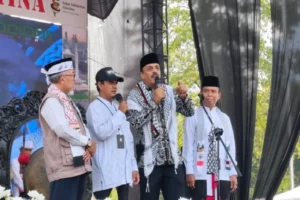
The decision by the Indonesian National Police to relieve AKBP Andika Dharma Sena of his duties as the Chief of the Sukoharjo Police Department has drawn widespread attention and support from prominent religious institutions. The leadership of the Indonesian Ulema Council (MUI) has publicly commended the firm disciplinary action taken by the highest levels of law enforcement following a deeply controversial police raid and search operation conducted at the Hamalatul Qur’an Girls Islamic Boarding School located in Sukoharjo, Central Java.
The high-profile incident, which triggered considerable public outcry, has reignited critical nationwide discussions regarding the appropriate protocols, boundaries, and humane approaches that law enforcement personnel must maintain when operating within sensitive community spaces, particularly educational and religious institutions. As the investigation into the conduct of the officers involved continues, civil society and religious leaders have emphasized the paramount importance of preserving public trust, institutional accountability, and the fundamental sense of safety and security for students, educators, and the broader community.
Background and Context of the Controversy
Educational institutions, particularly Islamic boarding schools or pesantren, hold a revered and culturally sensitive position within Indonesian society. For generations, these institutions have served as vital centers for moral instruction, community development, and religious scholarship. Given their unique status, any law enforcement action or intervention within the physical boundaries of a pesantren requires an exceptionally high degree of tact, proportionality, and adherence to humane standards.
The controversy in Sukoharjo began when local law enforcement units executed a sudden search and raid operation at the Hamalatul Qur’an Girls Islamic Boarding School. While the precise operational justifications cited by the local police initially pointed toward ongoing investigative procedures, the manner inWhich the operation was carried out immediately drew intense criticism. Eyewitness accounts, community reports, and preliminary evaluations suggested that the tactical approach lacked the necessary sensitivity required when dealing with a residential educational facility housing young female students.
The heavy-handed nature of the raid created an atmosphere of fear, confusion, and distress among the students, teachers, and administrators. Parents of the enrolled students expressed deep alarm over the psychological impact of the police presence on the young residents. As details of the operation circulated across local media and digital platforms, public reaction shifted rapidly from confusion to outrage. Civil society organizations, legal aid groups, and religious figures argued that the police action was disproportionate and violated the basic tenets of community policing, which prioritizes protection, dialogue, and de-escalation over intimidation.
Chronology and Escalation of Events
The unfolding crisis followed a rapid timeline that ultimately compelled intervention from the national headquarters of the Indonesian National Police (Polri).
In the immediate aftermath of the raid, local community leaders and representatives from the Hamalatul Qur’an Islamic Boarding School attempted to seek clarification from the Sukoharjo Police regarding the legal basis and execution methods of the search. However, the initial explanations provided by local officials failed to appease the growing public dissatisfaction.
As local tension mounted, regional religious figures and educational advocates escalated the matter to provincial and national authorities, including the Indonesian Ulema Council. Videos and testimonies detailing the distress experienced by the students during the operation began to circulate widely, creating significant pressure on law enforcement leadership to address the situation transparently.
Recognizing the potential for the incident to severely damage relations between the police force and the public—particularly the religious community—national police leadership acted decisively. Chief of the Indonesian National Police, General Suyudi Ario Seto, initiated an internal review to evaluate the conduct of the Sukoharjo Police leadership and the specific personnel involved in the raid.
The investigation swiftly concluded that the operational approach violated internal guidelines regarding community engagement and human rights-based policing. Consequently, an official decision was handed down to relieve AKBP Andika Dharma Sena of his command as the Sukoharjo Police Chief, alongside disciplinary evaluations for several other officers implicated in the execution of the search. This decisive move was designed to signal a zero-tolerance policy toward operational misconduct and heavy-handed tactics in sensitive environments.
Official Responses and Statements from the Indonesian Ulema Council
The General Secretary of the Indonesian Ulema Council (MUI), Amirsyah Tambunan, issued an official statement addressing the disciplinary actions taken by the national police leadership. Speaking in Jakarta, Amirsyah expressed his appreciation for the prompt response demonstrated by General Suyudi Ario Seto in holding the responsible officers accountable.
Amirsyah emphasized that law enforcement agencies bear a profound constitutional and moral responsibility to provide protection, shelter, and reassurance to the public. He noted that the core philosophy of modern policing in Indonesia relies heavily on a cooperative partnership between law enforcement and the community, encapsulated by the principle of the police standing alongside the people to maintain safety and order.
"Police Together with the Community forms an essential part of nurturing society, ensuring that citizens feel safe, secure, and comfortable. However, the actions executed by the police personnel in Sukoharjo produced a sense of deep discomfort and distress among the public," Amirsyah stated.
The MUI Secretary-General further underscored that the incident must serve as a critical learning moment for all law enforcement personnel across the archipelago. He stressed that any investigation or legal enforcement action involving civilian populations—especially vulnerable groups within educational settings—must prioritize humanitarian considerations above standard tactical rigidity. By taking swift corrective action, the national leadership has taken an important step toward preserving public trust, which remains the cornerstone of effective law enforcement.
Broader Appeals for Calm and Regulatory Compliance
In addition to evaluating the conduct of the police, MUI utilized the platform to address the broader community and stakeholders within the educational sector. Amirsyah issued a direct appeal to the public, urging citizens to remain calm, maintain social solidarity, and avoid falling victim to provocation or misinformation disseminated by opportunistic third parties. Maintaining peace, social stability, and mutual respect remains a shared duty for all elements of society during periods of tension.
Simultaneously, the council directed an important reminder toward the administrators and managers of educational institutions, particularly Islamic boarding schools and Quranic memorization centers (tahfiz Al-Qur’an). MUI emphasized the necessity for all educational providers to strictly adhere to existing regulatory frameworks, administrative procedures, and statutory laws governing the establishment and operation of educational facilities in Indonesia. Ensuring full compliance with legal requirements not only safeguards the operational continuity of these institutions but also protects them from unnecessary scrutiny or conflict with state authorities.
Analysis of Implications for Law Enforcement and Society
The Sukoharjo incident and its subsequent administrative fallout carry significant implications for the future of policing in Indonesia. For years, the National Police has pursued comprehensive internal reforms aimed at modernizing its operational philosophy under the framework of proactive, humane, and transparent policing. Despite these institutional commitments, individual lapses in judgment at the regional level continue to pose severe challenges to the overarching reform agenda.
The swift removal of the Sukoharjo Police Chief illustrates a growing sensitivity at the highest levels of Polri toward institutional accountability. In the digital age, operational misconduct can instantly amplify community grievances, eroding years of trust-building initiatives between law enforcement agencies and grassroots communities. By acting decisively against commanders who fail to apply humane approaches, national police leadership seeks to deter similar occurrences in other jurisdictions.
Furthermore, the episode highlights the delicate balance required between state law enforcement authority and the autonomy of religious and educational institutions. Pesantrens occupy a unique space where community trust and cultural reverence intersect. Any perceived overreach by secular authorities within these spaces is frequently interpreted not merely as an administrative error, but as an affront to religious dignity. Consequently, police operations in such environments demand exceptional intelligence, precision coordination, and proportional tactical execution.
Looking forward, the incident is expected to prompt a thorough review of standard operating procedures (SOPs) governing searches and investigations within educational and religious facilities nationwide. Enhanced training programs focusing on human rights, cultural sensitivity, and psychological impact assessment may see accelerated integration into police academy curricula and in-service training modules.
Ultimately, the resolution of the Sukoharjo case demonstrates that institutional accountability and public dialogue remain vital tools for healing community divides. As local stakeholders continue to navigate the aftermath of the event, the shared commitment of religious leaders, law enforcement agencies, and civil society to uphold justice, human dignity, and the rule of law will be essential in preventing future conflicts and fostering a harmonious society.