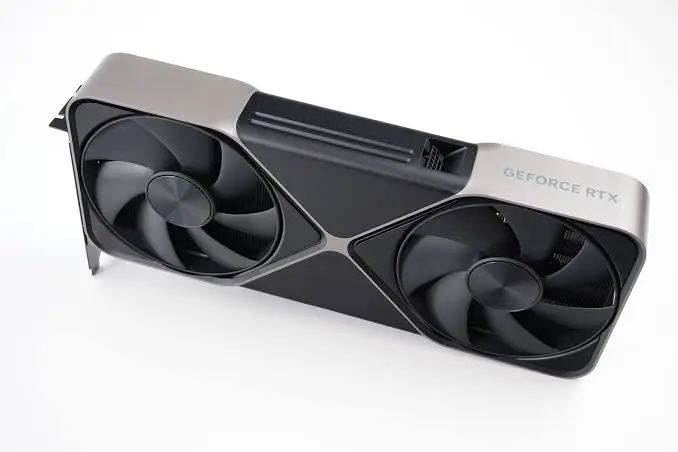
The global high-end graphics processing unit market is facing yet another severe supply crunch, as the NVIDIA GeForce RTX 5080 has begun disappearing from major retail channels and official storefronts in the United States. Following the widespread supply shortages of NVIDIA’s flagship RTX 5090 earlier in October 2026, the RTX 5080 is now exhibiting identical scarcity patterns. Industry observers and hardware enthusiasts noted that the card has been entirely removed from the listings of the official NVIDIA Marketplace in the US, with partner cards from major original equipment manufacturers (OEMs) such as ASUS similarly missing from official distribution pipelines.
This sudden evaporation of retail inventory has triggered an immediate and aggressive surge in market pricing. While the official Manufacturer’s Suggested Retail Price (MSRP) for the RTX 5080 stood at a baseline of $999 at launch, secondary markets and remaining independent retailers across North America are now listing the high-end GPU at inflated prices exceeding $2,000. With the RTX 5080 no longer listed on the NVIDIA Marketplace—leaving the RTX 5070 Ti as the most powerful graphics card currently visible on the platform—consumers and system builders are grappling with a rapidly deteriorating hardware availability landscape.
Chronology of the High-End GPU Shortage
The current supply crisis affecting the NVIDIA GeForce RTX series did not happen overnight; rather, it is the culmination of sustained supply chain pressures, soaring demand for accelerated computing components, and shifting production priorities by silicon foundries.
The trajectory of the current hardware shortage began taking shape earlier in the product lifecycle:
- Early Launch Phase: NVIDIA introduced the RTX 50-series lineup with high expectations, positioning the RTX 5080 as a premier high-end option for enthusiasts seeking elite 4K gaming performance and advanced ray-tracing capabilities at a competitive $999 MSRP.
- October 2026: The absolute flagship of the generation, the RTX 5090, suffered an acute inventory collapse, disappearing from primary retail and official direct-to-consumer channels due to overwhelming global demand and constrained packaging capacity.
- Late 2026: Supply constraints cascaded down to the second-tier flagship. By late November and early December 2026, the RTX 5080 16GB variant began vanishing from the NVIDIA Marketplace in the US and major American electronic retailers.
- December 2026 (Projected Transition): Industry supply chain reports indicate that NVIDIA has effectively burned through its initial allocation of the standard 16GB GPU silicon dies for the RTX 5080, with remaining global reserves projected to last only a couple of months before being entirely phased out.
Regional Availability: The Situation in Global Markets
While the United States market faces a near-total blackout of official RTX 5080 inventory, the situation in international regions presents a more fragmented picture. In Southeast Asia, specifically Indonesia, the RTX 5080 remains searchable across prominent e-commerce platforms such as Shopee and Blibli, though consumers face steep financial hurdles.
Market tracking across Indonesian digital storefronts reveals that while units are still physically present, pricing has heavily deviated from baseline expectations. Entry-level models begin at roughly Rp 34.9 million, while advanced custom-cooled variants from premium tier-one partners regularly command between Rp 40 million and Rp 50 million. This price disparity highlights how localized logistics, import duties, and regional distributor markups continue to sustain a fragile supply stream, forcing buyers to carefully vet multiple vendors to secure a unit without falling victim to predatory scalping.
Market Implications and Economic Analysis
The rapid depletion of standard RTX 5080 inventory underscores several underlying vulnerabilities in the high-performance consumer hardware ecosystem. Economically, the divergence between the baseline $999 MSRP and actual street prices surpassing $2,000 illustrates the persistent imbalance between high consumer demand and constrained component manufacturing yields.
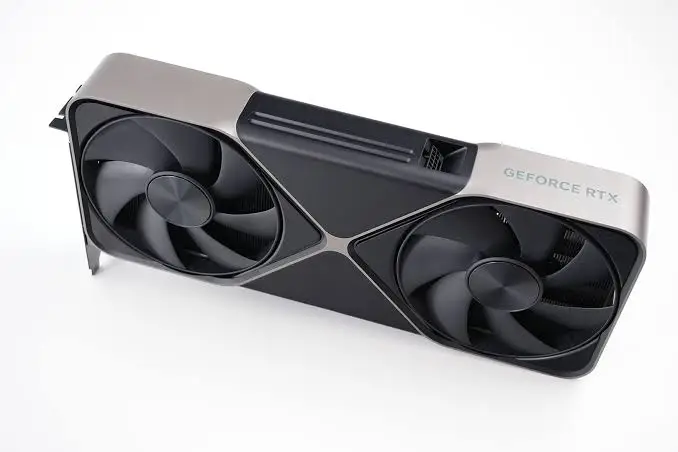
From an analytical standpoint, this supply shock impacts several key demographics:
- PC Enthusiasts and Gamers: High-refresh-rate 4K gaming and heavy path-tracing workloads are becoming increasingly inaccessible for mainstream enthusiasts due to prohibitive hardware costs and the lack of readily available stock at MSRP.
- Content Creators: Professionals relying on CUDA cores and heavy rendering pipelines are forced to delay system upgrades or pay extreme premiums to secure necessary workstation upgrades.
- The Secondary Market: The vacuum left by official retailers has once again empowered scalpers and opportunistic resellers, distorting the true market value of cutting-edge silicon.
Rumors of the GeForce RTX 5080 24GB Variant
Amidst the growing supply vacuum and widespread consumer frustration, new supply chain intelligence suggests that NVIDIA is actively preparing a strategic pivot. Industry leaks indicate that the company is developing a revised iteration of the high-end card: the GeForce RTX 5080 equipped with 24GB of VRAM.
This proposed specification represents a substantial 50% increase in frame buffer capacity compared to the existing 16GB model. According to preliminary industry reports, NVIDIA could officially unveil and release this high-capacity variant as early as December 2026 or January 2027. The timing aligns closely with reports that the current 16GB silicon allocation is nearing total exhaustion.
The introduction of a 24GB VRAM configuration on an xx80-tier card addresses a growing technical demand in both the gaming and professional sectors. Modern AAA titles running uncompressed high-resolution asset packs, coupled with complex ray-tracing and path-tracing algorithms, increasingly push past the 16GB threshold at 4K resolution. Furthermore, a 24GB framebuffer serves a critical role for local artificial intelligence workflows. Developers, researchers, and hobbyists utilizing consumer hardware for local LLM (Large Language Model) deployment will benefit significantly from the expanded memory pool, which reportedly enables the execution of quantized AI models featuring up to 27 billion parameters without offloading to slower system memory.
Industry Speculation: SUPER Branding or Silent Refresh?
As details regarding the 24GB variant circulate within hardware communities, a central question remains regarding its official nomenclature and market positioning. Industry analysts are currently divided on whether this upcoming hardware revision will carry the traditional "SUPER" moniker—historically used by NVIDIA to denote mid-generation refreshes with upgraded specifications—or if it will launch as an entirely distinct SKU with a redesigned memory bus and modified power profile.
To date, NVIDIA has maintained a strict silence regarding both the discontinuation of the standard RTX 5080 16GB model and the rumored launch of a 24GB successor. Company representatives have not issued official statements addressing the empty listings on the NVIDIA Marketplace or the inflating prices across global retail networks.
As the hardware community awaits official confirmation, the transition period between the fading 16GB generation and the anticipated 24GB successor marks a turbulent chapter for the PC hardware market. For consumers navigating this landscape, caution and patience remain paramount as the industry adapts to shifting production cycles and the evolving demands of next-generation gaming and local artificial intelligence computing.