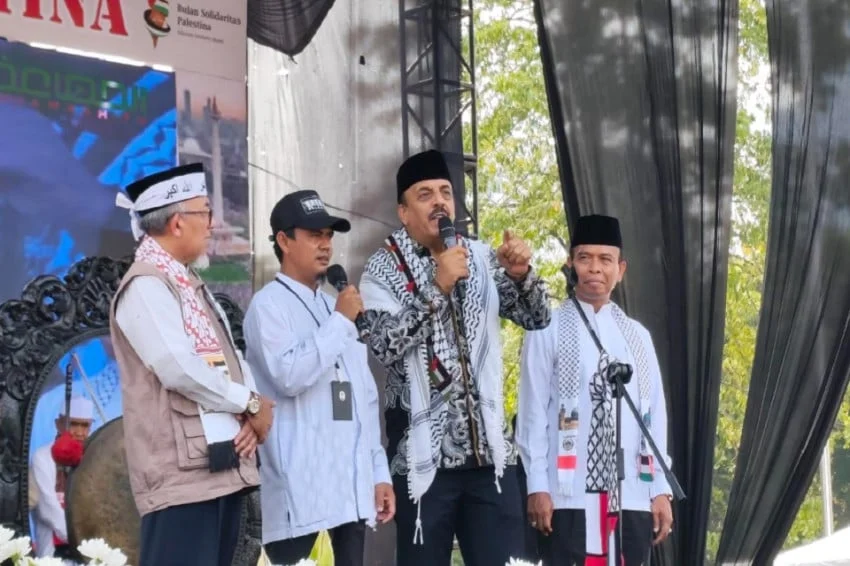
The diplomatic relationship between Indonesia and Palestine has once again taken center stage on the international platform following recent remarks by the Palestinian Ambassador to Indonesia, H.E. Abdulfattah A.K. Al-Sattari. Speaking in Jakarta, the ambassador addressed the complex geopolitical landscape surrounding international initiatives for Palestinian statehood, specifically responding to discussions regarding the United Nations and the Board of Peace (BoP). While international bodies continue to debate the framework and participation of member states in various multilateral security and humanitarian initiatives, Ambassador Al-Sattari emphasized that Palestine maintains absolute confidence in Indonesia’s foreign policy acumen. He commended Jakarta’s strategic capabilities, noting that Indonesian diplomacy remains consistently calculated, highly effective, and deeply committed to the self-determination and ultimate independence of the Palestinian people.
The statement comes at a crucial juncture for global diplomacy, as various international actors navigate the multifaceted crises affecting the Middle East. Indonesia, long recognized as a steadfast and vocal supporter of Palestinian rights within both regional and global forums such as the United Nations, the Organization of Islamic Cooperation (OIC), and the Non-Aligned Movement, continues to balance multilateral obligations with its foundational constitutional mandate to help abolish colonialism across the globe.
Context and Background of the Board of Peace Controversy
The discussion surrounding the Board of Peace (BoP) and Indonesia’s involvement has sparked considerable debate among international relations analysts and policymakers. The BoP, conceived as a platform to address protracted regional conflicts and foster diplomatic engagement, has recently faced scrutiny from various international bodies, including calls from certain United Nations quarters regarding the alignment of member states’ participations.
However, during his address at the Plaza Selatan Monas in Jakarta, Ambassador Al-Sattari downplayed the immediate operational significance of the BoP in its current iteration. He characterized the current institutional standing of the board as having lost its primary efficacy and focal point, largely due to shifting geopolitical priorities among major global powers. According to the ambassador, the organization’s capability to directly influence or alleviate the plight of the Palestinian population has diminished significantly.
This reduction in effectiveness, the ambassador explained, is largely attributed to the diversion of attention and resources by key Western actors—most notably the United States. With Washington heavily preoccupied with escalating and concurrent crises in multiple regional hotspots, including Iran, Yemen, Libya, and Lebanon, multilateral initiatives like the BoP have struggled to maintain a consistent and actionable focus on the core issues affecting the Middle East, foremost among them the ongoing Israeli occupation and the struggle for Palestinian statehood.
Indonesia’s Diplomatic Dexterity and Strategic Autonomy
Despite the complexities surrounding international administrative bodies and external pressures, Ambassador Al-Sattari expressed profound admiration for Indonesia’s diplomatic positioning. He noted that Jakarta exercises a high degree of strategic autonomy, ensuring that its foreign policy decisions regarding the Middle East are made with careful consideration of long-term objectives rather than being swayed by transient geopolitical pressures.
"Ya, tentu keputusan Indonesia soal BoP ini tentu saya mengomentarinya adalah kembali kepada kebijakan Indonesia itu sendiri," stated Al-Sattari, emphasizing that while the decision to engage with or withdraw from such platforms remains strictly within the sovereign purview of the Indonesian government, the underlying rationale of Jakarta’s foreign ministry is consistently anchored in constructive engagement.
The ambassador lauded Indonesian diplomats for their sophisticated approach to international law and negotiation. He highlighted that Indonesia possesses a unique capability to navigate the intricate web of global politics, maintaining constructive dialogues with various international stakeholders while steadfastly refusing to compromise on its core principle of supporting Palestinian independence. In the view of the Palestinian Embassy in Jakarta, Indonesia’s leadership understands the nuances of international diplomacy better than most, utilizing both public advocacy and quiet bilateral channels to advance the humanitarian and political rights of Palestinians.
The Broader Landscape of Solidarity: The 2026 Solidarity Month
The ambassador’s remarks coincided with a series of high-profile public events in the Indonesian capital, marking the commencement of the 2026 Palestinian Solidarity Month. Indonesia has consistently demonstrated that its support for Palestine extends far beyond governmental declarations, permeating deep into civil society, religious organizations, and grassroots movements.
The calendar for the 2026 solidarity initiatives features a wide array of public engagements designed to keep the Palestinian cause visible in the national and international consciousness. Among the prominent agenda items are the Solidarity Run, cultural exhibitions, academic seminars, and a massive long-march culminating at the historic Istiqlal Mosque in central Jakarta. These events draw tens of thousands of participants from diverse backgrounds, reflecting a rare bipartisan and cross-cultural consensus within Indonesia regarding the moral imperative of supporting Palestinian sovereignty.
Civil society organizations in Indonesia, ranging from humanitarian NGOs to major religious bodies such as Nahdlatul Ulama (NU) and Muhammadiyah, work in tandem with state institutions to channel aid, raise awareness, and maintain diplomatic pressure on international forums. This synergy between the state and civil society creates a robust ecosystem of support that Ambassador Al-Sattari frequently cites as a model of international solidarity.
Chronology of Indonesia-Palestine Diplomatic Relations
To understand the depth of the current relationship, it is essential to examine the historical trajectory linking Jakarta and Ramallah. Indonesia’s support for Palestinian independence is rooted in its own historical struggle against colonialism.
- 1945–1955: Following its declaration of independence in 1945 and the historic Asian-African Conference in Bandung in 1955, Indonesia consistently advocated for the rights of colonized nations, establishing the ideological foundation for its future foreign policy stance on Palestine.
- 1988: Following the Palestinian Declaration of Independence proclaimed by the Palestine Liberation Organization (PLO) in Algiers, Indonesia was among the earliest nations to officially recognize the State of Palestine, fostering formal bilateral ties.
- 1993: Indonesia established official diplomatic relations with the Palestinian Authority, facilitating the opening of the Embassy of the State of Palestine in Jakarta.
- 2000s–Present: Indonesia has utilized its positions in various international organizations—including serving multiple terms as a non-permanent member of the United Nations Security Council and participating actively in the Human Rights Council—to champion Palestinian resolutions, condemn illegal settlements, and advocate for humanitarian access.
- 2019–2021: Indonesia spearheaded numerous diplomatic initiatives at the UN General Assembly, pushing back against unilateral measures that threatened the two-state solution and demanding accountability for violations of international humanitarian law.
- 2024–2026: Amid escalating humanitarian crises in Gaza and the West Bank, Indonesia has significantly ramped up its financial contributions, medical deployments, and educational scholarships for Palestinian students, while simultaneously defending Palestinian rights in the International Court of Justice (ICJ).
Analysis of Implications: Navigating Multilateral Pressures
The commentary by Ambassador Al-Sattari carries broader implications for how middle powers navigate the competing pressures of traditional Western-led alliances and emerging multipolar realities. As international institutions face crises of legitimacy and effectiveness, nations like Indonesia are increasingly called upon to reassess their commitments to auxiliary boards and specialized diplomatic mechanisms.
From a policy analysis perspective, Indonesia’s measured response to suggestions regarding the Board of Peace demonstrates a mature approach to statecraft. Rather than engaging in reactive rhetoric, Jakarta continues to prioritize initiatives that yield tangible outcomes for peace and security. Analysts point out that Indonesia’s foreign policy—historically guided by the principle of bebas-aktif (independent and active)—allows the nation to cooperate with global superpowers while retaining the sovereign right to disengage from frameworks that fail to deliver equitable justice or meaningful resolutions to protracted conflicts.
Furthermore, the endorsement from the Palestinian envoy reinforces the credibility of Indonesia’s diplomatic corps. At a time when global consensus on human rights and international law is frequently strained by realpolitik, the alignment between Jakarta’s strategic maneuvers and Palestinian aspirations serves as a stabilizing factor for regional diplomacy in Southeast Asia and the Middle East alike.
Official Responses and Future Outlook
While Indonesian Ministry of Foreign Affairs officials continue to review various multilateral engagements in light of evolving UN frameworks, the overarching policy remains firmly committed to the realization of a sovereign Palestinian state based on pre-1967 borders, with East Jerusalem as its capital.
Ambassador Al-Sattari concluded his remarks by expressing absolute trust in the wisdom of the Indonesian government and people. He reiterated that regardless of administrative adjustments or debates surrounding auxiliary international bodies, the bedrock of the Indonesia-Palestine partnership remains unshakeable. As the international community continues to grapple with the complexities of Middle Eastern geopolitics, Jakarta’s calibrated diplomacy and unwavering solidarity ensure that the Palestinian cause retains a vital, principled voice on the global stage.