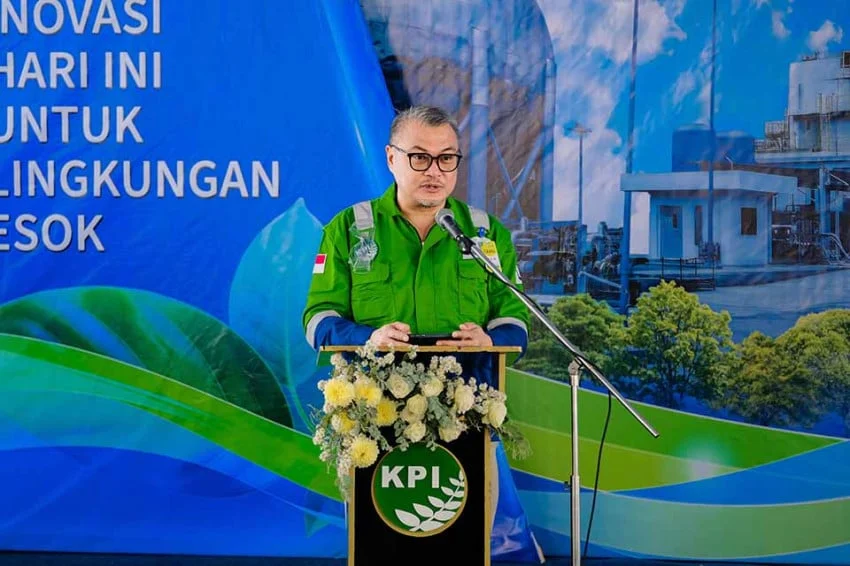
The landscape of Indonesian petrochemical infrastructure and environmental engineering reached a significant milestone with the official inauguration of a state-of-the-art carbon dioxide (CO2) liquefaction facility in Bontang, East Kalimantan. Developed by PT Kaltim Parna Industri (KPI), a prominent petrochemical business unit under the umbrella of the Parna Raya Group, the project was executed through a comprehensive engineering, procurement, and construction (EPC) contract awarded to PT Tripatra Engineers and Constructors (Tripatra). Officially inaugurated on October 22, 2026, the facility represents a pioneering leap forward in regional industrial capabilities, standing as the largest CO2 liquefaction plant in Indonesia, as well as the very first of its kind in Kalimantan and the broader eastern region of the archipelago.
Designed with a robust capacity of 300 metric tons per day, the facility addresses both environmental management and economic diversification by capturing industrial byproducts and transforming them into high-purity, commercially viable liquid carbon dioxide (LCO2). This landmark project underscores the growing convergence between heavy industry and sustainability practices in Southeast Asia’s largest economy, demonstrating how traditional chemical manufacturing can evolve to meet modern circular economy standards.
Project Background and Technological Integration
The genesis of the Bontang CO2 liquefaction facility lies in the optimization of industrial efficiency at PT Kaltim Parna Industri’s core ammonia production operations. Ammonia manufacturing inherently generates significant quantities of carbon dioxide as a gaseous byproduct. Historically, managing and mitigating these industrial emissions presented substantial operational challenges and environmental burdens. However, through the strategic integration of advanced Carbon Capture and Utilization (CCU) technologies, KPI and Tripatra have successfully converted a waste stream into a valuable resource.
The CCU framework deployed at the Bontang plant involves capturing the gaseous CO2 generated during ammonia synthesis, followed by rigorous purification and subsequent liquefaction. The resulting LCO2 meets stringent international and domestic quality benchmarks, making it fully certified for diverse industrial applications, including the stringent requirements of the food and beverage sector, where high-purity carbonation is essential.
By implementing this advanced technology, KPI not only enhances its operational value chain but also actively mitigates its environmental footprint. Rather than releasing greenhouse gases into the atmosphere or leaving them unutilized, the facility locks the carbon into commercial products, exemplifying a scalable model for industrial decarbonization in emerging markets.
Chronology and Execution of the EPC Mandate
The realization of Indonesia’s premier eastern CO2 liquefaction plant was the result of a meticulously managed timeline characterized by complex engineering feats and close cross-sector collaboration. While the facility reached its culmination with the inauguration ceremony on October 22, 2026, the journey began years prior with strategic feasibility studies, environmental impact assessments, and the awarding of the EPC contract to Tripatra.
Tripatra, a recognized leader in engineering-based solutions within Indonesia, assumed full responsibility for the engineering, procurement, and construction phases of the project. Operating in the challenging industrial ecosystem of East Kalimantan, the engineering teams faced logistical and technical hurdles, ranging from the transportation of heavy specialized cryogenic equipment to the seamless integration of the new liquefaction unit with KPI’s existing ammonia production infrastructure.
Throughout the construction phase, strict safety protocols and rigorous quality assurance measures were enforced to adhere to international engineering standards. The successful completion of the plant on schedule reflects the extensive expertise of Tripatra in managing mega-projects within the oil, gas, petrochemical, and renewable energy sectors. The synergy between KPI’s operational insights and Tripatra’s technical prowess ensured that the facility was commissioned smoothly, culminating in the historic launch event in late October 2026.
Leadership Perspectives and Strategic Vision
The successful delivery of the Bontang facility drew commendations from executive leadership across both organizations, who emphasized the strategic importance of the project for regional development and national industrial resilience.
Raymond Naldi Rasfuldi, President Director and CEO of Tripatra Engineers and Constructors, expressed deep gratitude for the trust bestowed upon his company by KPI. He highlighted the magnitude of the achievement not only for the corporate entities involved, but for the national industrial landscape.
"This trust represents both a responsibility and a pride for us to jointly support the business development of KPI," stated Raymond Naldi Rasfuldi. "As a contractor providing engineering-based solutions, Tripatra is proud to support KPI in realizing the largest CO2 liquefaction plant facility in Indonesia, as well as being the first in the island of Kalimantan and the eastern region of Indonesia."
Rasfuldi further underscored that the project’s success was not an isolated corporate achievement, but the direct result of collective labor, resilience, and unwavering commitment from all stakeholders involved. "This achievement is the result of joint work, perseverance, and the commitment of the entire KPI team, Tripatra, and the partners involved," he added.
Representatives from the Parna Raya Group and KPI echoed these sentiments, noting that the diversification into liquid carbon dioxide production aligns seamlessly with the conglomerate’s long-term vision of sustainable growth, resource optimization, and diversification into high-value downstream petrochemical products.
Broader Industry Implications and Economic Impact
The commissioning of the Bontang CO2 liquefaction facility carries profound implications for the Indonesian industrial sector, particularly regarding the adoption of Carbon Capture and Utilization (CCU) methodologies. As global markets increasingly demand low-carbon supply chains and environmentally responsible manufacturing processes, Indonesian enterprises are under mounting pressure to demonstrate tangible sustainability metrics.
By establishing the largest facility of its kind in the nation, KPI and Tripatra have set a new benchmark for how domestic petrochemical producers can repurpose greenhouse gas emissions. The availability of locally produced liquid carbon dioxide in Kalimantan and eastern Indonesia significantly reduces logistical costs and supply chain vulnerabilities for regional industries. Previously, businesses in these regions requiring food-grade or industrial-grade LCO2 often had to rely on shipments from Java or international imports, incurring high transportation expenses and carbon footprints associated with long-haul freight.
Furthermore, the operational success of the Bontang plant is expected to serve as a catalyst for other heavy industries across Indonesia. Fertilizer plants, refineries, and cement manufacturers—sectors similarly characterized by high process-related CO2 emissions—are closely watching the integration of CCU technologies as a viable pathway toward compliance with national emission reduction targets.
Alignment with National Sustainability and Climate Goals
Indonesia has committed to ambitious climate action targets under its Enhanced Nationally Determined Contribution (ENDC) and its long-term strategy for low carbon and climate resilience. While the primary focus of these policies often centers on renewable energy transition and forestry management, industrial decarbonization remains a critical pillar for achieving net-zero emissions by 2060 or sooner.
Projects like the Bontang CO2 liquefaction facility demonstrate that industrial growth and environmental stewardship are not mutually exclusive. Through the deployment of CCU technologies, carbon emissions are intercepted at the smokestack or reaction vessel, effectively decoupling industrial output from unchecked atmospheric release. While CCU does not permanently sequester carbon in geological formations in the manner of Carbon Capture and Storage (CCS), it provides an essential commercial bridge, keeping carbon circulating in productive industrial use while reducing the demand for newly synthesized or extracted industrial gases.
Economic Viability and Market Demand for Liquid CO2
The commercial viability of the Bontang facility is underpinned by robust domestic and regional demand for liquid carbon dioxide. LCO2 is a versatile commodity utilized across a wide spectrum of industries. In the food and beverage sector, it is indispensable for carbonating beverages, flash-freezing perishable foods, and maintaining cold chains during food transportation (using dry ice). In the manufacturing and metallurgical sectors, LCO2 serves as a shielding gas in welding, a cooling agent in machining, and a pH-adjustment agent in wastewater treatment.
Moreover, the oil and gas sector frequently utilizes carbon dioxide for enhanced oil recovery (EOR) projects, although the high-purity specifications of the Bontang plant are primarily targeted at commercial, food-grade, and general industrial applications. By securing a reliable, domestic source of LCO2 in East Kalimantan, regional manufacturers gain a competitive edge, insulating themselves from global supply chain disruptions and volatile shipping costs.
Future Outlook for Engineering and Petrochemical Collaboration
As the Bontang CO2 liquefaction facility transitions from its inaugural phase into full commercial operations, industry analysts anticipate that the partnership between Tripatra and KPI will serve as a blueprint for future infrastructure projects in Indonesia. The successful execution of an EPC contract of this complexity highlights the maturation of domestic engineering firms in handling sophisticated green-tech and brown-tech integration projects.
With Indonesia positioning itself as a burgeoning hub for sustainable industrial development—bolstered by government incentives for green technology adoption and stringent environmental oversight—the demand for specialized engineering firms capable of delivering CCU and energy-efficiency solutions is projected to soar. Tripatra’s successful delivery of the Bontang plant firmly positions the company at the forefront of this industrial evolution.
In conclusion, the inauguration of the Bontang carbon dioxide liquefaction facility marks a watershed moment for Indonesian petrochemical engineering. By combining technical excellence, strategic vision, and a steadfast commitment to sustainability, PT Tripatra Engineers and Constructors and PT Kaltim Parna Industri have successfully transformed an environmental challenge into an economic asset. As the facility scales up its operations to meet the diverse demands of the food, beverage, and industrial sectors, it stands as a testament to what can be achieved when industrial innovation aligns with environmental responsibility.