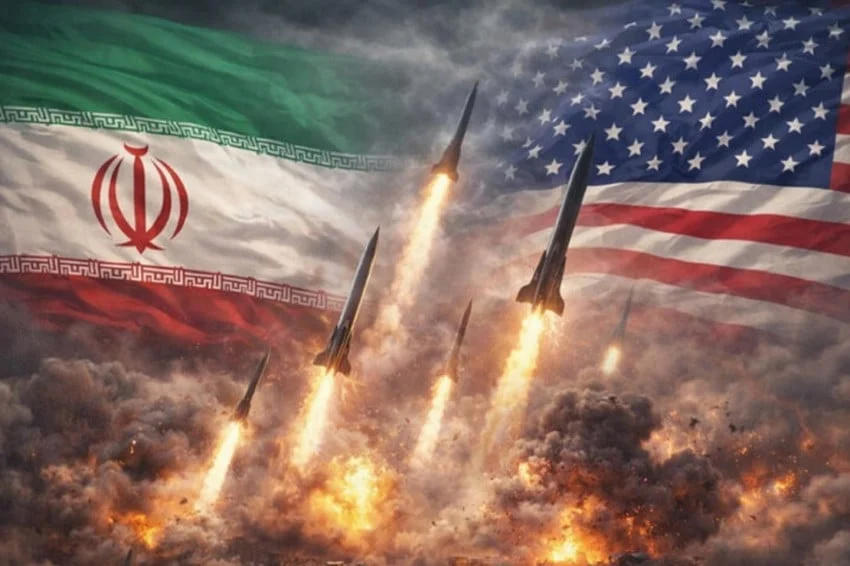
Tehran is currently navigating a period of profound strategic uncertainty, as senior officials signal that the nation’s long-standing prohibition against the development of nuclear weapons may be subject to revision. The discourse, which has gained traction within the highest echelons of the Iranian government, reflects a growing sentiment that the existing policy may no longer serve the country’s national security interests in the face of persistent military pressure from the United States and its regional allies.
The potential shift in doctrine was highlighted by Major General Mohsen Rezaei, Secretary of the Supreme National Security Council and former commander of the Islamic Revolutionary Guard Corps (IRGC). In a recent statement to state television, Rezaei confirmed that while no official change has been ratified, the question of whether to maintain the current nuclear doctrine—long anchored by a religious decree known as a fatwa from Supreme Leader Ayatollah Ali Khamenei—is being actively scrutinized.
The Evolution of the Nuclear Doctrine
For decades, Iran’s official position has been that its nuclear program is strictly for peaceful, civilian purposes. This stance is rooted in a fatwa issued by Ayatollah Khamenei in the early 2000s, which declares the production, stockpiling, and use of nuclear weapons to be "haram," or forbidden under Islamic law. This religious commitment has served as the bedrock of Iran’s diplomatic engagement with the West, particularly during the negotiations that led to the 2015 Joint Comprehensive Plan of Action (JCPOA).
However, the collapse of the JCPOA following the U.S. withdrawal in 2018, coupled with the subsequent "maximum pressure" campaign, has fundamentally altered the calculus in Tehran. As regional tensions have surged, the traditional policy of strategic patience has come under fire from domestic hardliners who argue that the lack of a nuclear deterrent makes the country vulnerable to external aggression.
Chronology of Escalation
The current debate did not emerge in a vacuum; it is the culmination of years of deteriorating relations. A brief timeline illustrates the trajectory of the crisis:
- 2015: The JCPOA is signed, placing strict limits on Iran’s uranium enrichment program in exchange for sanctions relief.
- 2018: The United States unilaterally withdraws from the deal, re-imposing sweeping economic sanctions.
- 2019–2020: Iran begins incrementally rolling back its commitments under the JCPOA, increasing uranium enrichment levels.
- 2022–2024: Stalled revival talks and increased military posturing in the Middle East heighten fears of a direct confrontation between Tehran and Washington.
- Late 2026: Public and political discourse in Tehran shifts toward the necessity of reassessing nuclear defensive postures as regional conflict spreads.
Public Sentiment and the Rationale for Change
General Rezaei’s comments underscore a critical shift in how the Iranian leadership interprets the "will of the people." According to Rezaei, there is growing frustration among the Iranian public regarding the perceived asymmetry of the conflict. Citizens, he argued, are questioning why Iran continues to adhere to international inspection regimes—such as those enforced by the International Atomic Energy Agency (IAEA)—when the country’s infrastructure remains a target for covert and overt military threats.
"The nation has its own demands," Rezaei noted. "When people see that our facilities are being targeted, they naturally ask why we should continue to permit inspections and maintain a policy that leaves us exposed."
This sentiment suggests that the government is attempting to synchronize its security policy with a domestic base that feels increasingly besieged. By framing the potential policy shift as a response to popular pressure rather than a purely top-down decision, the leadership may be preparing the ground for a departure from the status quo.
Supporting Data and Technical Context
Iran’s current enrichment capabilities have reached unprecedented levels. According to recent IAEA reports, Iran has continued to enrich uranium to 60% purity, a level that is technically only a short step away from the 90% threshold required for weapons-grade material. While the IAEA maintains that there is no evidence of a "nuclear weaponization program" currently underway, the technical knowledge gained by Iranian scientists is irreversible.
Furthermore, the expansion of the Fordow enrichment facility, which is buried deep within a mountain, has been a focal point of international concern. The site’s hardened structure is designed to withstand conventional aerial bombardments, making it a symbolic and tactical anchor for Iran’s deterrence strategy.
International and Regional Reactions
The prospect of a nuclear-armed Iran has triggered alarm across the international community. The United States and its allies, particularly Israel, have consistently maintained that a nuclear Iran is an "unacceptable" outcome.
Washington’s official response has remained firm, with policymakers reiterating that all options remain on the table to prevent nuclear proliferation. European signatories to the JCPOA have also expressed deep concern, warning that any formal abandonment of the nuclear prohibition would likely lead to a total breakdown in diplomatic relations and the potential imposition of "snapback" sanctions from the United Nations.
Regional powers, including Saudi Arabia and the United Arab Emirates, have long viewed Iran’s nuclear ambitions as a primary threat to regional stability. A move by Tehran to change its doctrine could trigger a nuclear arms race in the Middle East, as other nations may feel compelled to seek their own deterrent capabilities.
Strategic Implications and Risk Analysis
The implications of Iran abandoning its nuclear prohibition would be transformative for global security. A nuclear-armed Iran would alter the balance of power in the Persian Gulf, potentially emboldening its regional proxy networks and forcing a recalibration of the U.S. security umbrella in the region.
However, analysts also note that such a move would come at a significant cost. Iran remains under heavy economic pressure, and the transition to a nuclear state would likely result in total international isolation, the severance of remaining trade lifelines, and a heightened risk of preemptive strikes by the U.S. or Israel.
The debate in Tehran is therefore as much about economic survival as it is about national defense. The leadership is currently performing a high-stakes balancing act: using the threat of a doctrine shift as leverage to gain diplomatic concessions, while simultaneously preparing the infrastructure for a rapid "breakout" should the regional security environment deteriorate further.
Conclusion
As of now, the Iranian government maintains that its policy has not officially changed. The discussions mentioned by General Rezaei reflect an internal re-evaluation of security priorities in a volatile environment. Whether this debate is a strategic maneuver designed to gain negotiating leverage or a genuine pivot toward a new era of nuclear proliferation remains to be seen.
For the international community, the coming months will be critical. The discourse in Tehran indicates that the long-standing assumptions regarding Iran’s nuclear path are no longer set in stone. As the rhetoric between Washington and Tehran intensifies, the world is watching to see if the thin line separating civilian nuclear development from weaponization will finally be crossed, or if a diplomatic solution can still be salvaged to prevent a fundamental rupture in the global non-proliferation regime. The decision, when it comes, will not merely affect the immediate region; it will set the tone for international security architecture for decades to come.