
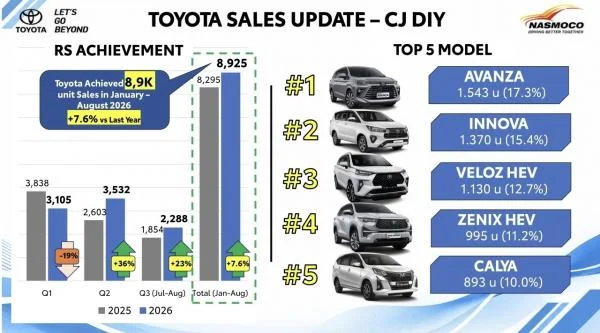
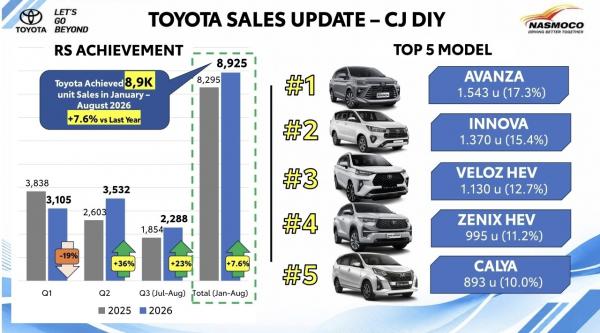
Toyota’s performance in the Central Java and Yogyakarta (Jateng-DIY) region has demonstrated a robust recovery and consistent growth throughout the first eight months of 2026. Data released by Nasmoco Group, the authorized dealer for Toyota vehicles in the region, indicates that the brand successfully navigated a challenging start to the year to reach a total of 8,925 units sold by the end of August 2026. This figure represents a 7.6 percent increase compared to the 8,295 units sold during the same period in 2025, signaling a resilient consumer appetite for automotive products despite fluctuating economic conditions.
The automotive sector in Indonesia often serves as a barometer for regional economic health. In the context of Central Java and Yogyakarta, the transition of fiscal policies and local tax regulations has played a significant role in shaping market dynamics. While the overall growth trajectory remains positive, the journey to these figures was marked by distinct volatility across the first two quarters of the year.
A Tale of Two Quarters: Navigating Tax Policy Challenges
The year 2026 began with significant headwinds for the automotive industry in the region. According to Jodjana Jody, Vice President Director of Nasmoco Group, the primary pressure on sales during the first quarter (Q1) stemmed from the implementation of new regional tax policies, specifically the "opsen" or additional tax levies at the provincial and regency levels. These changes initially created uncertainty among consumers, leading to a temporary slowdown in purchasing decisions.
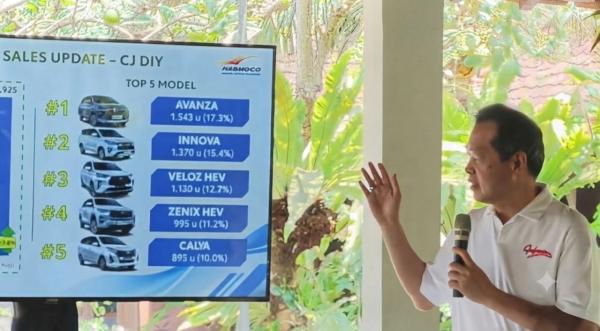
During the first three months of 2026, Nasmoco recorded 3,105 units sold, representing a sharp 19 percent decline compared to the 3,838 units sold during the same period in 2025. This contraction reflected a cautious market environment where potential buyers deferred major financial commitments until the impact of the new tax structure became clearer.
However, the narrative shifted dramatically in the second quarter (Q2). As consumers adjusted to the new fiscal landscape and dealer incentives became more aligned with market expectations, sales momentum surged. Nasmoco reported 3,532 units sold in Q2, a remarkable 36 percent increase over the 2,603 units sold in the corresponding period of 2025. This rebound is widely attributed to improved consumer confidence and the effective marketing strategies deployed by Toyota’s network to mitigate the perceived tax burden.
Sustained Momentum into the Third Quarter
The positive trend observed in the second quarter carried over into the summer months. During the July-August period of 2026, Toyota recorded 2,288 units sold, a 23 percent growth compared to the 1,854 units registered in the same two-month window in 2025.
Industry analysts suggest that this growth is not merely a recovery from a slow start but a reflection of Toyota’s diverse product portfolio meeting the specific needs of the Central Java and Yogyakarta markets. The region, characterized by a mix of urban centers like Semarang and Yogyakarta and expansive rural hinterlands, requires vehicles that offer a blend of durability, fuel efficiency, and passenger capacity.

The Role of the Toyota Avanza as a Market Leader
At the heart of Toyota’s sales success in the region remains the Toyota Avanza. As a cornerstone of the Indonesian automotive market, the "people mover" continues to command a significant market share. Between January and August 2026, the Avanza accounted for 1,543 units, or approximately 17.3 percent of Nasmoco’s total sales volume in the region.
The consistent popularity of the Avanza underscores a fundamental consumer preference for reliability and low maintenance costs in the Central Java and Yogyakarta territories. The model’s reputation for longevity makes it a preferred choice for both families and small business owners, who utilize the vehicle for both personal transport and commercial logistics.
Broader Economic Implications and Industry Outlook
The growth observed by Nasmoco Group provides a snapshot of the broader automotive industry’s resilience in Indonesia. The shift in taxation, while initially disruptive, has ultimately integrated into the cost of ownership without permanently suppressing long-term demand.
For the automotive industry, the lesson from 2026 is clear: market agility is essential. Dealership networks that can communicate transparently with customers regarding price adjustments—and provide value-added services—are better positioned to retain market share.

Furthermore, the regional performance in Central Java and Yogyakarta highlights the importance of the "regional economy" factor. As infrastructure connectivity improves across the island of Java, the demand for personal and light commercial vehicles is expected to remain steady. Toyota’s focus on regional events, such as the Journalist Test Drive held in Yogyakarta this September, serves as a strategic tool to maintain brand visibility and engage directly with local stakeholders and media, reinforcing the brand’s presence in the public consciousness.
Challenges and Future Considerations
Despite the positive figures, the automotive sector faces ongoing challenges. Global supply chain complexities, the potential for rising interest rates, and the gradual shift toward electric vehicle (EV) adoption remain critical variables. While internal combustion engine (ICE) vehicles like the Avanza continue to dominate the sales charts in Central Java, the industry is closely monitoring the transition toward more sustainable transport solutions.
Nasmoco Group, by maintaining a strong grip on its traditional market, is currently in a stable position to navigate these future transitions. The company’s ability to recover from a double-digit decline in Q1 to achieve an overall 7.6 percent growth by August suggests a high level of operational efficiency and a deep understanding of its local customer base.
Summary of Statistical Performance (Jan-Aug 2026)
- Total Sales (Jan-Aug 2026): 8,925 units
- Total Sales (Jan-Aug 2025): 8,295 units
- Year-on-Year Growth: +7.6 percent
- Q1 2026 Performance: 3,105 units (-19% vs Q1 2025)
- Q2 2026 Performance: 3,532 units (+36% vs Q2 2025)
- July-August 2026 Performance: 2,288 units (+23% vs same period 2025)
- Top Performing Model: Toyota Avanza (1,543 units; 17.3% share)
Conclusion
The sales data from Central Java and Yogyakarta serves as a testament to the enduring strength of the Toyota brand in Indonesia. Through tactical responses to fiscal changes and a consistent focus on high-demand vehicle segments, Nasmoco Group has managed to steer the brand toward a successful third quarter. As the year progresses, the focus for the industry will likely remain on maintaining this momentum, managing inflationary pressures, and continuing to adapt to the evolving regulatory landscape of the Indonesian automotive sector.
The success of the first eight months of 2026 provides a solid foundation for the remainder of the year. With the automotive market appearing to have stabilized, stakeholders are cautiously optimistic that the final quarter will continue to reflect the upward trend observed since the spring of 2026. The resilience shown by both the manufacturer and the regional dealer network illustrates that, despite localized economic hurdles, the demand for mobility solutions remains a primary driver of the regional economy in Indonesia.
