
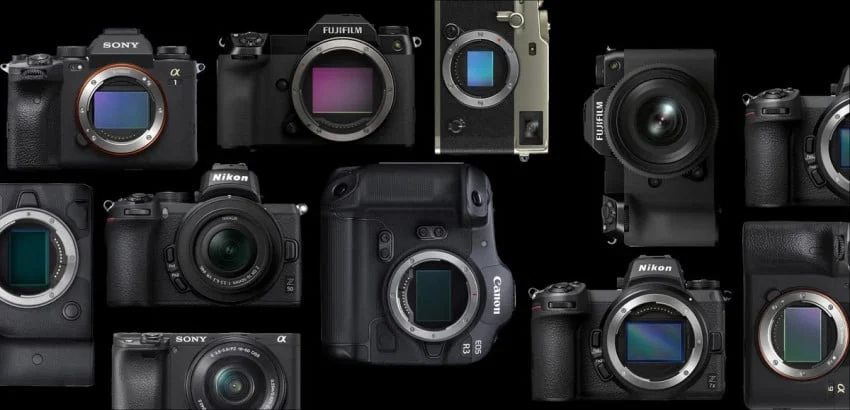
The global electronics landscape is currently navigating a period of unprecedented volatility, characterized by an insatiable demand for high-performance hardware driven by the rapid expansion of artificial intelligence (AI). As semiconductor manufacturers shift their production priorities to serve the massive data center infrastructure necessary for large language models and machine learning, secondary sectors are beginning to feel the squeeze. Among the most vulnerable of these sectors is the digital photography industry, which faces the prospect of significant price adjustments for consumer and professional-grade cameras by 2027 due to rising costs for critical components, particularly high-speed memory modules.
The Macroeconomic Context of the Semiconductor Squeeze
To understand why the price of a high-end mirrorless camera might increase in the coming years, one must first look at the economics of the global silicon supply chain. Modern digital cameras are no longer purely optical devices; they are sophisticated computing platforms. The integration of high-resolution sensors, advanced autofocus algorithms, and rapid buffer processing for burst photography requires specialized DRAM (Dynamic Random-Access Memory) and NAND flash storage.
Historically, the consumer electronics industry—including camera manufacturers—has operated under predictable supply cycles. However, the generative AI boom, which began in earnest in 2023, fundamentally altered this dynamic. According to industry analysts, the demand for High Bandwidth Memory (HBM) required for AI accelerators has surged by over 40% annually. Because HBM and standard DRAM often share the same manufacturing facilities and raw material sources, the overwhelming priority given to AI hardware has created a supply bottleneck that ripples down to smaller consumer electronics sectors.
By 2026, major semiconductor foundries reported operating at near-maximum capacity, with little room for the incremental growth needed to support secondary sectors. This shift in capital expenditure, where profit margins for AI chips far exceed those for consumer camera components, has left manufacturers like Canon, Sony, and Nikon in a difficult position: pay a premium to secure supply or face production halts.
Chronology of the Supply Chain Crisis
The current trajectory toward potential price hikes did not emerge in a vacuum. It is the culmination of a multi-year strain on the global electronics manufacturing ecosystem.
- 2020–2022 (The Pandemic Disruption): The initial semiconductor shortage exposed the fragility of just-in-time manufacturing. Camera manufacturers faced massive delays due to a lack of basic microcontrollers, leading to a temporary inflation in the second-hand market.
- 2023 (The AI Pivot): The release of generative AI tools triggered a massive investment cycle in data centers. Corporations globally began diverting silicon manufacturing capacity toward specialized GPUs and HBM.
- 2024 (The Memory Crunch): DRAM and NAND prices began to stabilize, but the focus shifted from simple availability to the sheer cost of procurement. Manufacturers began reporting increased lead times for the specialized components required for high-speed imaging.
- Late 2026 (The Current Assessment): During the third-quarter financial briefings, major industry players, most notably Canon, formally acknowledged that the "cooling" period for memory prices—which many analysts had predicted—was no longer guaranteed.
- 2027 (The Projected Inflection Point): Current projections indicate that if supply-side costs remain elevated through the end of 2026, the retail price adjustments for cameras are expected to reach the consumer level by the first half of 2027.
Canon’s Strategic Response and Industry Challenges
During the post-earnings session following their Q3 2026 financial results, Canon executives provided a candid assessment of the current manufacturing environment. The company highlighted that both its imaging and printing divisions were experiencing similar pressures. The scarcity is no longer limited to high-end chips; it has extended to fundamental components such as circuit boards, sensors, and power management integrated circuits (PMICs).
Canon’s leadership has indicated that they are exploring a variety of mitigation strategies. These include diversifying their supplier base to minimize reliance on single-source providers and engaging in long-term procurement contracts to hedge against further volatility. However, these strategies often come with increased overhead costs. When procurement costs rise significantly, companies face a binary choice: absorb the costs and accept a contraction in profit margins, or pass the expense on to the end-user.
Industry insiders suggest that while companies are hesitant to raise prices—given the already high entry cost for professional photography gear—the persistence of high costs for raw materials and energy makes a price hike increasingly inevitable. If component costs do not trend downward by the start of the next fiscal year, a systematic adjustment in retail pricing is the most probable outcome.
The Role of Memory in Modern Imaging
One might wonder why a standard digital camera would be affected by a shortage in AI-related memory. The answer lies in the evolving architecture of image processing. Even cameras not marketed as "AI-enabled" rely heavily on high-speed memory buffers. A professional camera capable of shooting 30 frames per second (FPS) in RAW format generates massive amounts of data that must be processed and cached near-instantaneously.
High-speed DRAM is the backbone of this operation. As sensors increase in megapixel count—moving toward 60MP, 80MP, and beyond—the amount of memory required to process these images without bottlenecking the shooting experience grows exponentially. Furthermore, the integration of computational photography—where the camera uses algorithms to stack exposures, reduce noise, or track subjects—requires significant onboard compute power and dedicated memory.
Consequently, the photography industry is effectively competing for the same high-performance memory chips that AI developers need for their server farms. The camera industry, despite its technological prestige, represents a smaller slice of the total semiconductor market compared to data centers and smartphones. In a market where supply is finite, larger players with more capital often secure priority, leaving the imaging industry to navigate the secondary market at higher price points.
Broader Implications for the Photography Market
The potential price increases in 2027 carry several implications for the professional and enthusiast photography communities:
- Market Consolidation: Smaller camera manufacturers or niche players with less capital to secure long-term component contracts may struggle to remain competitive. This could lead to a consolidation of the market, where only a few dominant brands can sustain the costs of innovation and production.
- Product Lifecycle Extension: Higher prices for new models may lead to longer product lifecycles. Consumers, faced with a higher entry price, may be more inclined to maintain their existing gear for longer periods, potentially slowing the pace of new model adoption.
- Shift in R&D Focus: Manufacturers may prioritize the release of high-margin professional equipment over entry-level cameras. If the costs of producing budget-friendly cameras become prohibitive due to fixed component costs, we may see a further erosion of the "prosumer" entry-level segment, effectively raising the floor for the cost of entry into professional photography.
- Second-hand Market Resurgence: As new prices climb, the value of pre-owned, high-quality camera bodies and lenses is expected to remain firm or increase. This creates a more robust secondary market, though it may also make it harder for aspiring photographers to find affordable entry points.
Expert Analysis and Future Outlook
Economic analysts tracking the semiconductor sector suggest that the 2027 timeline is a realistic projection for price stabilization or correction. The industry is currently witnessing a "wait and see" approach. Many firms are hoping that the rapid expansion of new fabrication plants (fabs) in North America, Europe, and Asia will eventually saturate the market, thereby driving down the costs of memory and processors.
However, the construction and qualification of new fabs is a multi-year process. While some capacity is coming online in late 2026, it may not be sufficient to offset the projected 15% annual increase in AI-related demand. The consensus among analysts is that the era of cheap, readily available electronics components is likely over for the near term. For the camera industry, this necessitates a paradigm shift in how products are priced and marketed.
Rather than competing solely on hardware specifications—which require ever-more expensive components—manufacturers may shift toward software-defined features and services. By offering subscription-based updates or cloud-integrated processing, companies might attempt to diversify their revenue streams, reducing their reliance on hardware sales as the sole pillar of profitability.
Conclusion
The convergence of the AI revolution and the digital camera supply chain serves as a stark reminder of the interconnected nature of modern technology. The high-performance memory required to train neural networks is the same memory required to capture high-resolution imagery. As long as the AI sector remains in a high-growth phase, the pressure on the silicon supply chain will persist.
For the professional photographer, the hobbyist, and the casual content creator, the year 2027 may represent a challenging transition. While technological advancements will undoubtedly continue to deliver better performance, the cost of accessing that technology is likely to reflect the global scarcity of the raw materials that make these devices possible. Canon’s proactive communication regarding these challenges suggests that the industry is preparing for a period of fiscal discipline and careful strategic maneuvering. Whether this will lead to a broader industry-wide price adjustment remains to be seen, but the data clearly points toward an era where the cost of innovation is being passed directly to the consumer.