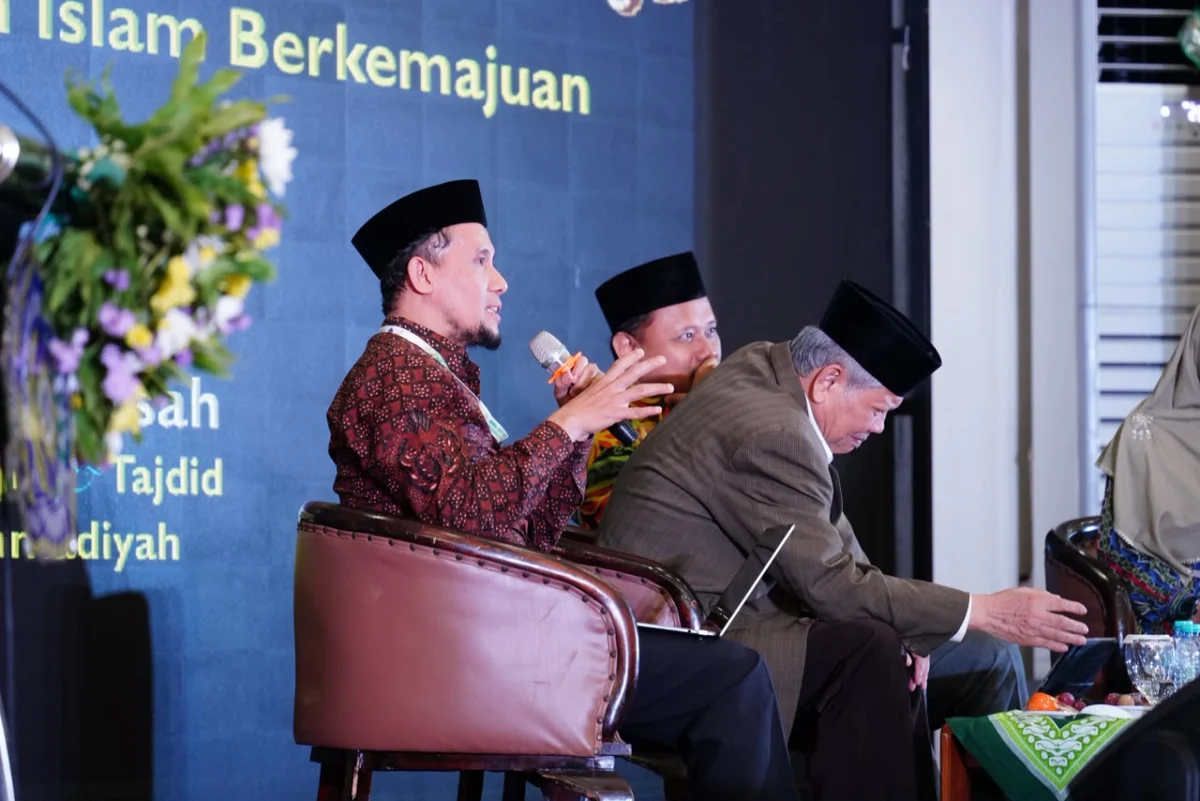
The theological foundations of modern Indonesian Islam continue to evolve as intellectual bodies seek to bridge classical faith with contemporary realities, ensuring that religious doctrines actively address global and domestic challenges such as environmental degradation, social inequality, and economic disparity. During the 33rd National Congress (Munas) of the Tarjih Council hosted by Universitas Muhammadiyah Surabaya, senior scholars and organizational leaders convened to deliberate on the practical applications of Islamic theology in the modern era. The discourse centered on steering the Islamic faith away from abstract theological scholasticism toward a dynamic, action-oriented paradigm defined by universal compassion and forward-thinking progress.
This pivotal academic and religious gathering brought together hundreds of theologians, researchers, university academics, and community leaders from across the archipelago. As one of Muhammadiyah’s most authoritative bodies on religious law and thought, the Majelis Tarjih and Tajdid utilized the national congress to introduce and dissect comprehensive frameworks aimed at modernizing how believers articulate their faith in daily life, institutional management, and civic engagement.
Context, Background, and Timeline of the Munas Tarjih
The 33rd Munas Tarjih stands as a flagship event within Muhammadiyah’s extensive organizational calendar. Historically, the Tarjih Council has served as the ultimate authority for issuing fatwas, religious guidance, and theological clarifications for the movement since its establishment in the early 20th century. The choice of Universitas Muhammadiyah Surabaya as the venue for this year’s congress underscores the institution’s growing prominence as a hub for progressive Islamic scholarship in East Java.
Preparations for the congress spanned nearly a year, involving regional consultative meetings, pre-congress academic seminars, and preliminary studies conducted by theological experts across various Muhammadiyah-affiliated universities. The official multi-day event officially commenced on November 5, drawing national media attention due to its focus on redefining the traditional boundaries of Ahlul Haq wa as-Sunnah (the People of Truth and the Sunnah) as formulated in the Himpunan Putusan Tarjih (HPT)—the official compendium of Muhammadiyah’s religious decisions.
The temporal urgency of the congress is highlighted by compounding contemporary crises, including widening wealth gaps, escalating climate change impacts, and sociopolitical polarizations globally and domestically. By re-evaluating the theological underpinnings of the movement, the leadership aimed to provide grass-roots members and institutional networks with an updated manual for ethical conduct and social contribution.
Grounding Faith Through Rahmatiyyah and Taqaddumiyyah
At the heart of the discourse presented by Ustadi Hamsah, Chairman of the Central Board’s Majelis Tarjih and Tajdid, is the urgent need to operationalize Islamic creed (aqidah) through two foundational pillars: rahmatiyyah (compassion) and taqaddumiyyah (progressiveness).
According to Ustadi, traditional approaches to theology often risk becoming insular intellectual exercises that fail to translate into tangible solutions for everyday societal struggles. To counter this, Muhammadiyah advocates for an aqidah that is both deeply rooted and dynamically enlightening.
The principle of rahmatiyyah dictates that true Islamic faith must inherently produce universal compassion. Because Islamic theology recognizes God (Allah) as Ar-Rahman and Ar-Rahim (The Most Gracious and The Most Merciful), human beings who profess belief in Him must reflect these divine attributes in their daily interactions.
"Having faith must generate a sense of profound compassion, rather than cruelty and severity," Ustadi emphasized during his keynote address at the seminar.
This theological stance extends far beyond interpersonal human relations. It mandates a fundamental shift in how Muslims view individuals outside their immediate faith communities or ideological groups. Pluralism and diversity are acknowledged not as threats, but as realities that require mutual respect, human dignity, and cooperative coexistence, explicitly forbidding the subordination of minority groups or religious others based on theological differences.
Furthermore, the rahmatiyyah framework explicitly encompasses environmental stewardship. In an era marked by severe ecological crises—ranging from deforestation and plastic pollution to food security vulnerabilities—the Majelis Tarjih argues that protecting the environment is an intrinsic component of religious devotion. Ecological degradation is classified not merely as a secular scientific issue, but as a direct violation of humanity’s trusteeship (khalifah) on Earth, tying environmental ethics directly back to the core of Islamic creed.
The Ethos of Progress: Taqaddumiyyah and Fastabiqul Khairat
Complementing the principle of compassion is taqaddumiyyah, which positions the Muslim community as khair ummah—the best community called forth for mankind, tasked with commanding the right, forbidding the wrong, and believing in God.
Ustadi linked this principle directly to the Quranic mandate of fastabiqul khairat (competing with one another in good works). In the context of Muhammadiyah’s overarching vision of "Progressive Islam" (Islam Berkemajuan), taqaddumiyyah serves as the engine for continuous renewal (tajdid) and independent legal reasoning (ijtihad).
This forward-looking perspective equips Muhammadiyah to respond proactively to rapid technological advancements, globalization, and shifting socioeconomic structures. By integrating a firm grounding in the Quran and Sunnah with rational, scientific inquiry, the movement seeks to demonstrate that Islam is inherently compatible with—and a driver of—modern civilization, human rights, and intellectual progress.
Functionalizing Aqidah: Relational, Cross-Sectoral, and Solutive
To ensure these theoretical constructs transition successfully from academic symposiums to grassroots implementation, the Tarjih Council outlined three practical functions that a reformed understanding of aqidah must fulfill:
- Relational Function: Aqidah must actively cultivate harmonious relationships across all spheres of existence—bridging gaps between individuals, communities, nations, and the surrounding ecosystem.
- Cross-Sectoral Function: Religious values must serve as an ethical bedrock across diverse fields, including politics, economics, education, public health, social welfare, and cultural preservation.
- Solutive Function: Faith cannot remain passive in the face of structural injustices. A robust Islamic creed must compel believers to take active part in solving pressing societal problems, such as systemic poverty, corruption, institutional corruption, and environmental degradation.
Scholars at the congress noted that these functional dimensions are not entirely novel to the organization, but rather represent a formal articulation of the practices that have defined Muhammadiyah since its founding by K.H. Ahmad Dahlan in 1912. From establishing modern schools and orphanages to pioneering universal healthcare systems and disaster response units via Muhammadiyah Disaster Management Center (MDMC), the movement’s history reflects a creed driven by philanthropic and developmental action.
Broader Implications and Future Outlook
The outcomes of the 33rd Munas Tarjih carry significant implications for Indonesia’s sociopolitical and religious landscape. As the world’s largest Muslim-majority nation grapples with the rise of religious conservatism and sectarian identity politics, Muhammadiyah’s emphasis on rahmatiyyah and taqaddumiyyah offers a moderating counter-narrative.
By framing environmental protection, social justice, and interfaith respect as core articles of faith rather than secondary political concerns, the organization reinforces its commitment to inclusive national development. Analysts suggest that this theological evolution will likely influence the curricula of hundreds of Muhammadiyah-run universities, boarding schools (pesantren), and thousands of primary and secondary educational institutions across Indonesia, ultimately shaping the worldview of millions of students.
As the congress concluded its sessions, the challenge ahead lies in the effective dissemination and practical adoption of these conceptual frameworks among the grassroots membership. If successfully implemented, the modernized understanding of aqidah articulated in Surabaya could serve as a global model for how traditional religious movements can address 21st-century complexities without compromising their foundational heritage.