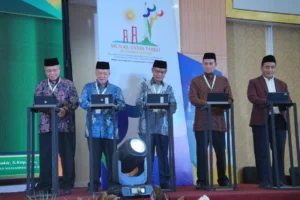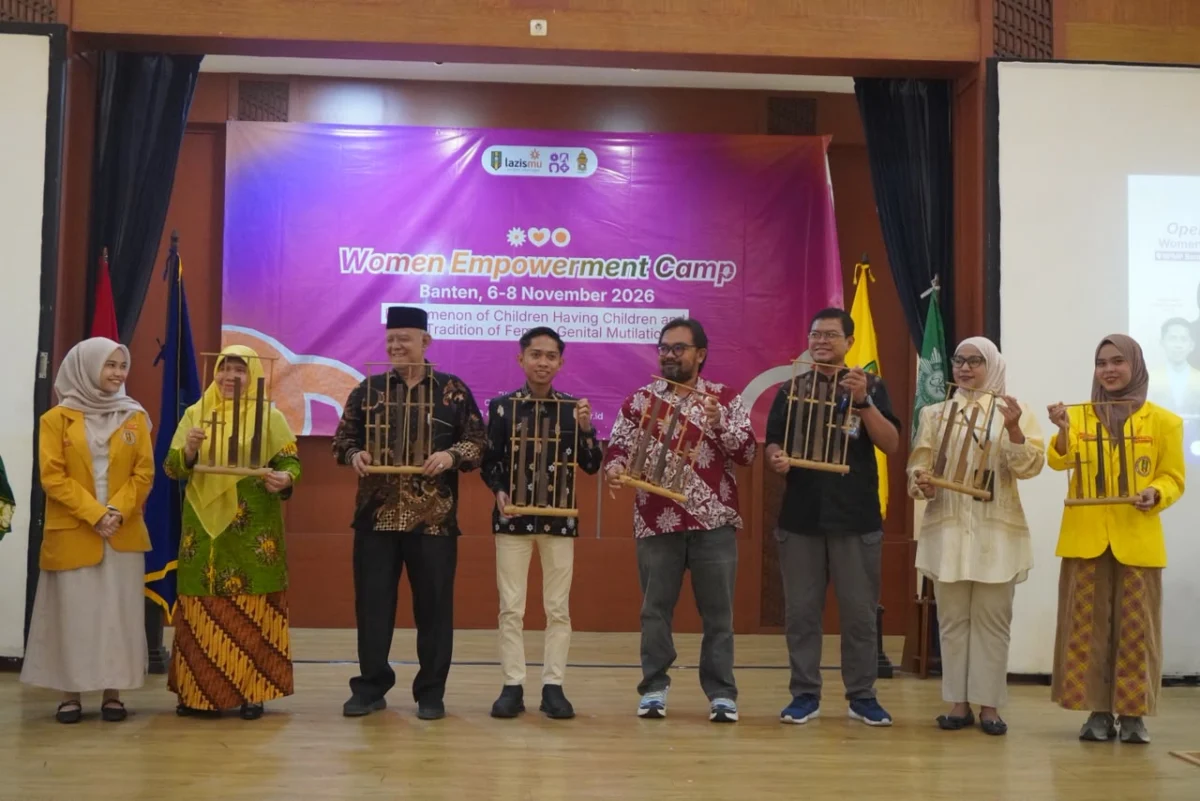
BANTEN — In a decisive move to address deeply entrenched social issues affecting youth and women, the Gender Mainstreaming Bureau (Pengarusutamaan Gender – PUG) of the Central Board of the Muhammadiyah Student Association (Pimpinan Pusat Ikatan Pelajar Muhammadiyah, or PP IPM) has officially launched the Women Empowerment Camp (WEC). Hosted at the Quality Assurance Agency for Education (Balai Penjaminan Mutu Pendidikan – BPMP) in Banten Province, the intensive program brings together 35 elite student delegates representing various regional chapters.
Scheduled to run from November 6 to November 8, the multi-day initiative is designed to serve as both an educational incubator and a strategic advocacy platform. By tackling controversial and critical human rights issues head-on, PP IPM aims to shift the paradigm surrounding gender equity within student movements, moving beyond tokenism to foster genuine ideological commitment and grassroots systemic change.
Main Facts and Core Focus of the Initiative
The 2026 edition of the Women Empowerment Camp centers its curriculum around two alarming socio-cultural phenomena: the "Phenomenon of Children Having Children" and the traditional practice of Female Genital Mutilation (FGM), locally referred to in advocacy spaces as Female Genital Cutting and Mutilation (P2GP – Pelukaan dan Pemotongan Genital Perempuan).
These topics were deliberately chosen to align with the core mission of the PP IPM Gender Mainstreaming Bureau, which has prioritized the eradication of gender-based violence, early childhood marriages, and harmful traditional practices that disproportionately compromise the health, education, and autonomy of young girls. The 35 selected participants underwent a rigorous vetting process in their respective regions before securing their status as delegates, positioning them to act as vanguard change-agents upon returning to their local communities.
Rather than relying on conventional, one-way lectures, the WEC framework incorporates intensive incubation modules, analytical focus group discussions, and collaborative policy formulation workshops. The ultimate objective is to empower these young leaders—particularly young women, known within the organization as Ipmawati—to dismantle systemic marginalization and lead regional campaigns against child marriage and bodily autonomy violations.
Contextualizing the Crisis: Child Marriage and FGM in Banten
The selection of Banten Province as the host location is far from arbitrary. Regional leaders and organizers have pointed to pressing localized data indicating that provinces like Banten—with specific rural concentrations in regions such as Lebak and Pandeglang—continue to grapple disproportionately with high rates of early marriage and the persistence of traditional genital cutting practices.
Child marriage remains a formidable barrier to human development across developing regions in Indonesia. According to socioeconomic and health demographic reports, marrying before the age of 18 severely truncates a young girl’s formal education, exposes her to severe reproductive health complications, locks families into cyclical poverty, and significantly increases vulnerability to domestic volatility. The phrase "children having children" encapsulates the tragic public health and social reality where underage mothers, lacking physical maturity and psychological readiness, give birth while still children themselves.
Simultaneously, the practice of FGM/P2GP remains an invisible crisis in many parts of the archipelago. Often deeply embedded in local interpretations of tradition and religious observance, the practice persists despite mounting medical evidence highlighting its lack of health benefits and its potential to cause long-term physical and psychological trauma. By bringing these taboos into the open within an Islamic educational framework, PP IPM is challenging communities to re-evaluate traditions that conflict with fundamental human dignity, child protection, and modern medical consensus.
Ideological Standpoints and Leadership Perspectives
Addressing the opening ceremony, PP IPM General Chairperson Dany Rahmat Muharram delivered a compelling address challenging the historical minimization of women within student and political organizations. He emphasized that gender mainstreaming must never be treated as a mere public relations slogan or a bureaucratic checkbox.
"We view gender mainstreaming not merely as a slogan, but as an ideological step in dismantling all forms of oppression, marginalization, and limitation of potential based on gender," stated Dany before the assembly of delegates.
Dany further exhorted male and female cadres alike to actively dismantle structural stereotypes that relegate women to the sidelines of public discourse and organizational leadership. He stressed that female student leaders are fully capable executives who deserve equal footing in administrative and ideological decision-making spaces. "Ipmawati here are not mere figures simply displayed in a showcase window within an organizational group. Women have an equal right to become leaders," he asserted.
Echoing these sentiments, Fajry Annur, Chairperson of the PP IPM Gender Mainstreaming Bureau and Project Manager for the Voice initiative, underscored the necessity of unwavering courage when confronting deeply entrenched social norms. Fajry noted that tackling issues as sensitive as juvenile marriage and bodily integrity requires persistence, community-level education, and multi-stakeholder partnerships spanning government agencies, religious institutions, and civil society organizations.
"The future of a child must not be determined by a marriage that is far too premature. The bodies of young girls must be respected and protected, and their voices must be heard in every decision concerning their lives," Fajry emphasized during the plenary sessions.
Institutional Backing from Muhammadiyah Regional Leadership
The initiative has also drawn robust institutional endorsement from senior leadership within the broader Muhammadiyah organizational network. Zakaria Syafei, Secretary-General of the Muhammadiyah Regional Leadership (Pimpinan Wilayah Muhammadiyah – PWM) of Banten, delivered an address affirming that women’s empowerment is not a Western import, but rather an imperative deeply rooted in Islamic teachings and historical correction.
Drawing historical parallels to the pre-Islamic era of Jahiliyah—during which women were systematically oppressed and marginalized—Zakaria urged contemporary Muslim women to reclaim their agency, pursue rigorous education, and assume leadership roles in public life. He also addressed localized socio-economic challenges, specifically citing cultural attitudes in areas like Serang City where formal education is sometimes prematurely abandoned in pursuit of immediate, low-wage labor. He argued that institutional interventions and specialized training programs are vital to shifting these economic paradigms.
"In the modern era, women are demanded to take part in the public sphere and become leaders, because the capacity to lead is the right and potential of every human being regardless of gender," Zakaria explained, framing female empowerment as an essential component of modern civilizational progress.
Speaking on behalf of the regional host, Nur Ida Ersafabanyo, Chairperson of the Banten Regional Leadership of IPM (PW IPM Banten), reiterated the urgency of addressing local vulnerabilities. She noted that the discourses generated during the camp are tailored specifically to combat the elevated rates of early marriage and traditional practices recorded in districts like Lebak and Pandeglang.
"We hope this discussion space is capable of fostering leadership and expanding the awareness of the younger generation regarding reproductive health and women’s empowerment, thereby generating a positive and sustainable impact," Nur Ida concluded.
Broader Implications and Long-Term Outlook
The execution of the Women Empowerment Camp by PP IPM signals a progressive evolution within Islamic student organizations in Indonesia. By confronting taboo subjects such as bodily autonomy and structural youth marriage, the organization is bridging the gap between traditional religious scholarship and contemporary human rights advocacy.
The implications of this three-day training extend far beyond the 35 participants currently gathered in Banten. As these delegates return to their respective schools, districts, and chapters, they are expected to cascade their training through peer-to-peer education, community dialogues, and localized advocacy campaigns. If successful, the initiative could serve as a replicable blueprint for youth-led social transformation across other provinces facing similar demographic and cultural challenges.
Ultimately, the WEC framework highlights a growing recognition among youth leaders that sustainable national development is inextricably linked to the protection, education, and empowerment of young women. By challenging the normalization of child marriage and harmful traditional practices, PP IPM is actively redefining the parameters of student activism in modern Indonesia, positioning human rights and gender equity at the very vanguard of educational reform.