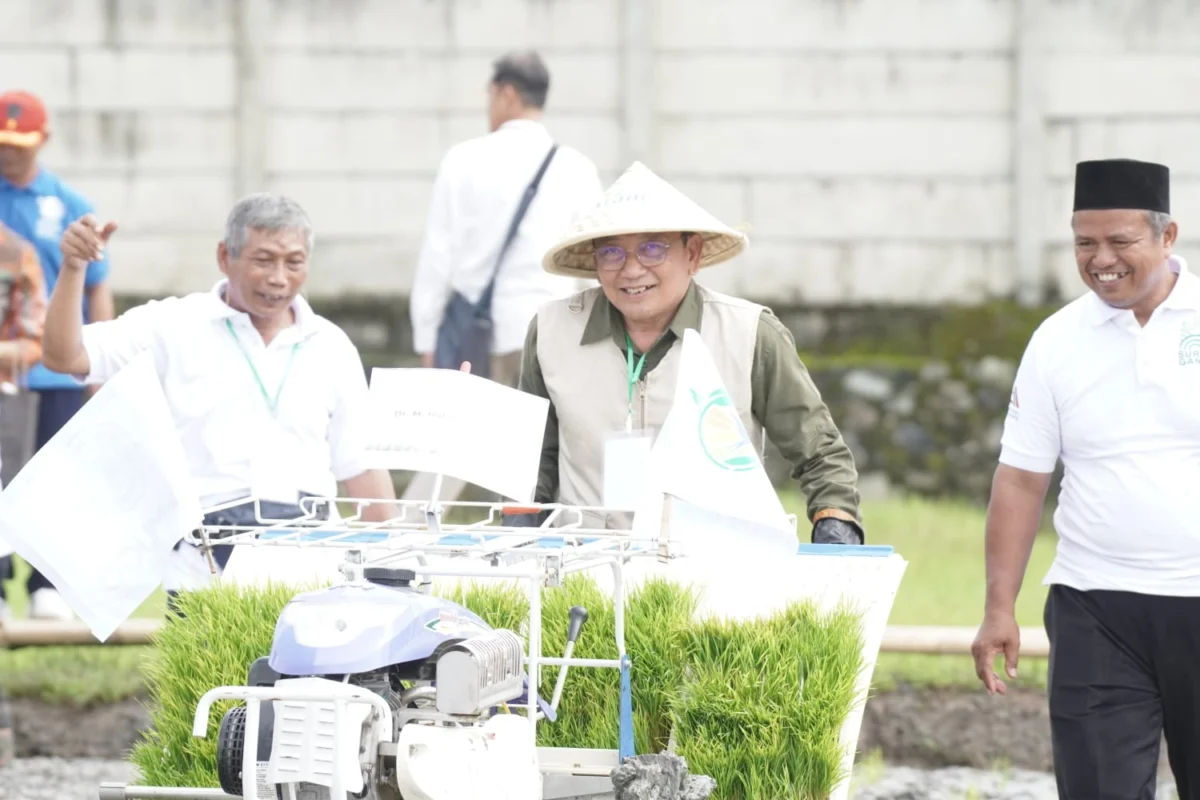
YOGYAKARTA — In a decisive move to address mounting domestic and international food security challenges, the Council for Empowerment of Society (Majelis Pemberdayaan Masyarakat or MPM) of the Central Leadership (PP) of Muhammadiyah has officially formulated a comprehensive food sovereignty roadmap. This strategic framework focuses heavily on advancing sustainable agricultural practices, developing high-yielding crop varieties, and ensuring widespread access to certified, premium-quality seeds through the year 2028.
The formulation of this visionary roadmap emerged as one of the principal policy outcomes during the recent National Consolidation (Konsolnas) of MPM Muhammadiyah, held over two intensive days from October 31 to November 1, 2026. As one of Indonesia’s largest Islamic organizations, Muhammadiyah has consistently positioned itself as a proactive partner to the state, leveraging its extensive grassroots networks, educational institutions, and community organizations to address structural socio-economic challenges, of which food security remains a paramount priority.
Demographic Pressures and Global Food Realities
The urgency behind Muhammadiyah’s newly minted roadmap is underscored by compounding demographic pressures both globally and domestically. According to demographic tracking models referenced by Worldometer, the global human population currently hovers around 8.3 billion individuals and is projected to surge to an unprecedented 9 to 10 billion people by the year 2050. This massive population expansion will place an exponential demand on global arable land, freshwater supplies, and agricultural supply chains.
Locally, Indonesia faces its own distinct demographic trajectory. Projections indicate that the national population will reach approximately 287 million citizens by the close of 2026, continuing on an upward trajectory for decades to come. This massive domestic consumer base represents both a vast economic market and an immense logistical challenge for national policymakers tasked with ensuring stable, affordable, and equitable food distribution.
Addressing these realities during a media briefing on Wednesday, November 4, 2026, the Chairman of MPM PP Muhammadiyah, M. Nurul Yamin, emphasized that population growth directly correlates with heightened consumption demands. "Population growth brings the direct consequence of rising food needs. Therefore, food production must be continuously increased through the more efficient utilization of resources while maintaining strict attention to environmental preservation," Yamin stated.
Environmental Vulnerabilities and Structural Hurdles
Beyond simple demographic math, Indonesian agriculture continues to grapple with a complex array of structural vulnerabilities that threaten long-term productivity. Chief among these issues is the accelerating rate of agricultural land conversion (alih fungsi lahan), where productive paddy fields and farming zones are continuously repurposed for industrial, commercial, and residential real estate developments. This loss of arable acreage directly compresses the nation’s capacity for domestic harvest.
Compounding the land scarcity issue are the escalating impacts of global climate change. Indonesian farmers face increasingly erratic weather patterns, marked by prolonged droughts linked to climate phenomena, alongside devastating floods that routinely wash away entire harvests. Furthermore, decades of intensive chemical farming have contributed to noticeable soil degradation, stripping arable lands of vital organic nutrients and diminishing natural fertility levels.
Faced with these multi-faceted threats, MPM PP Muhammadiyah has identified sustainable agriculture not merely as an alternative farming method, but as an absolute structural necessity for securing national food sovereignty.
The Three Pillars of Sustainable Agriculture
Muhammadiyah’s sustainable agriculture framework rests upon three foundational pillars: economic viability, social equity, and environmental stewardship.
From an economic perspective, the roadmap aims to guide farmers away from low-efficiency traditional practices and toward modern farm management systems that generate higher profit margins and increased value-added processing. Socially, the framework seeks to uplift the general welfare of smallholder farmers—who constitute the backbone of Indonesia’s agricultural sector—while simultaneously expanding community access to nutritious and affordable food staples. Environmentally, the approach mandates the conservation of natural resources, ensuring that current production yields do not compromise the ecological integrity of the land for future generations.
"Agriculture must not be oriented solely toward short-term production increases," Yamin explained. "We must build an agricultural system that is productive, profitable for farmers, and firmly protective of environmental sustainability."
Technological Innovation and the Genetics Foundation
A core realization embedded within the Muhammadiyah food sovereignty roadmap is that true food self-reliance extends far beyond securing physical acreage; it requires aggressive investment in technological innovation, particularly in crop science and seed genetics.
Agricultural productivity is governed by a combination of variables, including fertilization protocols, advanced irrigation systems, proactive pest and disease management, and overall cultivation husbandry. However, agricultural scientists universally recognize that plant genetics—specifically the deployment of superior crop varieties—serves as the ultimate ceiling for productivity.
High-quality seeds act as the biological vehicle through which genetic potential is translated into real-world yields. Consequently, the widespread distribution of certified, resilient seeds is viewed by Muhammadiyah as an indispensable catalyst for modernizing rural farming communities and helping them adapt to shifting climatic conditions. This strategic focus aligns directly with the United Nations Sustainable Development Goals (SDGs), particularly those targeting zero hunger, climate action, and sustainable production and consumption patterns.
The Success Story of Mentari 1 Rice
Long before formalizing the 2028 roadmap, Muhammadiyah demonstrated its capability for practical agricultural innovation. A prime example of this commitment is the development and release of "Mentari 1," an indigenous superior rice variety engineered and propagated under the auspices of the organization.
Mentari 1 was officially introduced to the public during the inaugural National Jamboree of the Muhammadiyah Farmers Association (Jamnas I JATAM) held in 2025 in Kebumen, Central Regency, Central Java. The rollout was met with widespread enthusiasm from agricultural experts and local farming cooperatives alike.
Agronomic trials and field harvests have demonstrated that the Mentari 1 rice variety boasts an impressive average yield of 6.7 tons of dry unhusked rice (gabah kering giling or GKG) per hectare, with peak performance potentials reaching up to 9.7 tons per hectare under optimal cultivation conditions. Beyond its high volumetric output, Mentari 1 possesses distinct nutritional advantages, featuring a higher protein content and a lower amylose level compared to many standard commercial varieties, making the grains softer upon cooking and nutritionally superior.
Timeline and Implementation Strategy Through 2028
The newly announced food sovereignty roadmap provides a structured, multi-year implementation timeline extending through 2028. By anchoring its institutional efforts around the scaling up of the Mentari 1 variety alongside other localized agricultural breakthroughs, MPM PP Muhammadiyah intends to systematically build out a parallel, resilient agricultural ecosystem.
The timeline envisions three distinct phases of execution between late 2026 and 2028:
- Phase One (Late 2026): Intensive institutional consolidation, mapping of vulnerable agricultural zones, and expanding seed propagation networks across Muhammadiyah-affiliated rural chapters.
- Phase Two (2027): Mass distribution and pilot farming programs utilizing Mentari 1 and complementary drought-resistant crop varieties across key agricultural hubs in Java, Sumatra, and Sulawesi.
- Phase Three (2028): Comprehensive evaluation of regional yields, establishment of farmer-managed seed banks, and policy advocacy integration with national agrarian ministries to institutionalize community-led sustainable practices.
Implications for National Food Security and Policy
Analysts following Indonesia’s agrarian sector note that independent civil society initiatives like those spearheaded by Muhammadiyah play an invaluable role in complementing state-led food estate projects and bureaucratic distribution policies. By engaging directly with local farming communities, organizations like Muhammadiyah can bridge the gap between high-level scientific research and grassroots implementation.
Furthermore, by focusing intensely on seed sovereignty—reducing dependency on imported commercial seeds controlled by multinational conglomerates—Muhammadiyah is directly tackling one of the most vulnerable choke points in modern farming economics. If successful, the widespread adoption of indigenous superior seeds like Mentari 1 could significantly lower production overheads for millions of Indonesian smallholders.
Concluding his remarks, Yamin reiterated that Muhammadiyah’s overarching goal is to instill a deep sense of national self-determination regarding what the country consumes and how it is produced.
"Through the development of superior varieties, quality seeds, and the reinforcement of sustainable agriculture, Muhammadiyah wishes to take a tangible role in realizing food sovereignty," Yamin concluded. "It is not merely about ensuring that food is physically available, but ensuring that this nation possesses the sovereign capability to fulfill its nutritional needs independently and sustainably for generations to come."