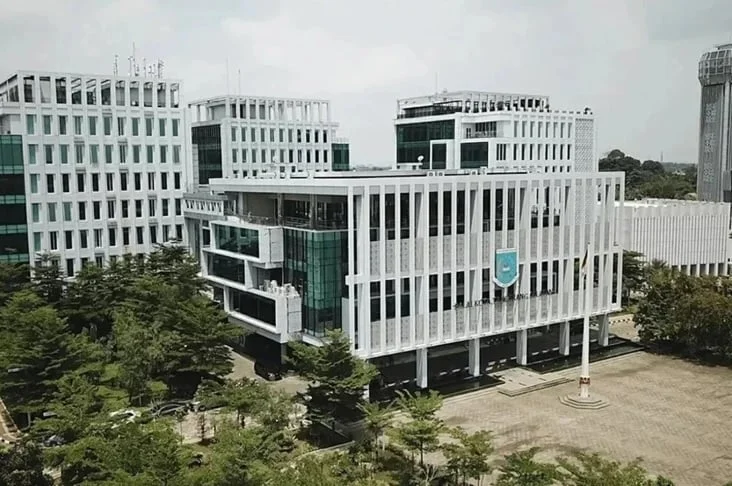
The administration of Tangerang Selatan has officially countered recent digital discourse labeling the region as an "Autopilot City," a derogatory term suggesting that local governance is stagnant or detached from the rapid pace of private sector development. City officials and policy analysts maintain that the municipal government is actively managing the region’s complex urban expansion, ensuring that the intersection of massive private investment and public interest remains balanced. By emphasizing transparency, infrastructure regulation, and social equity, the administration seeks to redefine its governance model as one of proactive oversight rather than passive observation.
The Origins of the Autopilot Discourse
In recent months, the term "Autopilot City" gained traction on various social media platforms and digital forums. The narrative stems from the unique socio-economic landscape of Tangerang Selatan—a city defined by its high density of elite residential clusters, large-scale commercial developments, and expansive private gated communities. Critics argued that the sheer influence of private developers and major corporations in the city’s spatial planning had overshadowed the municipal government’s presence, creating an environment where the city appeared to be running itself based on market forces rather than public policy.
This sentiment was exacerbated by the rapid demographic shifts in the region, which has become a primary satellite city for Jakarta’s workforce. As high-end residential estates expanded, concerns regarding the neglect of traditional neighborhoods and the disparity in infrastructure maintenance between gated communities and public sectors fueled the narrative that the local government had surrendered its regulatory authority to private entities.
Expert Analysis: Governance in a Rapidly Developing Landscape
Addressing these claims, public policy analyst Yanuar Winarko highlighted that the "Autopilot" characterization lacks empirical grounding. According to Winarko, the reality of Tangerang Selatan’s administration is one of constant mediation between capital-heavy development and the needs of the wider public.
"The assertion that Tangerang Selatan operates on autopilot is fundamentally flawed," Winarko stated during a press briefing on Wednesday, November 11, 2026. "On the contrary, the current municipal administration has demonstrated a capacity to act as a regulatory anchor. In a city where private investment is exceptionally high, the government’s role is to ensure that this growth does not result in the erosion of social justice. They are the essential ‘social glue’ that binds the interests of private developers with the daily necessities of the general populace."
Winarko points to the government’s intervention in the procurement of public facilities (fasum) and social infrastructure as evidence of active management. By forcing developers to adhere to strict regulatory frameworks during the handover of public facilities, the city government prevents the privatization of essential spaces and ensures that maintenance costs do not become a burden on the taxpayers.
Chronology of Recent Municipal Initiatives
To combat the perception of stagnation, the Tangerang Selatan government has intensified its efforts in several key sectors. The following timeline outlines recent initiatives that demonstrate the administration’s attempt to assert its role in urban management:
- Q1 2026: The administration launched an audit of facilities and utilities (fasos/fasum) across major residential clusters, pressuring developers to fulfill their legal obligations to hand over assets to the municipal government.
- Q2 2026: The government initiated a comprehensive review of public transportation connectivity, seeking to integrate private transit networks with municipal transport to address the mobility gaps between gated communities and public residential zones.
- Q3 2026: The Tangerang Selatan Environmental and Agricultural Department began pilot programs, including the innovative "Floating Rice Paddy" project at Tandon Ciater, designed to demonstrate the city’s commitment to food security and urban environmental management.
- November 2026: Official statements were issued by the Department of Communication and Information (Diskominfo) to address the "Autopilot" narrative and invite public scrutiny, reaffirming that the city is governed by established statutes rather than individual whims.
The Role of Public Infrastructure and Social Equity
A significant pillar of the city’s defense lies in its infrastructure development projects. Historically, Tangerang Selatan has faced challenges in managing the connectivity between its disparate neighborhoods. The municipal government has recently increased budget allocations for road widening, flood mitigation through the development of drainage systems, and the construction of public community centers.
The "social glue" concept mentioned by analysts refers to the government’s efforts to ensure that the rapid expansion of gated communities does not lead to "social enclosure." By enforcing regulations that require private developers to provide public access to certain amenities and by investing in infrastructure that links lower-income areas with the economic hubs of the city, the administration claims it is actively preventing the formation of a fragmented urban society.
Official Response: The Institutional Framework
TB Asep Nurdin, Head of the Tangerang Selatan Department of Communication and Information (Diskominfo), underscored that the governance of the city is strictly institutional. He noted that the administration operates within the parameters of national and regional regulations, which mandate constant oversight, planning, and evaluation.
"The governance of Tangerang Selatan is not a matter of individual style or happenstance; it is a matter of administrative law," Nurdin stated. "The system is designed to respond to the needs of the public. We welcome social control and public criticism, as they are integral to the feedback loop of democratic governance. The narrative of the city running on ‘autopilot’ ignores the complex legislative and executive processes that govern every development project, utility expansion, and public service initiative in this city."
Nurdin emphasized that the city’s digital transformation efforts, which include real-time public service portals and grievance mechanisms, are specifically designed to minimize the gap between the government and the citizenry. These platforms allow residents to report issues directly, ensuring that the government remains accountable and responsive to the granular needs of the population.
Broader Implications and Future Challenges
The debate surrounding Tangerang Selatan’s governance serves as a microcosm for the challenges faced by many Indonesian satellite cities. As these regions transition from rural-fringe areas to high-density metropolitan hubs, the balance of power between the government and the private sector becomes increasingly strained.
If the "Autopilot" narrative persists, it could potentially discourage public-private partnerships, which are crucial for the city’s development. Conversely, the government’s aggressive refutation of this narrative signals a shift toward a more interventionist approach to urban planning. Future success will depend on three critical factors:
- Transparency in Asset Management: The continued, transparent handover of public facilities from developers to the city government is essential to build public trust.
- Infrastructure Integration: The ability to effectively merge private residential transit networks with public systems will be a key performance indicator for the administration in the coming years.
- Community Engagement: As the city grows, the government must move beyond top-down communication to foster deeper community involvement in local policy-making.
The administration’s recent pushback indicates a move toward more assertive public relations and a renewed focus on showcasing visible governance. By inviting open dialogue and emphasizing its regulatory functions, Tangerang Selatan hopes to shift the focus from the dominance of private developers to the strengthening of municipal authority.
Conclusion
The narrative of an "Autopilot City" is a symptom of the rapid, market-driven growth that characterizes Tangerang Selatan. However, the available data on regulatory oversight, infrastructure development, and official administrative structures suggests a government that is attempting to catch up with—and eventually lead—the rapid pace of development. Whether this current wave of proactive governance is sufficient to satisfy a skeptical public remains to be seen. What is clear, however, is that the administration is no longer willing to allow the perception of passivity to go unchallenged, marking a significant turn in the city’s political and social discourse as it heads into the next phase of its urban evolution.