The Jakarta Metropolitan Police, or Polda Metro Jaya, has announced the implementation of strategic traffic management protocols surrounding the Parliament Complex in Senayan, Jakarta, in anticipation of mass demonstrations scheduled for Tuesday, November 10, 2026. As the capital braces for potential civil unrest and public expression, the Directorate of Traffic (Ditlantas) has signaled that traffic flow will be adjusted on a situational basis, depending on the volume of protesters and the physical footprint of the crowds occupying the thoroughfares leading to the legislative building.
The announcement, disseminated via the official @TMCPoldaMetro social media channels, serves as a proactive measure to mitigate gridlock in one of Jakarta’s busiest business districts. Commuters are strongly advised to seek alternative routes to avoid the primary thoroughfare of Jalan Gatot Subroto, which typically experiences severe congestion whenever the House of Representatives (DPR RI) becomes the focal point of public dissent.
Chronology of Preparedness and Security Protocols
The mobilization of security forces in Jakarta follows a well-established standard operating procedure (SOP) for large-scale public assemblies. The decision to implement "situational" traffic engineering—a strategy involving the closure of specific lanes or the total diversion of traffic toward side roads—reflects the unpredictable nature of such demonstrations.
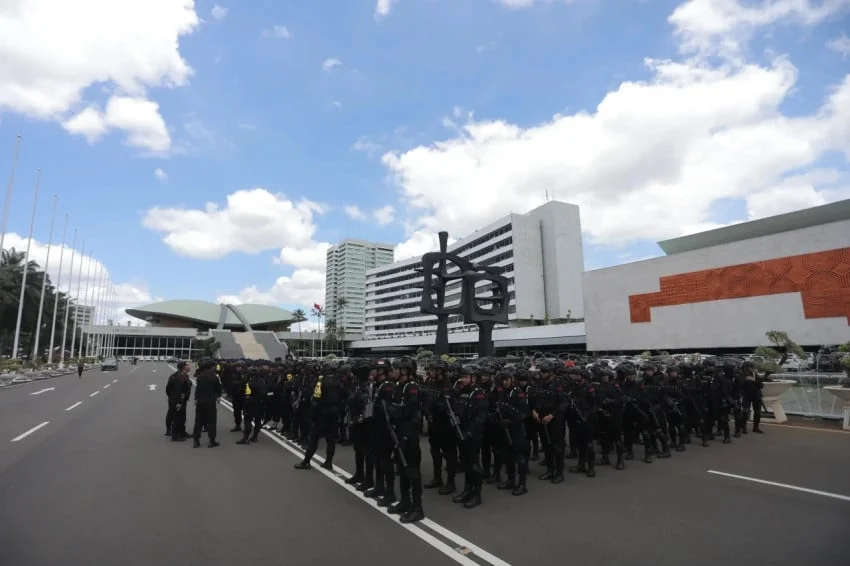
In the days leading up to November 10, the Polda Metro Jaya leadership initiated a series of preparatory drills. Kabid Humas (Head of Public Relations) Kombes Budi Hermanto confirmed that the force has conducted a Tactical Floor Game (TFG). This high-level coordination exercise is designed to ensure that all units, from the mobile brigade (Brimob) to traffic control officers, operate under a unified command structure. The primary objective of the TFG is to synchronize perceptions regarding the handling of protestors: ensuring that while the democratic right to express opinions is upheld, public order and the integrity of state infrastructure remain protected.
Security analysts note that the TFG serves as a critical simulation for various scenarios, including potential escalation, the need for perimeter containment, and the identification of escape routes for emergency services. By formalizing these plans, the police aim to prevent the kind of chaotic scenes that have occasionally disrupted the capital’s central artery in previous years.
Context of Legislative Demonstrations in Jakarta
The Parliament Complex in Senayan has long served as the symbolic and physical epicenter of political activism in Indonesia. Demonstrations at this location are often linked to grievances regarding new legislation, government policies, or economic conditions. November 10, being National Heroes Day in Indonesia, often carries added symbolic weight, with various labor unions, student organizations, and civil society groups frequently choosing this date to voice their demands for systemic reform or the protection of worker rights.
Historically, protests at the DPR complex fluctuate in intensity. While many remain peaceful, the density of the crowds frequently necessitates the full closure of the main gates and the diversion of TransJakarta bus routes. The scale of the current mobilization has prompted the police to adopt a defensive posture, prioritizing the prevention of property damage while maintaining the flow of traffic in surrounding areas such as Slipi and Semanggi.
Data on Traffic Management and Urban Impact
The urban impact of demonstrations in Senayan is statistically significant. According to historical traffic data from the Jakarta Transportation Agency (Dishub), major protests at the Parliament building can reduce traffic velocity in the Gatot Subroto and Sudirman-Thamrin corridors by up to 60 percent. During peak hours, these disruptions ripple throughout the city, causing cascading delays that affect thousands of commuters traveling between West Jakarta and the central business district.
The "situational" approach adopted by Ditlantas Polda Metro Jaya implies that there is no fixed schedule for closures. Instead, field commanders are empowered to assess real-time conditions. If demonstrators occupy the arterial roads, police will divert traffic toward Jalan Gelora, Jalan Palmerah, or through the back alleys of the Senayan neighborhood. This flexibility is essential for maintaining a balance between the right to assemble and the economic necessity of keeping the city’s transportation arteries functioning.
Official Responses and Security Philosophy
Kombes Budi Hermanto’s emphasis on the TFG highlights a shift in security philosophy that prioritizes de-escalation. By ensuring that officers on the ground are aligned in their approach, the police aim to avoid the heavy-handed tactics that have drawn criticism in the past. The goal, as stated by the Polda, is to "guard, escort, and secure" the protest, acknowledging that the freedom of speech is a protected constitutional right.
This philosophy is bolstered by the presence of negotiators from the police force, who are often deployed to engage with protest leaders before tensions rise. By establishing a line of communication, the authorities hope to ensure that the protest remains within designated boundaries, thereby minimizing the need for more aggressive crowd control measures such as tear gas or water cannons, which are reserved only as a final resort in cases of significant public disturbance.
Implications for the Capital and Future Outlook
The recurring nature of these protests raises broader questions about urban planning and the governance of public expression in a sprawling metropolis like Jakarta. The concentration of political power in the Senayan area creates a natural friction point between protesters and the city’s transit network. Experts suggest that as Jakarta continues to grow, the authorities will need to invest more in digital traffic management systems that can provide real-time updates to citizens, reducing the uncertainty that currently plagues commuters on protest days.
Furthermore, the economic implications of frequent demonstrations cannot be overlooked. Businesses located near the Parliament Complex often report lost productivity and reduced customer traffic on these dates. While the right to protest is an essential component of Indonesia’s democracy, the challenge for the Jakarta administration remains the effective integration of these events into the city’s daily rhythm without crippling its economic engine.
Analysis of the Current Security Posture
The state of readiness displayed by Polda Metro Jaya suggests a high level of vigilance. By focusing on traffic engineering, the police are attempting to minimize the visibility of the "security state" while maintaining effective control. This approach serves to minimize friction between the public and the authorities.
However, the effectiveness of these measures will ultimately be tested by the turnout and the temperament of the demonstrators. If the protests remain orderly, the impact will be limited to temporary traffic inconveniences. If, however, the rhetoric turns inflammatory or the crowd numbers exceed current estimates, the situation could shift rapidly. The police have signaled that they are prepared for both outcomes, with additional reserve units placed on standby at key intersections throughout Central and South Jakarta.
Recommendations for the Public
For the citizens of Jakarta, the advice provided by the authorities is clear: avoid the Senayan area if possible. For those who must travel, utilizing the Jakarta MRT or KRL Commuter Line is strongly recommended over private vehicles, as these rail systems operate independently of the road traffic grid and are largely unaffected by the diversions implemented on the surface.
As of the morning of November 10, the situation remains under close monitoring. The Polda Metro Jaya continues to provide updates through its official social media channels, ensuring that the public remains informed as the situation evolves. The presence of law enforcement at the Parliament Complex remains a reminder of the delicate balance between maintaining public order and upholding the democratic values that underpin the Indonesian state.
In conclusion, the situation at the DPR RI building on November 10, 2026, serves as a test of Jakarta’s crisis management capabilities. Through the implementation of situational traffic management, proactive security planning, and a focus on de-escalation, the authorities are working to ensure that the city remains operational even in the face of significant political expression. As the day progresses, the primary objective remains the safe and orderly management of the crowd, ensuring that the democratic process can proceed without compromising the safety and security of the broader population.