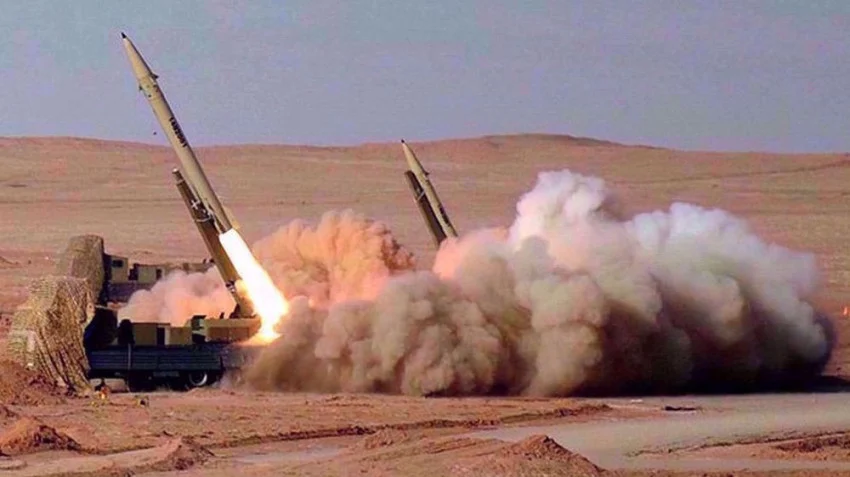
The geopolitical landscape in the Middle East faces a potential paradigm shift as Tehran signals a major doctrine evolution regarding its strategic military capabilities. In a series of high-level announcements that have drawn profound international concern, the Islamic Republic of Iran has formally declared that it is no longer bound by its self-imposed restriction limiting the range of its ballistic missile arsenal to 2,000 kilometers (approximately 1,200 miles). This policy shift, announced by senior military and government officials, is paired with a direct warning: Iran intends to target military installations across Europe utilized by United States forces should Washington and Israel engage in renewed military aggression against the Iranian state.
The developments underscore a sharp escalation in deterrence posturing following months of tit-for-tat strikes, covert operations, and heightened regional friction between Iran, Israel, and the United States. By lifting geographical ceilings on its missile development and openly incorporating European-based American assets into its theoretical target matrix, Tehran is attempting to fundamentally alter the calculus of Western military planners.
Strategic Shift: The Abandonment of the 2,000-Kilometer Ceiling
The formal notification regarding the removal of missile range limitations was delivered by Brigadier General Hossein Mohebbi, a spokesperson for the Islamic Revolutionary Guard Corps (IRGC), during a press briefing. Addressing domestic and international media, Mohebbi stated unequivocally that the operational ceiling restricting ballistic missile development to 2,000 kilometers has been officially lifted for Iran’s armed forces.
While the IRGC spokesperson refrained from disclosing granular technical specifications or operational blueprints during the briefing, he emphasized that the military’s primary focus has transitioned from theoretical constraints to demonstrating these advanced capabilities in practical scenarios.
For years, Iranian state policy—often attributed to directives from Supreme Leader Ayatollah Ali Khamenei—dictated that a 2,000-kilometer radius was sufficient to deter regional adversaries, primarily Israel and various US military outposts scattered across the Middle East, including the Gulf states, Iraq, and Syria. This self-imposed cap was frequently cited by Iranian diplomats during negotiations over the country’s nuclear program as evidence of a defensive, rather than globally offensive, military posture.
However, intelligence assessments from Western defense agencies suggest that Tehran’s technical proficiency has long outpaced its political restrictions. According to reports compiled by international news agencies such as the Associated Press, citing Western defense and intelligence officials, Iran possesses the foundational technology, material science, and propulsion expertise required to develop Intercontinental Ballistic Missiles (ICBMs). An ICBM classification typically applies to missiles with a range exceeding 5,500 kilometers, which would theoretically place portions of southeastern and central Europe within reach of Iranian launch sites.
Chronology of Escalation: From Regional Skirmishes to Continental Threats
To fully understand the gravity of Tehran’s latest pronouncement, it is necessary to examine the escalating timeline of confrontations that have brought the Middle East to the precipice of wider war over the past several years.
The modern phase of acute friction accelerated dramatically following the collapse of the Joint Comprehensive Plan of Action (JCPOA) and the subsequent “maximum pressure” campaign executed by the United States. Direct confrontations have since superseded proxy warfare, transforming the shadow war into an open contest of conventional and asymmetric capabilities.
- Early 2020: The targeted assassination of IRGC Quds Force Commander General Qasem Soleimani in Baghdad by a US drone strike ignited profound retaliatory vows from Tehran, leading to missile strikes against Iraqi bases housing US personnel.
- 2021–2023: A steady accumulation of cyberattacks, maritime skirmishes in the Persian Gulf and the Gulf of Oman, and alleged proxy drone attacks targeting US and allied assets in Syria and Jordan maintained a high-threat operational environment.
- 2024: The conflict breached new thresholds when direct military exchanges occurred between Iran and Israel. Following an Israeli strike on the Iranian consular annex in Damascus, Syria, in April 2024, Iran launched an unprecedented barrage of hundreds of drones and ballistic missiles directly at Israeli territory. This was followed by a subsequent Iranian missile volley in October 2024 in response to the assassinations of key allied leadership figures, including Hamas political bureau chief Ismail Haniyeh in Tehran and Hezbollah Secretary-General Hassan Nasrallah in Beirut.
- Late 2024 to Present: Israel’s retaliatory airstrikes against Iranian air defense nodes and missile production facilities prompted deeper strategic introspection within Tehran’s military establishment. The realization that traditional regional deterrence may be insufficient against advanced Western-backed coalitions has catalyzed the current doctrine revision, culminating in the removal of the 2,000-kilometer missile range cap and threats directed at European soil.
Expanding the Target Matrix: The Inclusion of European Bases
The explicit threat to target European military installations housing American personnel represents a critical rhetorical and strategic escalation. Historically, Iranian war doctrine focused heavily on regional deterrence, targeting Israel, US naval carrier strike groups in the region, and land-based US assets within the Middle Eastern theater.
By extending potential targets to Europe, Tehran is seeking to exploit the transatlantic alliance framework. European nations host numerous vital command, control, communications, intelligence, surveillance, and reconnaissance (C4ISR) nodes, as well as logistical hubs and airbases critical to US force projection globally. Major installations in countries such as Germany, Italy, Greece, and Spain serve as staging grounds or transit points for American military operations.
Ezzatollah Zarghami, a member of the Iranian government’s Supreme Council of Cyberspace, elaborated on this shifting strategic calculus in an interview with international media. Zarghami noted that given the rapidly evolving nature, scale, and scope of perceived threats facing the Islamic Republic, Tehran is compelled to redefine its defense policies and capabilities to align dynamically with contemporary security realities.
“They should know that Iran’s next blow will be far harsher,” Mohebbi warned during his weekend address, adding that the Iranian military is actively preparing tactical and strategic “surprises” designed to disrupt adversary calculations in the event of renewed hostilities.
Supporting Data and Military Capabilities Assessment
Evaluating Iran’s capacity to project power beyond its immediate neighborhood requires analyzing the current state of its aerospace and missile industries. Over the past four decades, subject to rigorous international arms embargoes, Iran has invested heavily in domestic military manufacturing, developing a robust indigenous missile and drone complex.
- Ballistic and Cruise Missile Inventory: Defense think tanks, including the International Institute for Strategic Studies (IISS), estimate that Iran fields the largest and most diverse missile arsenal in the Middle East. This inventory includes medium-range ballistic missiles (MRBMs) such as the Shahab-3, Emad, and Khorramshahr, which have demonstrated operational ranges up to 2,000 kilometers with varying payload capacities.
- Space Launch Vehicle (SLV) Technology: A critical intersection exists between Iran’s civilian space program and its military capabilities. Space launch vehicles utilize multi-stage rocket propulsion systems that share nearly identical engineering principles with intercontinental ballistic missiles. Successful orbital launches by the Iranian Space Agency, utilizing rockets like the Qaem and Simorgh, demonstrate that the underlying rocketry required for long-range global strike capabilities is progressively maturing.
- Asymmetric and Hybrid Warfare Integration: Alongside conventional ballistic advancements, Iran continues to refine its doctrine of integrated deterrence. This involves synchronizing long-range missile forces with asymmetric naval capabilities in the Strait of Hormuz, cyber warfare units targeting critical infrastructure, and a robust network of regional allied militias capable of simultaneously harassing US and allied interests across multiple fronts.
International Reactions and Diplomatic Implications
The announcement has elicited deep concern from Western capitals, though formal diplomatic and military responses are still being calibrated.
Washington has consistently maintained that its security commitments to its European allies and Israel are ironclad. US Department of Defense officials have repeatedly stated that American forces remain fully postured to defend against ballistic missile threats originating from the Middle East, utilizing a multi-layered missile defense architecture that includes Aegis-equipped naval vessels, Patriot missile batteries, and the Terminal High Altitude Area Defense (THAAD) system deployed across various strategic nodes.
European governments, many of which have strained diplomatic relations with Tehran due to human rights concerns, regional destabilization, and Iran’s expanding military cooperation with Russia in the context of the Ukraine war, are expected to view the threats against European soil as a reckless escalation. Such rhetoric risks accelerating European alignment with US-led containment strategies and could prompt further sanctions targeting Iran’s aviation, shipping, and defense sectors.
Furthermore, regional actors in the Middle East, particularly Gulf Cooperation Council (GCC) member states, are closely monitoring the developments. While nations such as Saudi Arabia and the United Arab Emirates have pursued diplomatic de-escalation with Tehran in recent years, the prospect of a widening conflagration that draws in European-based assets introduces unpredictable variables into regional security equations.
Fact-Based Analysis: The Broader Impact on Global Security
The decision by Iran to discard its self-imposed missile range restrictions and threaten European-based US installations carries profound implications for global arms control and strategic stability.
- Erosion of Non-Proliferation Norms: The formal pursuit or signaling of long-range missile capabilities outside established international verification frameworks undermines global efforts to curb the spread of strategic delivery systems.
- Heightened Risk of Miscalculation: As both sides signal readiness for harsher escalations and strategic surprises, the margin for diplomatic error diminishes. In a crisis scenario, the ambiguous nature of missile telemetry and launch preparations could lead to preemptive defensive actions, accelerating a transition from crisis to open conflict.
- The Weaponization of Geography: By expanding the geographic scope of potential conflict zones to include European territory, Tehran is attempting to raise the political cost for Western nations supporting Israeli security operations or participating in Middle Eastern containment initiatives. However, this strategy also carries high risks for Iran, potentially provoking a devastating, technologically superior conventional and strategic response from the United States and its NATO allies.
As diplomatic channels remain strained and mutual deterrence is tested by ongoing friction, the international community watches closely to see how Iran’s doctrinal announcements will translate into tangible military developments on the ground and in the skies above the Middle East and beyond.