The Indonesian National Police (Polri) has officially confirmed the establishment of a special investigative team tasked with probing allegations of treason (makar) linked to a high-profile illegal wiretapping operation targeting President Prabowo Subianto. This extraordinary development follows the fallout from a scandal involving former National Police Chief General Listyo Sigit Prabowo and several associates, marking one of the most significant internal security crises in the history of the Indonesian police force.
The special task force, which operates under the direct supervision of the Criminal Investigation Agency (Bareskrim) Polri, is currently headed by the Chief of Bareskrim, Commissioner General Asep Safrudin. The investigation aims to determine whether the unauthorized surveillance of the head of state was part of a broader conspiracy to undermine the constitutional order of the Republic of Indonesia.
The Genesis of the Scandal
The current investigation is the culmination of months of internal instability within the Indonesian security apparatus. Reports of unauthorized surveillance—commonly referred to in Indonesian law enforcement circles as "illegal tapping"—surfaced earlier this year, suggesting that sensitive communications belonging to President Prabowo Subianto had been intercepted.
While initial reports characterized the incident as a breach of internal security protocols, the scope of the inquiry has expanded significantly. The involvement of former National Police Chief Listyo Sigit Prabowo has elevated the case from a standard disciplinary breach to a potential national security threat. Under Article 107 of the Indonesian Criminal Code (KUHP), acts categorized as "makar" are defined as efforts to overthrow the government or threaten the safety of the President, crimes that carry severe penalties, including life imprisonment or death.
Chronology of the Investigation
The timeline of this investigation reveals a systematic attempt by the state to uncover the depth of the betrayal. The following chronology outlines the progression of the case:
- Initial Discovery (Q1 2026): Internal security units detect anomalies in encrypted communication channels used by the Presidential Palace. Initial forensic analysis points toward high-level access being used to bypass existing cybersecurity firewalls.
- The Identification Phase (Q2 2026): Investigators identify a digital footprint leading back to a clandestine cell within the police force, allegedly orchestrated by former top-ranking officials.
- The Ahrie Sonta Precedent (Q3 2026): In a major signal of the state’s intent to purge involved individuals, Ahrie Sonta was dishonorably discharged from the Polri. This move served as a public indication that the government was moving beyond mere internal administrative sanctions toward criminal prosecution.
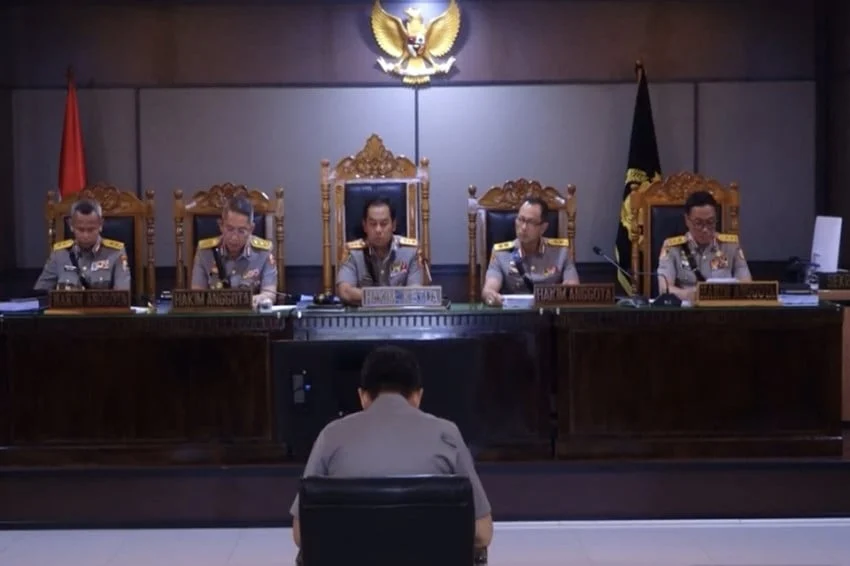
- Formation of the Special Task Force (November 2026): With the investigation moving into the realm of treason, the Polri leadership formally announced the formation of the Asep Safrudin-led task force to centralize evidence gathering and interrogate key suspects, including Listyo Sigit Prabowo and his associates.
Official Statements and Procedural Delays
During a press briefing held on Tuesday, November 10, 2026, the Head of the Public Relations Division of the Indonesian National Police, Inspector General Johnny Eddizon Isir, emphasized the gravity of the situation. Addressing the press, Isir stated, "Regarding information and the potential for treason allegations, as we have mentioned in previous releases, the National Police Chief is attentive and responsive. A team chaired by the Kabareskrim has been formed and is currently conducting a deep-dive investigation."
Isir acknowledged the public’s impatience for results but urged stakeholders to recognize the complexity of the digital forensic work involved. "Naturally, the process of deep investigation and inquiry requires time to process thoroughly. I invite the public to support and monitor this legal process. I understand that the media and the public are seeking immediate certainty, but as I stated, this is a delicate, multi-layered investigation."
The police have maintained that the integrity of the institution is at stake. By appointing the Bareskrim chief to lead the task force, the Polri is signaling that it intends to handle this case with the utmost transparency, despite the political sensitivity surrounding a former police chief.
Legal and Political Implications
The implications of this investigation are profound. First, it tests the resilience of Indonesia’s democratic institutions. If a former top law enforcement officer is proven to have engaged in, or facilitated, illegal wiretapping of the President, it suggests a profound institutional capture that has persisted even during the transition of power.
From a legal standpoint, proving "makar" requires evidence of intent—specifically, proof that the wiretapping was not merely an act of espionage or intelligence gathering, but a foundational step in a plan to destabilize the government. Legal experts note that the prosecution will likely rely heavily on digital evidence, including intercepted encrypted logs, server access records, and financial trails connecting the suspects to external interests.
Furthermore, the dismissal of high-ranking officers like Ahrie Sonta suggests that the purge is not limited to the leadership level but extends to the mid-tier operational layers of the Polri. This "cleansing" process is necessary for the administration of President Prabowo to consolidate control over the security sector, which has historically been a critical power center in Indonesian politics.
Broader Impact on National Security
The scandal has sparked a national debate regarding the oversight of intelligence-gathering capabilities within the Indonesian government. Critics argue that the existing framework governing the use of intercept technology lacks sufficient independent civilian oversight. If a former police chief can utilize state resources to monitor the President, it indicates a significant failure in the checks and balances designed to prevent the weaponization of the police force.
Economically, the political uncertainty surrounding the case may have ripple effects on foreign investor confidence. Investors typically view stability in the security sector as a prerequisite for long-term commitment in Indonesia. The administration’s firm stance in prosecuting its own former officials is being watched closely by international observers as a sign of whether the rule of law is being applied equally, regardless of the suspect’s past rank or influence.
Future Outlook and Expected Challenges
As the investigation proceeds, the special task force faces several challenges. Firstly, the risk of "information leakage" from within the police force remains high. Given that many of the suspects previously held high-ranking positions, they likely possess intimate knowledge of how to manipulate or destroy digital evidence.
Secondly, the task force must balance the need for public transparency with the need to protect state secrets. Since the case involves the President’s personal and official communications, much of the evidence presented in court may be subject to closed-door proceedings, which could lead to accusations of a lack of transparency.
Ultimately, the successful resolution of this case will be a litmus test for the Polri’s autonomy. By aggressively pursuing those who have compromised the security of the nation, the institution hopes to restore public trust. However, the path forward is fraught with political peril. The nation awaits the final findings of the Asep Safrudin-led team, which are expected to set a new precedent for how Indonesia handles internal threats to its constitutional integrity.
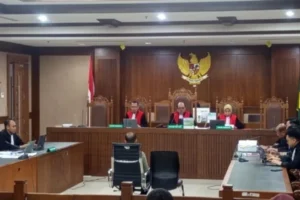
The case remains active, with the Polri pledging further updates as the evidentiary phase concludes. For now, the focus remains on the meticulous verification of digital logs and the systematic questioning of individuals who were, until recently, at the helm of the very institution currently investigating them. The outcome of this trial will undoubtedly define the political landscape of Indonesia for the foreseeable future, ensuring that the principle of "no one is above the law" remains a central pillar of the nation’s governance.