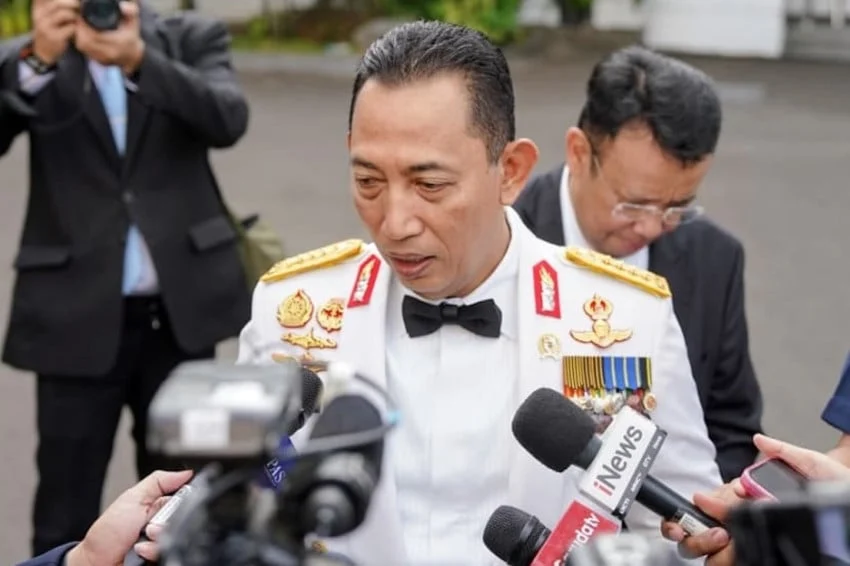
Jakarta — In a shocking development that has sent ripples through Indonesia’s national security apparatus and political landscape, the Indonesian National Police’s Criminal Investigation Agency (Bareskrim Polri) has officially named former National Police Chief General Listyo Sigit Prabowo as a suspect in a high-profile illegal wiretapping and data manipulation case. The investigation, which marks an unprecedented downfall for a former top law enforcement officer in the country, also implicates two high-ranking police generals: Inspector General Ahrie Sonta and Inspector General Eko Hadi Santoso.
According to official statements released by Bareskrim Polri, the charges stem from allegations of illegal wiretapping, the malicious deletion of electronic data, and unauthorized access to secure electronic systems. Most alarmingly, investigators revealed that one of the primary targets of the illicit surveillance operation was sitting Indonesian President Prabowo Subianto. As the gravity of the accusations sets in, the fallout from this case threatens to destabilize public trust in key state institutions while underscoring the strict legal boundaries governing state intelligence and cybersecurity in modern Indonesia.
The sweeping charges leveled against the three high-ranking officials carry severe legal penalties. Under the statutory framework applied by Bareskrim Polri, the suspects face a maximum sentence of 10 years in prison if convicted. This landmark case not only highlights the strict enforcement of Indonesia’s digital privacy laws but also signals a zero-tolerance approach toward abuse of power within the nation’s security architecture.
Legal Basis and Charges Filed by Bareskrim Polri
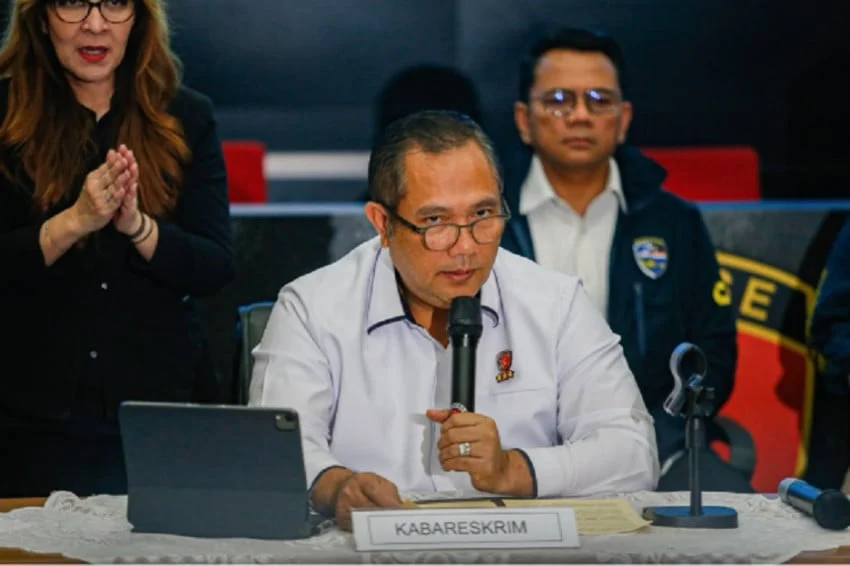
Detailing the legal grounds for the arrests and designations, Bareskrim Chief Commissioner General Asep Safrudin outlined the specific statutory provisions applied to General Listyo Sigit Prabowo and his co-accused officers. Investigators have built their case using a combination of articles from the newly enacted Criminal Code (UU Nomor 1 Tahun 2023 tentang KUHP) and the Electronic Information and Transactions (ITE) Law.
The primary charge is anchored in Article 258 of the new Criminal Code, which explicitly criminalizes the unlawful interception, listening to, recording, or transmission of non-public electronic information without legal authorization. This provision is designed to protect private communications and state secrets from unauthorized surveillance, whether conducted by private citizens or rogue state actors. In addition to illegal wiretapping, investigators have piled on charges related to illegal access under the ITE Law and the intentional tampering with or deletion of critical electronic data logs, actions purportedly taken to cover up the clandestine surveillance operations.
Legal analysts have noted that the inclusion of the new Criminal Code provisions in such a high-stakes political case demonstrates the government’s resolve to test the boundaries of modern cybercrime and privacy legislation against high-ranking officials. The intersection of physical state power and digital security protocols makes this prosecution a defining moment for Indonesian jurisprudence.
The Swift Chronology of Events
The stunning reversal of fortune for General Listyo Sigit Prabowo unfolded with breathtaking speed. Only a month prior to his designation as a criminal suspect, he stepped down from his powerful position as the Chief of the Indonesian National Police (Kapolri). The transition of power at the top of the police force was initially viewed as a routine administrative handover following the inauguration of President Prabowo Subianto’s administration.
However, behind the scenes, internal audits and digital forensic investigations initiated by security agencies began uncovering anomalies in communication security protocols. Whistleblowers and cybersecurity teams flagged unauthorized access points and suspicious data harvesting activities that pointed directly to the upper echelons of the National Police.

By early November 2026, the investigation reached a critical threshold. Bareskrim Polri formally upgraded the status of General Listyo Sigit Prabowo, Inspector General Ahrie Sonta, and Inspector General Eko Hadi Santoso from witnesses to suspects. In an unprecedented spectacle that dominated national headlines, the former Kapolri was swiftly transitioned from the pinnacle of law enforcement authority to being detained as a suspect within the very institution he once commanded. The rapid progression from his departure as police chief to his current status as a detained criminal suspect underscores the gravity and urgency with which investigators approached the breach of presidential security.
Background Context and Institutional Implications
The revelation that the sitting president was targeted for illegal wiretapping exposes vulnerabilities at the intersection of national security, intelligence, and internal police operations. In any democratic state, the interception of communications belonging to the head of state represents a severe national security threat, categorized not merely as a domestic cybercrime, but potentially as a breach of sovereign security.
The involvement of high-ranking generals—figures who once wielded immense operational control over intelligence networks, cyber divisions, and internal security apparatuses—raises critical questions regarding institutional oversight. During his tenure as Kapolri, General Listyo Sigit Prabowo oversaw major modernization initiatives within the police force, including the expansion of digital policing and electronic surveillance capabilities. The irony that these very technological tools were allegedly turned inward against the nation’s highest office has sparked intense debate among lawmakers, legal scholars, and civil society organizations.
Experts on governance and security sector reform have pointed out that this case serves as both a cautionary tale and a test of institutional resilience. On one hand, the willingness of Bareskrim Polri to investigate and detain a former police chief demonstrates a commitment to the rule of law and the principle that no individual, regardless of their former rank, is above the law. On the other hand, the breach itself reveals systemic vulnerabilities in how sensitive state communications are protected from internal sabotage or unauthorized surveillance.
Broader Political and Public Reactions
As news of the indictment spread across national media networks, reactions from political figures, legal experts, and the general public have been swift and varied. Members of the House of Representatives (DPR RI) have called for a transparent, thorough, and independent judicial process to ensure that all dimensions of the conspiracy are brought to light. Lawmakers emphasized that public confidence in state institutions hinges on the complete impartiality of the legal proceedings, free from political interference or institutional shielding.
Civil society groups focusing on digital rights and legal transparency have expressed cautious optimism regarding the strict enforcement of the ITE Law and the new Criminal Code. While privacy advocates have historically scrutinized the overreach of surveillance laws against ordinary citizens, the application of these same statutes against top-tier security officials has been viewed as a rare instance of accountability. However, watchdogs also caution that the investigation must strictly adhere to due process, ensuring that transparency prevails over speculation.
The psychological and political impact on the Indonesian National Police (Polri) cannot be overstated. The institution, which is currently striving to maintain public trust and reform its internal culture, faces a profound morale challenge. Having a former leader detained on charges as grave as conspiring against the head of state forces the organization to confront uncomfortable truths about internal discipline and the concentration of power.
Outlook and Future Legal Proceedings
As the legal process moves forward, Bareskrim Polri is expected to expand its inquiry to determine whether additional individuals—both within and outside the police force—were complicit in the illegal wiretapping network. Investigators are currently conducting forensic examinations of seized digital devices, servers, and communication logs to map out the full extent of the conspiracy, the motives behind the surveillance, and whether any sensitive data was disseminated or exploited.
The trial, when it commences, is anticipated to be one of the most closely watched legal proceedings in modern Indonesian history. With a potential 10-year prison sentence looming over General Listyo Sigit Prabowo and his co-accused generals, the case will set a monumental legal precedent for how the state handles abuse of power, digital privacy violations, and breaches of presidential security in the years to come.