
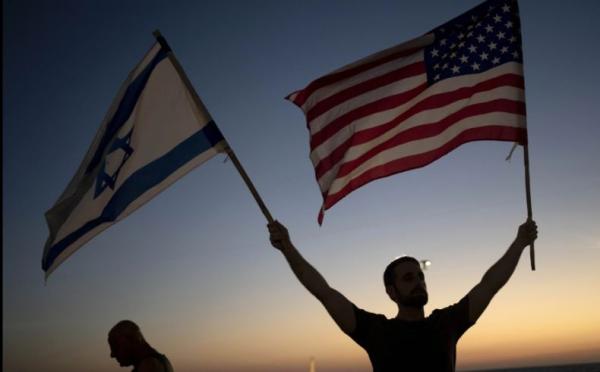
The strategic alliance between the United States and Israel is currently undergoing a period of intense, behind-the-scenes negotiation aimed at securing a multi-year military cooperation framework. This diplomatic effort, shrouded in relative secrecy, comes as both nations navigate a rapidly evolving political landscape following the recent U.S. midterm elections, which saw the Democratic Party secure control of the U.S. Congress. As the clock ticks toward the inauguration of a new legislative body in January 2027, Israeli officials are pushing for a finalized agreement to insulate their national security interests from potential shifts in American foreign policy.
The Catalyst: Shifting Political Winds in Washington
The impetus for these urgent negotiations stems from concerns within the Israeli establishment regarding the sustainability of military aid under the incoming Congress. While the U.S.-Israel relationship has historically been bipartisan, recent trends within the Democratic Party have indicated a more critical stance toward unconditional military support for Israel, particularly regarding regional conflict management and humanitarian concerns.
For Israeli decision-makers, the goal is to codify a support mechanism that extends well beyond the current legislative cycle. By locking in a new deal before the new Congress convenes in January 2027, the Israeli government aims to create a "firewall" that protects their defense procurement pipelines from the political volatility that often accompanies a change in congressional leadership.
Chronology of the Current Diplomatic Maneuvering
The timeline of these negotiations reflects a broader sense of urgency within the Israeli government, which is currently undergoing its own internal transition. Following the appointment of Gadi Eisenkot by President Isaac Herzog to form a new government—bypassing Benjamin Netanyahu—the Israeli political sphere is in a state of flux.
- November 3, 2026: The U.S. midterm elections result in a significant shift, with the Democratic Party capturing control of both the House and the Senate.
- Early November 2026: Reports emerge from Israeli media, specifically Yedioth Ahronoth, that back-channel discussions between Washington and Jerusalem have intensified.
- Mid-November 2026: Negotiators focus on reconciling the conflicting narratives between past executive promises and the reality of long-term defense budgeting.
- Target Deadline (Late 2026): Israel aims to conclude the technical details of the agreement before the swearing-in of the 120th U.S. Congress in early January 2027.
Reconciling Policy Discrepancies
A significant point of friction in these negotiations is the discrepancy between public statements made by former President Donald Trump and the actual administrative progress of the aid packages. Trump had previously signaled that military assistance to Israel would be phased out entirely by the end of 2026. This pronouncement created considerable anxiety in Jerusalem, where the defense budget is heavily reliant on the Memorandum of Understanding (MoU) framework.
However, the current proposal being drafted suggests a more nuanced approach. Rather than an abrupt termination, the new deal contemplates a gradual reduction of direct military aid over a five-year period, beginning after the current agreement expires in 2028. This represents a pragmatic compromise: it acknowledges the fiscal and political pressures within the United States to reduce foreign military spending while providing Israel with the necessary transition time to adapt its domestic defense industry and financial planning.
The Economic and Military Implications
The military aid provided by the United States to Israel is not merely a financial transfer; it is a linchpin of the regional security architecture. Since the 2016 MoU, which provided for $38 billion in aid over ten years, the funding has primarily been used for sophisticated defense systems, including the Iron Dome, David’s Sling, and the Arrow missile defense programs.
A reduction in this aid would necessitate a significant restructuring of Israel’s defense budget. Analysts suggest that if the flow of American capital is tapered, Israel may be forced to:
- Increase its own defense spending as a percentage of GDP, which could impact domestic social programs.
- Seek alternative procurement partnerships, potentially looking toward domestic technological innovation or niche partnerships with European defense firms.
- Accelerate the export of Israeli-made defense technology to offset the loss of U.S. grants.
Broader Regional Context: The Iran Factor
The urgency of these negotiations cannot be viewed in isolation from the broader geopolitical challenges facing the Middle East. The ongoing tensions regarding Iran’s nuclear program and its influence through regional proxies remain the primary driver for Israel’s security concerns.
For the Israeli government, the guarantee of consistent U.S. military support is seen as a deterrent against regional adversaries. A perception of a weakening U.S.-Israel defense bond could, in the eyes of Tehran and its allies, embolden hostile actions. Therefore, the current negotiations are as much about maintaining "strategic ambiguity" and regional deterrence as they are about the actual procurement of hardware.
Official Responses and Political Realities
While the Biden-Harris administration and the newly empowered Democratic leadership in Congress have not released specific details regarding these negotiations, the general consensus from Washington observers is that the support for Israel remains a foundational element of U.S. foreign policy. However, the nature of that support is increasingly tied to conditions involving transparency and the handling of the Palestinian territories.

In Israel, the appointment of Gadi Eisenkot as the lead for government formation signals a shift toward a more security-focused, pragmatic governance style. Eisenkot, a former Chief of General Staff, is well-versed in the intricacies of the U.S.-Israel military relationship. His involvement suggests that the negotiations will prioritize technical military needs over ideological posturing, aiming to secure the best possible terms despite the unfavorable shift in Washington’s power dynamics.
Analysis: What the New Deal Represents
The move to negotiate a new, multi-year agreement indicates that both nations recognize the limitations of the existing framework. The original 2016 agreement was designed for a different era of global politics. The current push for a new deal is an admission that the post-2026 world requires a new financial and operational blueprint.
The "gradual phase-out" strategy being discussed acts as a diplomatic buffer. It allows American policymakers to claim they are meeting the mandate to reduce foreign aid commitments, while simultaneously allowing Israel the stability required to maintain its qualitative military edge (QME) in a volatile region.
Future Outlook
As the negotiations enter their final phase, the focus will remain on the fine print—specifically, the timelines for the "tapering" of funds and the conditions attached to the remaining aid. Whether the new U.S. Congress will attempt to interfere in these executive-level negotiations remains a primary concern for the Israeli delegation.
Legislative oversight of foreign aid is a powerful tool in the hands of the new congressional majority. Should the Democratic leadership decide to scrutinize these negotiations, it could introduce significant delays or additional requirements that were not part of the original discussions. For now, the process remains a high-stakes balancing act: keeping the gears of military cooperation moving while navigating the turbulent waters of domestic politics in both Washington and Jerusalem.
Ultimately, the outcome of these talks will define the trajectory of U.S.-Israel relations for the remainder of the decade. The shift from a paradigm of unconditional, long-term support to a model of structured, conditional, and potentially declining aid marks a historic turning point in one of the world’s most enduring strategic partnerships. As both sides work toward a January 2027 deadline, the global community watches closely, aware that the stability of the Middle East remains tethered to the strength of this bilateral cooperation.