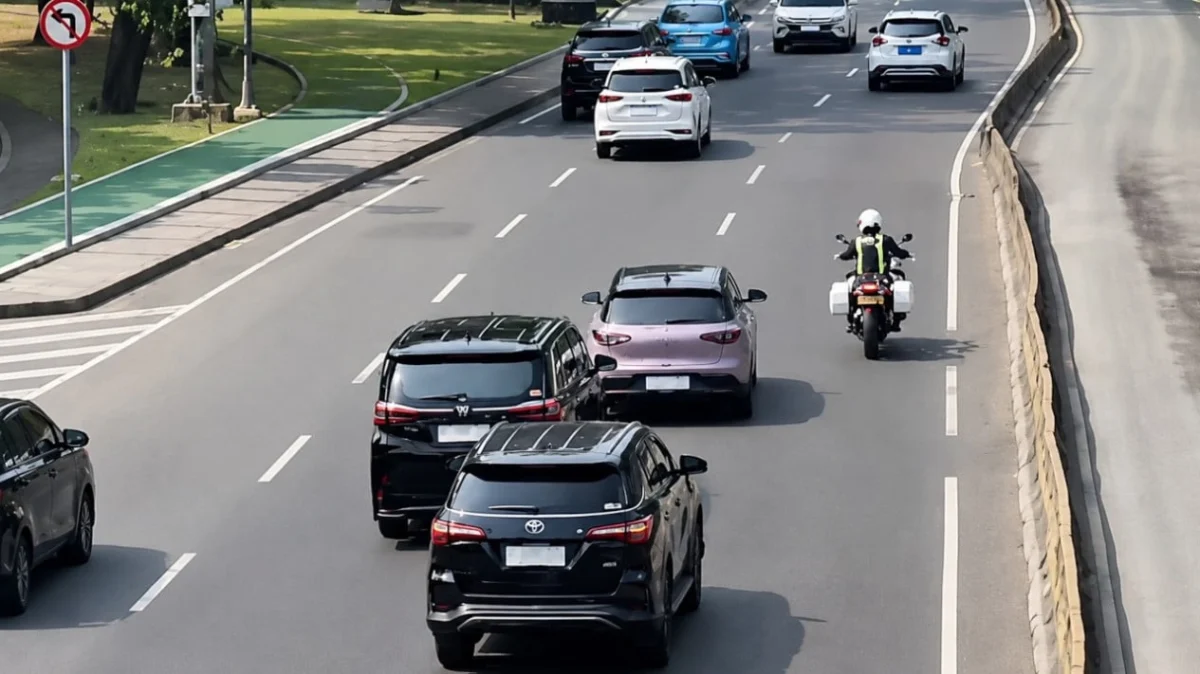
Jakarta, VIVA – A seemingly innocuous video, widely circulated across social media platforms on Sunday, July 19, 2026, has inadvertently thrust Indonesia’s intricate traffic regulations, particularly those governing priority vehicles, strobe lights, and sirens, back into the national spotlight. The footage depicts a vibrant pink Geely EX2 electric vehicle maintaining its lane discipline, steadfastly refusing to yield ground as a convoy, complete with flashing lights and blaring sirens, attempted to navigate through the traffic. This singular act of defiance, or perhaps adherence to standard traffic protocol, has sparked a fervent public debate, drawing widespread commentary and reigniting long-standing questions about road etiquette, privilege, and the consistent application of traffic laws in the archipelago.
The Catalyst: A Pink EV’s Unwavering Stance
The viral video, timestamped around 17:06 WIB on Sunday, July 19, 2026, quickly became a trending topic across platforms like X (formerly Twitter), Instagram, and TikTok. It showcased a compact Geely EX2, a popular urban electric vehicle known for its distinctive design and eco-friendly credentials, proceeding calmly in its lane. In stark contrast, an approaching motorcade, ostensibly a non-emergency escort, was observed attempting to assert its priority with the characteristic flash of strobes and the insistent wail of sirens. The driver of the pink Geely, however, appeared unfazed, continuing its trajectory without swerving or slowing excessively, forcing the convoy to adjust its path slightly or wait for a clearer opening.
This visual clash between a standard road user and a presumed VIP escort immediately resonated with a public often frustrated by perceived abuses of road privileges. While the specific details of the convoy’s occupants or the nature of their escort remained unconfirmed, the incident became a powerful symbol. It encapsulated a broader sentiment among Indonesian motorists: a desire for fair and equitable application of traffic laws, irrespective of status or vehicle type. The Geely EX2, a symbol of modern urban mobility, inadvertently became the standard-bearer for ordinary citizens against what many view as an entrenched culture of entitlement on the roads.
Deciphering the Law: Indonesia’s Traffic Priority Framework
The ensuing public discussion swiftly gravitated towards the legal framework governing traffic priority and the use of special signaling devices. In Indonesia, the use of flashing lights (strobo) and sirens is not arbitrary but strictly regulated. The foundational legal instruments are Undang-Undang Nomor 22 Tahun 2009 tentang Lalu Lintas dan Angkutan Jalan (Law No. 22 Year 2009 on Traffic and Road Transportation, hereinafter referred to as UU LLAJ) and further elaborated by Peraturan Pemerintah Nomor 55 Tahun 2012 tentang Kendaraan (Government Regulation No. 55 Year 2012 on Vehicles, hereinafter referred to as PP 55/2012). These regulations aim to ensure road safety, maintain order, and clearly define the hierarchy of road users, particularly concerning emergency and priority vehicles.
Specifics on Signal Lights and Sirens (Article 59 UU No. 22/2009):
Article 59 of the UU LLAJ explicitly delineates the types of vehicles permitted to be equipped with signal lights and sirens, categorizing them by color and their specific functions:

- Blue Signal Lights and Sirens: These are exclusively designated for vehicles belonging to the Kepolisian Negara Republik Indonesia (Indonesian National Police). Their use is critical for law enforcement, rapid response to crime scenes, and maintaining public order, allowing police units to navigate traffic efficiently during critical operations.
- Red Signal Lights and Sirens: Vehicles authorized to use red signal lights accompanied by sirens include:
- Detention vehicles, ensuring secure and swift transportation of detainees.
- Escort vehicles for the Tentara Nasional Indonesia (Indonesian National Armed Forces), primarily for operational movements or dignitary protection.
- Mobil pemadam kebakaran (fire engines) during emergency responses to fires or other incidents requiring immediate presence.
- Ambulans (ambulances) transporting sick or injured individuals, where time is often a critical factor for survival.
- Kendaraan untuk memberikan pertolongan pada kecelakaan lalu lintas (traffic accident relief vehicles), which need to reach accident sites quickly to provide assistance and clear obstructions.
The red light signifies an immediate emergency or critical mission requiring other road users to yield.
- Yellow Signal Lights (typically without sirens): These lights serve as a warning signal for specific operational vehicles, indicating their presence or a potential hazard, rather than demanding immediate right-of-way in the same manner as red or blue lights. This category includes:
- Kendaraan patroli jalan tol (toll road patrol vehicles), for monitoring and assisting motorists on highways.
- Kendaraan pengawasan sarana dan prasarana lalu lintas (traffic infrastructure supervision vehicles), for inspecting and maintaining road networks.
- Kendaraan perawatan dan pembersihan fasilitas umum (public facility maintenance and cleaning vehicles), such as street sweepers or utility repair trucks.
- Kendaraan derek (tow trucks), when operating to clear disabled vehicles.
- Kendaraan yang mengangkut barang khusus yang memerlukan pengamanan selama perjalanan (vehicles transporting special goods requiring security during transit), which may include oversized loads or hazardous materials.
The primary purpose of yellow lights is to enhance visibility and alert other drivers to their operational status.
Misuse of these signaling devices carries legal penalties. While the original text doesn’t specify them, generally, under Indonesian traffic law, unauthorized use of strobes or sirens can result in fines and potentially imprisonment, depending on the severity and intent, typically falling under categories related to violating traffic signs and signals or using equipment not conforming to vehicle specifications. For instance, individuals found using unauthorized strobes or sirens could face penalties as stipulated in Article 287 paragraph (4) of the UU LLAJ, which often includes a fine of up to IDR 250,000 or a maximum of one month imprisonment, reflecting the seriousness of maintaining road order and preventing confusion.
Right of Way Hierarchy (Article 134 UU No. 22/2009):
Beyond the equipment, UU LLAJ also clarifies the hierarchy of vehicles granted priority on the road, as outlined in Article 134. This article dictates which vehicles are entitled to immediate right-of-way, requiring other road users to yield:
- Mobil pemadam kebakaran yang sedang bertugas (fire engines on active duty).
- Ambulans yang membawa orang sakit (ambulances transporting sick or injured persons).
- Kendaraan untuk memberikan pertolongan pada kecelakaan lalu lintas (vehicles providing assistance in traffic accidents).
- Kendaraan pimpinan lembaga negara Republik Indonesia (vehicles of leaders of state institutions of the Republic of Indonesia).
- Kendaraan tamu negara (vehicles of state guests).
- Iring-iringan pengantar jenazah (funeral convoys).
- Kendaraan tertentu yang mendapat pengawalan petugas Kepolisian Negara Republik Indonesia (certain vehicles receiving escort from Indonesian National Police officers).
It is crucial to note that for categories 4, 5, and 6, the right of way is generally conditional upon receiving a legitimate escort from the National Police. This distinction is vital; merely being a state leader or state guest does not automatically confer priority without the official police escort, which then dictates the necessary road clearing. This nuance is often misunderstood by the public and sometimes overlooked by those in unofficial convoys.
Korlantas Polri’s Proactive Stance: The 2026 Technical Guidelines
In a significant move to address persistent public concerns and standardize practices, the Korps Lalu Lintas (Korlantas) Polri, the National Police Traffic Corps, had already taken proactive steps. In early 2026, months before the Geely EX2 incident, Korlantas Polri issued comprehensive technical guidelines for traffic escort procedures. These guidelines were reportedly developed in response to a growing number of public complaints regarding aggressive convoy behaviors, unauthorized use of sirens and strobes, and incidents where official escorts posed risks to other road users.
As VIVA Otomotif observed on Sunday, July 19, 2026, these guidelines emphasized several critical points:
- Proportional Use: Strobes and sirens are to be used strictly proportionally, only when necessary to ensure safety or facilitate passage for legitimate priority vehicles. This aims to curb their indiscriminate and excessive use.
- Safety First: Escorts must avoid maneuvers that could endanger other road users. This includes reckless driving, sudden lane changes without warning, or blocking intersections unnecessarily, which have historically been sources of public frustration and accidents.
- Humanistic Approach: Officers conducting escorts are instructed to adopt a more humanistic and communicative approach when requesting priority from other drivers. This means avoiding intimidation, using clear hand signals, and prioritizing safety over speed, fostering better cooperation from the public.
- Strict Adherence to Law: The guidelines reiterated that only vehicles explicitly mentioned in UU LLAJ Article 59 and 134 are entitled to special privileges, and even then, under strict operational protocols.
The issuance of these 2026 guidelines underscored Korlantas Polri’s recognition of the public’s grievances and its commitment to improving traffic order and public trust. The pink Geely EX2 incident, occurring just months after these guidelines were formalized, served as an immediate real-world test and a stark reminder of the ongoing challenges in their implementation and public awareness.
Expert Perspectives and Official Responses

The viral video quickly prompted reactions from various stakeholders. A spokesperson for Korlantas Polri, speaking on condition of anonymity due to the ongoing public discussion, stated, "We are aware of the video circulating. This incident, while isolated, serves as a crucial reminder for both our officers and the public about the importance of adhering to traffic laws and the new technical guidelines issued earlier this year. Our commitment remains to ensure fair and safe roads for everyone. We continuously train our personnel to apply the guidelines proportionally and humanely."
Similarly, an official from the Ministry of Transportation (Kemenhub), who preferred not to be named, highlighted the broader implications: "The regulations are clear, but enforcement and public understanding are key. Kemenhub fully supports Korlantas Polri’s efforts to standardize escort procedures. Road safety is a collective responsibility, and every road user, regardless of their status, must respect the rules designed to protect us all."
Traffic law analyst Dr. Budi Santoso from the University of Indonesia commented, "This incident reflects a deep-seated issue in our road culture. While the laws are robust, their consistent application and public awareness remain challenging. The Geely driver’s action, whether intentional or not, highlighted a public desire for equality on the roads. It also exposes the enforcement gap where unauthorized convoys or those not following guidelines continue to operate. There’s a critical need for sustained public education campaigns and strict penalties for violators, especially those who abuse power."
Road safety advocate Ms. Rina Wijaya from ‘Jalan Aman’ NGO added, "The public’s response to the pink Geely video is a clear message: citizens are tired of seeing privilege override safety and law. We need clearer public communication from authorities on who truly has priority and under what circumstances. Moreover, empowering citizens to report abuses through accessible channels could be a game-changer, fostering greater accountability."
The Broader Implications: Trust, Safety, and Future Road Culture
The viral pink Geely EX2 incident, far from being a mere traffic curiosity, carries significant broader implications for Indonesian society.
- Erosion of Public Trust: Incidents of perceived abuse of road privileges by official or unofficial convoys contribute to a growing public cynicism towards authorities and government officials. When ordinary citizens feel that laws are applied unequally, it undermines the rule of law and public trust in institutions. The video, therefore, became a symbol of resistance against this perceived inequity.
- Risks to Road Safety: Unauthorized or poorly managed convoys pose genuine risks to road safety. Aggressive maneuvers, sudden lane changes, and the expectation of immediate yielding can lead to accidents. The confusion caused by non-standard or illegally equipped vehicles further complicates traffic flow and increases collision potential.
- Socio-Political Context of Privilege: The debate surrounding priority vehicles often touches upon deeper socio-political issues of privilege and power. In a society grappling with social inequalities, the visual representation of certain individuals or groups demanding preferential treatment on public roads can ignite strong reactions, symbolizing broader disparities.
- Role of Technology and Public Reporting: The incident also highlighted the growing power of citizen journalism and social media. Dashcam footage and smartphone videos enable the public to document and disseminate incidents, holding authorities and individuals more accountable. This trend necessitates a transparent and responsive mechanism for handling public reports.
- Educational Initiatives: There is an undeniable need for continuous and comprehensive public education campaigns regarding traffic laws, particularly those related to priority vehicles. Many drivers, both civilian and official, may not fully understand the nuances of the regulations. Clearer signage, public service announcements, and accessible information can bridge this knowledge gap.
- Evolving Road Culture: As Indonesia’s vehicle fleet diversifies, with a growing number of electric vehicles like the Geely EX2, and traffic congestion remains a challenge, the nation’s road culture must evolve. This incident provides an opportunity to reassess old norms and reinforce a culture of respect, safety, and adherence to the law for all road users.
Conclusion: A Shared Responsibility for Orderly Roads
The viral footage of the pink Geely EX2, refusing to be swayed by a passing convoy, has become more than just a fleeting internet sensation. It has catalyzed a crucial national dialogue on road discipline, the legitimate use of authority, and the fundamental principle of equality under the law. As Indonesia strives for more orderly and safer roads, the incident underscores the imperative for consistent enforcement of existing regulations, continuous public education, and a renewed commitment from all stakeholders to uphold the spirit of the law. Ultimately, navigating the nation’s roads safely and efficiently is a shared responsibility, demanding respect, understanding, and adherence to rules from every driver, whether in a standard vehicle or a state-escorted convoy. The incident of Sunday, July 19, 2026, serves as a powerful reminder that an orderly road is built on the foundation of fairness and mutual respect, not perceived privilege.