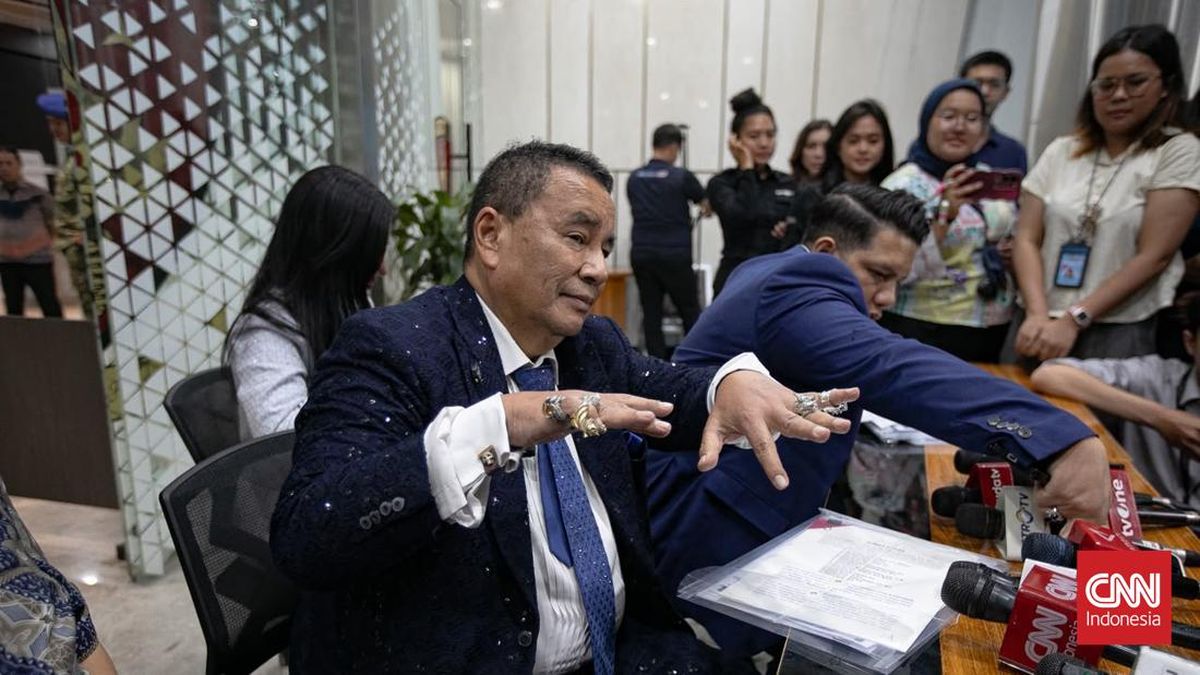
The Indonesian Editors Forum (Forum Pemred) has issued a strong condemnation regarding the conduct of prominent lawyer Hotman Paris Hutapea during a press conference held at the Attorney General’s Office on Friday, July 17, 2015. The forum specifically criticized Hotman Paris’s demeanor and choice of words when responding to journalists’ questions concerning his client, former Deputy Attorney General for Special Crimes (Jampidsus) Febrie Adriansyah. Retno Pinasti, Chairperson of the Forum Pemred, characterized Hotman Paris’s response as "highly unprofessional" and "demeaning to the journalistic profession," emphasizing that such behavior undermines the fundamental principles of press freedom and the legal protections afforded to media professionals under Indonesian law.
The incident, which quickly drew widespread attention within media circles, highlighted recurring tensions between public figures and the press in Indonesia. Hotman Paris, known for his flamboyant style and often provocative public statements, reportedly used dismissive language and displayed an arrogant attitude when confronted with journalists’ inquiries. According to Retno Pinasti, phrases such as "Do you have a brain?" were allegedly directed at reporters, demonstrating a profound lack of respect for the media’s legitimate role in seeking information for public dissemination. The Forum Pemred’s statement, released on Sunday, July 19, 2015, and widely quoted by various media outlets including Detiknews, underscored the gravity of the situation, asserting that journalists were merely carrying out their duties as mandated by Law No. 40 of 1999 concerning the Press.
Background: The High-Profile Febrie Adriansyah Case and Hotman Paris’s Role
The press conference in question revolved around the legal affairs of Febrie Adriansyah, a former high-ranking official within the Attorney General’s Office. While the specifics of the case were not detailed in the original condemnation, the involvement of a former Jampidsus inherently implies a matter of significant public interest, often pertaining to corruption, high-profile criminal investigations, or other sensitive legal issues. In Indonesia, the Jampidsus plays a critical role in prosecuting major corruption cases, making any legal proceedings involving such an official a subject of intense media scrutiny and public concern.
Hotman Paris Hutapea, a well-known figure in Indonesia’s legal landscape, frequently represents high-profile clients, including celebrities, politicians, and business magnates. His media presence is substantial, often leveraging press conferences and public appearances to articulate his clients’ positions. While his aggressive and outspoken style has often been seen as effective in advocating for his clients, it has also occasionally led to friction with various parties, including the media. This particular incident, however, crossed a line for the journalistic community, as it directly challenged the professional integrity and legal protections of reporters. The expectation for legal professionals, especially those representing public figures in matters of national interest, is to engage with the media responsibly and respectfully, even when declining to answer specific questions.
Chronology of the Incident and Immediate Fallout
The sequence of events leading to the Forum Pemred’s condemnation unfolded rapidly:
- Friday, July 17, 2015: A press conference is convened at the Attorney General’s Office, attended by lawyer Hotman Paris Hutapea, representing his client, former Jampidsus Febrie Adriansyah. The exact nature of the case being discussed, though significant, is secondary to the interaction itself.
- During the Q&A session, journalists posed questions to Hotman Paris. The content of these questions was presumably part of standard journalistic inquiry aimed at understanding the legal proceedings and seeking clarity on behalf of the public.
- Hotman Paris’s response to some of these questions was characterized by the Forum Pemred as unprofessional and demeaning. Specific examples cited included rhetorical questions aimed at disparaging the intelligence of journalists and an overall arrogant posture.
- Journalists present at the scene likely felt insulted and professionally undermined by these remarks, prompting internal discussions within media organizations.
- Sunday, July 19, 2015: The Forum Pemred, a collective body representing editors-in-chief from various Indonesian media outlets, issues an official statement condemning Hotman Paris’s behavior. The statement is attributed to its Chairperson, Retno Pinasti, and quickly circulates among news agencies, highlighting the media community’s unified stance against such treatment.
This swift reaction from the Forum Pemred underscores the seriousness with which the Indonesian media views any actions perceived as an impediment to journalistic work or an affront to the profession’s dignity. The timing, just two days after the incident, indicates a rapid consensus among media leaders that such conduct could not go unchallenged.
The Forum Pemred’s Unwavering Stance and Legal Foundations
Retno Pinasti’s statement meticulously outlined the Forum Pemred’s position, rooted deeply in the principles of press freedom and professional ethics. She reiterated that the act of asking questions is fundamental to journalistic work, serving as the primary method for confirming information, gathering facts, and obtaining statements from sources. This process is integral to the "journalistic work process and the discipline of professional verification," which is explicitly protected by law.
Crucially, the Forum Pemred emphasized that while sources have the right to decline answering questions, this right does not extend to responding with insults or arrogance. "It is highly inappropriate for a source to respond to journalists’ questions in a demeaning manner, whether through word choice, such as ‘Do you have a brain?’, or through arrogant behavior that completely fails to address the substance of the question," Retno asserted. This distinction is vital: a source can choose silence or provide a "no comment," but they cannot engage in verbal abuse or intimidation without violating the spirit of media-source relations and potentially legal provisions.
The legal bedrock for the Forum Pemred’s condemnation is Law No. 40 of 1999 concerning the Press (Undang-Undang Pers). This landmark legislation is a cornerstone of press freedom in post-New Order Indonesia. Article 8 of this law is particularly relevant, explicitly stating that journalists are afforded legal protection while carrying out their profession. This protection encompasses several critical aspects:
- Right to Refuse (Hak Tolak): Journalists have the right to keep their sources confidential.
- Prohibition of Censorship: Media outlets cannot be subjected to censorship.
- Freedom from Violence and Intimidation: Journalists must be free from acts of violence, intimidation, or harassment while performing their duties.
Retno Pinasti underscored that "intimidating ways of responding to journalists’ questions, both verbally and non-verbally, contradict Law No. 40 of 1999 on the Press and the spirit of press freedom." This legal framework is not merely a formality; it is a vital safeguard for ensuring that the press can fulfill its role as a watchdog, an information provider, and a platform for public discourse without fear of reprisal or undue pressure. The Forum Pemred’s invocation of this law highlights that the issue transcends mere etiquette; it delves into the legal and ethical boundaries of public engagement with the media.
Broader Implications for Press Freedom and Professional Conduct
The incident involving Hotman Paris and journalists at the Attorney General’s Office carries significant broader implications for press freedom in Indonesia and the professional conduct expected from public figures and legal representatives. Such occurrences, while perhaps seemingly isolated, contribute to a cumulative environment that can either foster or stifle independent journalism.
Firstly, repeated instances of disrespect or intimidation towards journalists can have a chilling effect on reporting. If reporters fear verbal abuse or public humiliation, they may become hesitant to ask probing questions, especially in high-stakes legal cases involving influential figures. This self-censorship, even if subtle, can severely compromise the media’s ability to hold power accountable and inform the public comprehensively.
Secondly, the incident underscores the ongoing need for mutual respect between professions. Journalists operate under a specific code of ethics and legal mandates, just as lawyers do. While lawyers advocate for their clients, journalists advocate for the public’s right to know. These roles, though distinct, are interdependent in a functioning democracy. When one profession demeans another, it erodes the societal trust necessary for these institutions to operate effectively. The Forum Pemred’s call for "all parties to uphold press freedom by respecting each other’s professions and prioritizing competence and professional ethics" is a crucial reminder of this interdependence.
Thirdly, this event serves as a public education moment. It highlights to the general public the challenges journalists face and the importance of the legal protections afforded to them. For many citizens, the intricacies of press law might be obscure. When a prominent body like the Forum Pemred steps forward to defend journalists based on explicit legal provisions, it raises public awareness about the media’s rights and responsibilities.
Supporting Data and General Trends in Media-Public Figure Interactions
While specific quantitative data on such incidents in Indonesia from 2015 is not readily available without external research, qualitative observations and historical trends reveal that interactions between journalists and public figures, especially legal professionals, can often be fraught with tension.
- Historical Context: In many countries, including Indonesia, the relationship between the press and figures of authority has historically been complex. The transition from authoritarian rule to democracy brought with it stronger legal protections for the press, but ingrained attitudes of superiority or dismissiveness towards media workers can persist.
- High-Stakes Reporting: When journalists cover high-profile legal cases, they are often dealing with individuals under immense pressure (clients) and their representatives (lawyers) who are strategically managing narratives. In such environments, aggressive questioning by journalists can be met with equally aggressive, or even hostile, responses.
- Global Parallels: Incidents of journalists being verbally attacked or intimidated by public figures are not unique to Indonesia. News organizations globally often report on similar challenges, prompting media advocacy groups to consistently call for greater respect for journalistic work and adherence to press freedom principles. The United Nations and various international press freedom organizations routinely highlight the need for governments and public figures to ensure a safe and respectful environment for media professionals.
The Forum Pemred’s statement acts as a critical piece of qualitative data, demonstrating the organized media’s readiness to defend its members and the integrity of its profession against perceived affronts. It signals that the media community will not passively accept behavior that undermines its constitutional and legal rights.
Inferred Reactions and the Path Forward
While the original article does not provide Hotman Paris’s direct response to the Forum Pemred’s condemnation, it is possible to infer potential reactions or broader sentiments. A lawyer of Hotman Paris’s stature might typically argue that he was passionately defending his client, or that the journalists’ questions were inappropriate, leading to his strong reaction. He might also contend that his comments were taken out of context or that he was simply expressing frustration under pressure. However, such justifications, even if offered, would unlikely negate the Forum Pemred’s central argument regarding professional decorum and legal obligations.
The Attorney General’s Office (Kejaksaan Agung), as the host of the press conference, would likely maintain a neutral stance, emphasizing its commitment to transparency while also respecting the legal process. They might reiterate general guidelines for media interactions within their premises, without directly taking sides in the dispute between the lawyer and the press.
The Forum Pemred’s firm stance sends a clear message that such incidents will not be tolerated. The organization explicitly stated its "great interest in the safety and honor of journalists in carrying out journalistic duties, including fighting against those who deliberately harass the journalistic profession or even obstruct journalistic work." This commitment signifies that the forum is prepared to take further action, whether through public advocacy, formal complaints, or collaboration with legal bodies, to ensure that the protections enshrined in the Press Law are upheld.
The incident serves as a vital reminder for all public figures, especially those in positions of power or influence, to exercise caution and respect when interacting with the media. It highlights the need for ongoing education on media literacy and ethics, not just for journalists but also for sources and public relations professionals. A healthy democracy relies on a robust and free press, and maintaining this requires mutual respect, adherence to professional standards, and unwavering commitment to legal protections.
In conclusion, the Forum Pemred’s condemnation of Hotman Paris’s conduct was a powerful affirmation of journalistic rights and professional dignity in Indonesia. By invoking the Press Law and emphasizing the importance of respectful engagement, the forum underscored that the media’s role in a democratic society is sacrosanct and must be protected from any form of intimidation or disrespect. The incident, while specific, reflects broader challenges in media-public figure relations and serves as a critical call for all parties to uphold the principles of press freedom and professional integrity.