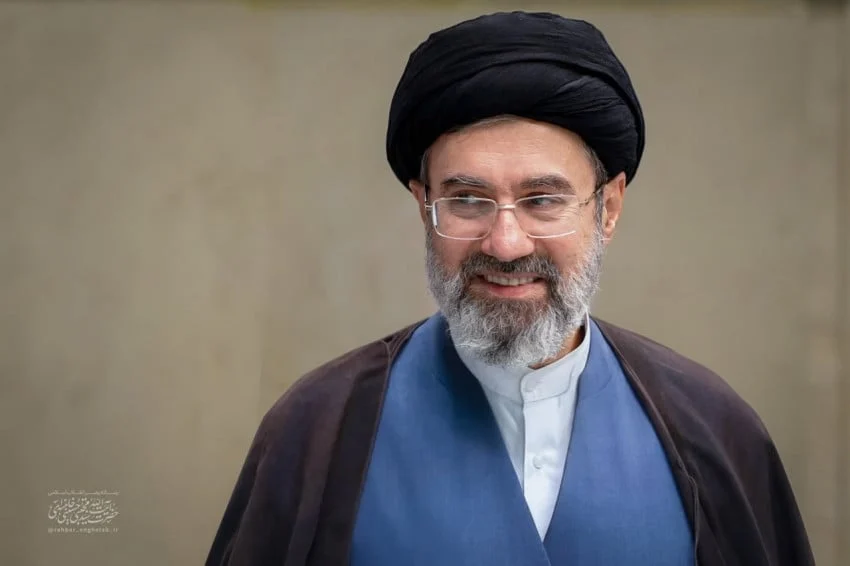
The era of foreign domination over Iran has officially come to an end with no prospect of return, according to a recent high-profile address delivered by Ayatollah Seyyed Mojtaba Khamenei. Speaking to the public and military leadership on the occasion of Holy Defense Week—which commemorates the onset of the devastating 1980–1988 war imposed by former Iraqi dictator Saddam Hussein—Khamenei asserted that the Islamic Republic is firmly on a trajectory toward full-fledged superpower status. His remarks also coincided with solemn commemorations marking the second anniversary of the martyrdom of former Hezbollah leader Sayyed Hassan Nasrallah, tying Iran’s regional resistance strategy directly to its broader geopolitical ambitions.
During his address, Khamenei contrasted historical vulnerabilities with contemporary strategic deterrence. He pointedly recalled that during the early decades of the 20th century and leading up to the 1979 Islamic Revolution, foreign powers—specifically Western nations and their regional proxies—treated Iran’s sovereign waters as an unhindered playground for military and economic exploitation. Today, however, that dynamic has undergone a fundamental transformation. According to Khamenei, adversarial naval forces no longer dare to cross into the Arabian Sea due to the high costs inflicted by Iranian defense forces and the Islamic Revolutionary Guard Corps (IRGC) units stationed along the critical Strait of Hormuz.
Background Context: The Geopolitical Legacy of the 1979 Revolution and the Iran-Iraq War
To understand the weight of Mojtaba Khamenei’s recent assertions, it is essential to examine the historical architecture of Iran’s foreign policy and security doctrine, which is deeply rooted in the events of the 20th century. Prior to the 1979 Islamic Revolution, Iran was governed by the Pahlavi dynasty under Mohammad Reza Shah. During this era, foreign diplomats—predominantly from the United States, Great Britain, and other Western nations—wielded immense influence over domestic governance, economic policy, and military procurement. The Shah’s administration was frequently criticized by domestic opponents for pandering to foreign interests, particularly concerning the extraction and export of Iran’s vast oil and natural gas reserves.
The 1979 Islamic Revolution radically upended this paradigm, replacing a pro-Western monarchy with a theocratic republic centered around the principle of Velayat-e Faqih (Guardianship of the Islamic Jurist). This systemic shift transformed Iran from a close Western ally into a fiercely independent actor explicitly opposed to foreign interference in the Middle East.
Barely a decade into its founding, the newly established Islamic Republic faced an existential threat. On September 22, 1980, the Baathist regime of Iraq, led by Saddam Hussein, launched a full-scale military invasion of Iran. Backed financially and logistically by numerous regional and international powers who feared the export of the Iranian revolution, Iraq sought a swift military victory to dismantle the fledgling clerical government.
Instead, the conflict devolved into an eight-year war of attrition—reminiscent of the brutal trench warfare of World War I—that claimed hundreds of thousands of lives. Despite severe international isolation, economic blockades, and Iraq’s use of chemical weapons, Iran successfully defended its territorial integrity. In his recent remarks, Khamenei invoked the imagery of the mythical phoenix to describe how the nation rose from the ashes of the war, emerging with a hardened military infrastructure, an indigenous defense manufacturing sector, and an ideological resilience that continues to define its national security posture.
Chronology of Strategic Realignment in the Persian Gulf
The transformation of the Persian Gulf and the broader Middle East security architecture has evolved through distinct phases over the past four decades. Tracing this chronology provides critical context for Khamenei’s claims regarding Iran’s naval deterrence:
1979–1980: The geopolitical fault lines of the modern Middle East are drawn. The overthrow of the Pahlavi dynasty terminates decades of Western hegemony, swiftly followed by the outbreak of the Iran-Iraq War.
1980–1988: The Holy Defense Era. Iran mobilizes millions of citizens through the Basij volunteer force and regular military units, successfully halting the Iraqi invasion despite severe resource constraints.
1990s–2000s: Post-war reconstruction and asymmetrical doctrine development. Denied access to advanced Western weaponry due to comprehensive sanctions, Iran focuses on developing domestic missile technology, fast-attack naval craft, and asymmetric warfare capabilities tailored to the geography of the Persian Gulf and the Strait of Hormuz.
2010s: Regional expansion and the "Axis of Resistance." Iran deepens its strategic depth by coordinating with allied state and non-state actors across Lebanon, Syria, Iraq, and Yemen, solidifying its deterrent posture far beyond its immediate borders.
2020–Present: Assertion of naval dominance and superpower aspirations. Following repeated confrontations with foreign navies in the Persian Gulf, Gulf of Oman, and northern Arabian Sea, Iranian leadership declares that hostile maritime forces have been effectively pushed back from its immediate spheres of influence.
Core Pillars of Iran’s Superpower Ambitions
While Khamenei’s address emphasized ideological resilience, strategic analysts and Iranian state media have outlined several foundational pillars supporting the narrative of Iran’s ascendance to superpower status:
-
Asymmetrical Naval Deterrence and Control of Chokepoints
The Strait of Hormuz remains one of the most critical energy transit chokepoints in the world, through which a significant portion of global petroleum passes daily. Khamenei emphasized that the IRGC Navy has established an ironclad defensive perimeter. Through the deployment of anti-ship cruise missiles, fast-attack craft swarms, and advanced coastal radar systems, Iran has raised the operational risk for foreign navies attempting to project power near its shores. Tehran maintains that any hostile adventurism in the Arabian Sea or the Persian Gulf will result in unacceptable economic and military consequences for the aggressor. -
Indigenous Defense Capabilities and Technological Self-Sufficiency
DecADES of sweeping international sanctions have paradoxically catalyzed Iran’s domestic defense sector. Rather than collapsing under economic isolation, the country has engineered a wide array of military hardware, including precision-guided ballistic missiles, long-range loitering munitions (drones), air defense batteries, and naval vessels. This self-reliance ensures that Iran’s military readiness is insulated from external supply chain disruptions, allowing it to project regional deterrence independently. -
Consolidation of the Axis of Resistance
Iran’s strategic doctrine relies heavily on "forward defense"—engaging adversaries outside its borders through a network of allied regional movements known collectively as the Axis of Resistance. The mention of Sayyed Hassan Nasrallah during Khamenei’s address underscores the enduring importance of groups like Hezbollah in Lebanon, alongside aligned forces in Iraq, Syria, and Yemen. By maintaining a coordinated front across multiple theaters, Tehran projects influence that stretches from the Levant to the Persian Gulf, challenging the traditional unipolar security framework previously dominated by the United States and its regional allies. -
Ideological Continuity and National Cohesion
Drawing a direct line from the sacrifices of the 1980–1988 war to contemporary geopolitical challenges, the Iranian leadership continues to leverage revolutionary ideology to foster domestic unity. By framing current economic hardships and geopolitical tensions as part of a historical struggle against arrogant foreign powers, the establishment seeks to reinforce national resilience against external pressure.
Regional and International Implications
Khamenei’s declarations arrive at a volatile juncture for the Middle East, characterized by shifting diplomatic alignments, ongoing conflicts, and heightened tensions between Iran, Israel, and Western powers.
From an analytical standpoint, the assertion that foreign navies are retreating from the Arabian Sea reflects Tehran’s desire to project an image of unassailable strength to both domestic and international audiences. While the United States and its allies maintain a robust military presence in the broader Middle East—including the U.S. Fifth Fleet headquartered in Bahrain—frequent friction in regional waters has tested the rules of engagement. Incidents involving the seizure of commercial oil tankers, drone encounters, and skirmishes involving regional proxies have highlighted the persistent risk of escalation in these vital shipping lanes.
Neighboring Gulf Cooperation Council (GCC) states, including Saudi Arabia and the United Arab Emirates, have recently pursued a dual-track approach of diplomatic engagement with Tehran while maintaining security partnerships with Western powers. This pragmatic diplomacy aims to mitigate the very security risks that Iranian officials frequently highlight, ensuring that maritime trade and energy infrastructure remain insulated from potential open conflict.
Furthermore, economic implications remain profound. As Iran continues to weather rigorous international sanctions, its deepening strategic and economic integration with alternative global powers—such as Russia and China—provides a vital counterweight to Western isolation. Membership in multilateral blocs like the Shanghai Cooperation Organisation (SCO) and BRICS further signals Tehran’s systematic effort to anchor its economy within a multipolar global order, directly aligning with the narrative of emerging superpower status.
Conclusion
Ayatollah Seyyed Mojtaba Khamenei’s address serves as a forceful reaffirmation of Iran’s long-term strategic doctrine: absolute rejection of foreign hegemony, reliance on indigenous military power, and the consolidation of regional alliances. By framing past hardships as the crucible in which modern Iran was forged, the leadership seeks to project confidence in the face of persistent geopolitical headwinds. Whether these ambitions translate into sustained superpower standing will depend not only on military deterrence and regional networking, but also on navigating complex domestic economic realities and an increasingly interconnected and volatile international arena.