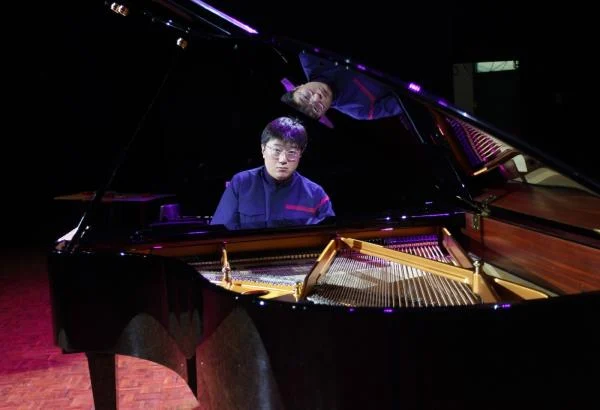
The global stage of classical music is set to welcome back one of Indonesia’s most accomplished exports as virtuoso pianist Alfred Young Sugiri prepares for a high-profile performance in the heart of Europe. On October 1, 2026, the Bandung-born musician will take the stage at the prestigious ORF Radiokulturhaus (Großer Sendesaal) in Vienna, Austria. This performance marks a significant milestone in his international career, solidifying his status as a leading figure in the contemporary classical music landscape.
A Prestigious Collaboration in Vienna
The upcoming concert in Vienna represents a pinnacle of artistic collaboration. Sugiri has been invited to perform as the primary soloist alongside the Hungarian State Symphony Orchestra of Szolnok. The ensemble, renowned for its technical precision and emotional depth, will be under the baton of esteemed American conductor Everett McCorvey. Adding to the gravity of the event, the concert will also feature the acclaimed violinist Maria Solozobova, creating a program that promises to be a tour de force of orchestral and solo talent.
The choice of venue, the ORF Radiokulturhaus, is significant. As the cultural broadcast center of the Austrian Broadcasting Corporation, the Großer Sendesaal is a hallowed hall that has hosted some of the most influential musicians of the 20th and 21st centuries. For a pianist to be invited to lead a concert in such an acoustic landmark serves as a testament to Sugiri’s technical proficiency and his ability to resonate with European audiences. The event is expected to draw an audience of approximately 1,500 to 2,000, consisting of music critics, classical enthusiasts, and international dignitaries.
A Journey Through the European Classical Circuit
Alfred Young Sugiri’s ascent to this level of prominence is not an overnight success story, but rather the result of over a decade of disciplined cultivation in the European classical scene. His journey began in earnest in 2015 when he officially joined a prominent German artist management firm. Since then, he has meticulously built a portfolio that reads like a directory of the world’s most respected classical music institutions.
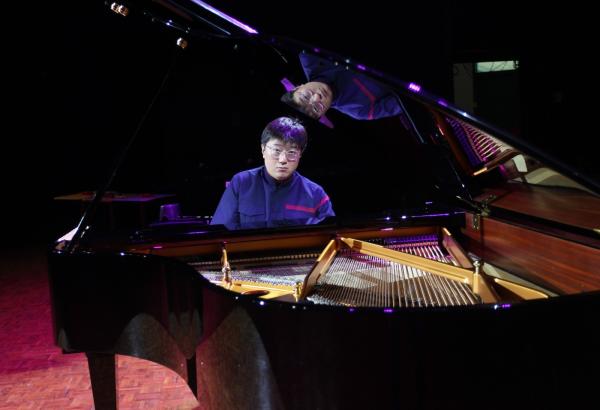
His resume includes participation and performances at the Bach International Festival and the Brahms Festival—events that serve as gatekeepers to the highest tiers of classical recognition. Furthermore, his association with the Yamaha Foundation of Europe and the C. Bechstein concert series highlights his standing as a pianist of choice for top-tier instrument manufacturers and musical foundations. The DAAD (German Academic Exchange Service) Prize, which he earned during his academic tenure in Germany, further underscores the rigorous training that shaped his stylistic approach.
The 2026 European Tour: An Evolving Narrative
The 2026 tour is structured into two distinct segments. The first, a private, exclusive engagement in Hungary, serves as a masterclass in intimate performance, focusing on nuanced interpretation and technical accuracy in a setting designed for high-level musical discourse. This will be followed by the public showcase in Vienna, which provides the grandeur and scale required for a soloist of his caliber.
Reflecting on his return to the European stage, Sugiri expressed a complex blend of professional readiness and personal humility. "Dapat undangan tampil lagi di Eropa kali ini rasanya campur aduk—antara senang, deg-degan, nervous, dan bangga karena masih diberi kepercayaan oleh Tuhan untuk tampil di hadapan publik Eropa," he stated in an interview ahead of the tour. He noted that the environment in Europe is exceptionally competitive, and maintaining a foothold in the circuit requires constant evolution. "Tidak mudah untuk mendapatkan kepercayaan di panggung musik klasik Eropa, apalagi bisa tampil dalam konser tertutup yang sifatnya sangat eksklusif di Hungaria serta panggung megah di Wina. Ini kehormatan besar bagi saya."
Contextualizing the Impact of Indonesian Musicians Abroad
The success of Alfred Young Sugiri provides a broader look at the trajectory of Indonesian talent in the global arts sector. While Indonesia has long been recognized for its rich traditional music heritage, the emergence of virtuosos like Sugiri demonstrates a deepening integration of Indonesian artists into the Western classical canon.
Experts in musicology often point to the "cross-pollination" of styles that occurs when musicians trained in Asian conservatories transition into the European professional landscape. Sugiri, who completed his advanced studies in Germany, represents a bridge between these two worlds. His ability to interpret the works of Bach, Brahms, and other European masters while maintaining a distinct personal identity is what continues to garner interest from European impresarios.

The Role of Orchestras and Conductors in Artistic Growth
The inclusion of a conductor of Everett McCorvey’s stature indicates the seriousness with which this performance is being approached. McCorvey, known for his work in both symphonic and operatic realms, provides a framework that allows a soloist to shine without compromising the integrity of the orchestra. For Sugiri, performing under a seasoned conductor provides an opportunity to test his interpretive boundaries.
Collaborating with the Hungarian State Symphony Orchestra of Szolnok also brings a unique flavor to the performance. Hungarian symphonic traditions are deeply rooted in a history of intense, expressive playing, which contrasts interestingly with the more rigid, structural expectations often found in Viennese classical traditions. The synthesis of these two forces—the Indonesian soloist and the Hungarian orchestra—is precisely the kind of international synergy that global classical festivals strive to achieve.
Analyzing the Logistics and Professional Standards
Behind every major concert is a massive logistical operation. The organization required to manage an international tour, secure bookings in prestigious halls like the ORF Radiokulturhaus, and coordinate between an Indonesian soloist, an American conductor, and a Hungarian orchestra is significant. This process highlights the professional maturity of Sugiri’s management team.
In the world of classical music, the "second act" of a career is often more difficult than the first. Having established himself as a rising talent years ago, Sugiri’s 2026 tour serves as a transition into the phase of a "mid-career master." This phase is characterized by a shift from proving one’s technical competence to demonstrating deeper maturity, wisdom, and an individual "voice" in his playing. Critics will likely be listening for how his interpretation of standard repertoire has matured since his earlier festival appearances.
Future Implications for Cultural Diplomacy
Beyond the music itself, such performances serve as vital tools for cultural diplomacy. When a pianist from Indonesia headlines a sold-out concert in Vienna, it shifts the perception of the country’s cultural output. It moves the conversation away from traditional expectations and toward a more contemporary, globalized understanding of talent.

As Sugiri prepares for the October 1st concert, the expectations are high. However, his track record suggests that he is well-equipped to meet them. The combination of his formal education in Germany, his decade-long experience in the European circuit, and the high-profile nature of his upcoming collaborators suggests that this tour will be a defining moment in his career.
As the date approaches, the eyes of the classical music community—both in Indonesia and abroad—will be on the ORF Radiokulturhaus. For Alfred Young Sugiri, the concert is more than just a performance; it is a manifestation of years of persistence, a bridge between nations, and a confirmation of his place among the world’s most significant pianists. Whether through the technical rigor of his playing or the emotive power of his performances, Sugiri continues to prove that the language of classical music remains a universal medium, one that he has mastered with remarkable poise and distinction.