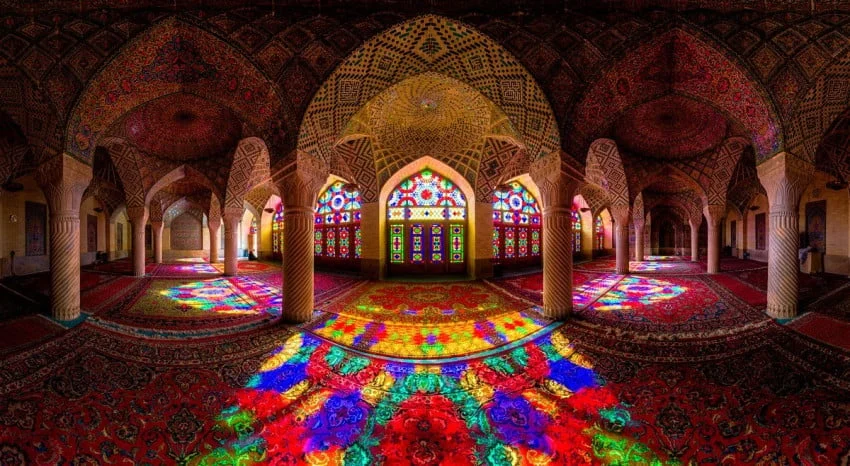
TEHRAN — High-ranking military leadership within the Islamic Republic of Iran has formally underscored the strategic necessity of preserving, identifying, and actively integrating the nation’s profound historical and cultural assets into contemporary public life. Major General Ahmad Vahidi, a senior commander of the Islamic Revolutionary Guard Corps (IRGC), articulated these viewpoints during a high-profile address in the Iranian capital, framing cultural heritage not merely as a relic of the past, but as an active, stabilizing force for national identity and social cohesion.
The commentary delivered by General Vahidi places renewed emphasis on a long-standing ideological framework within the Iranian establishment. According to the senior commander, the directives and philosophical foundations laid down by the late Leader of the Islamic Revolution, Ayatollah Seyyed Ali Khamenei, consistently pointed toward the immense, largely untapped reservoir of historical wealth embedded within Persian and Islamic traditions. Vahidi argued that modern governance and societal development must incorporate technological and administrative mechanisms capable of extracting and translating these historical lessons into actionable strategies for the modern citizenry.
This strategic perspective reflects a broader government narrative in Iran that views culture and history as primary bulwarks against external geopolitical pressures, cultural globalization, and internal social fragmentation. By mobilizing public participation and weaving historical touchstones into everyday civic routines, the state seeks to fortify the ideological resilience of younger generations.
The Historical and Ideological Context of Cultural Preservation in Iran
To fully understand the weight of General Vahidi’s remarks, it is essential to examine the socio-political backdrop of cultural administration in the Islamic Republic. Iran possesses one of the world’s oldest continuous major civilizations, with historical and urban settlements dating back to 4000 BCE. The synthesis of ancient Persian imperial traditions with the advent of Islam in the 7th century created a unique cultural tapestry that has continually evolved over centuries.
Following the 1979 Islamic Revolution, the preservation and promotion of culture underwent a profound paradigm shift. Culture was no longer viewed merely through an academic or aesthetic lens; it was re-engineered as an instrument of statecraft and anti-imperialist resistance. The revolutionary leadership recognized that historical narratives and religious observances possessed the mobilization capacity to unite the population during times of crisis, such as the eight-year Iran-Iraq War in the 1980s.
In recent decades, Iranian state institutions—ranging from the Ministry of Culture and Islamic Guidance to specialized bodies within the IRGC—have increasingly focused on what they term "soft power" and "cultural defense." This framework treats cultural heritage as a strategic domain, akin to national defense or economic security. Consequently, calls from senior military figures like General Vahidi to systematize the extraction and utilization of historical assets highlight the blurring lines between national security, institutional ideology, and cultural management in contemporary Iran.
The Mechanics of Heritage Utilization: Bridging Past and Present
During his address, General Vahidi elaborated on the practical dimensions of cultural preservation, noting that current methodologies remain insufficient given the vast scale of the country’s historical wealth. He pointed out that while Iran’s historical archives, architectural marvels, and religious traditions are globally renowned, the administrative and technological frameworks required to translate these assets into daily educational and social frameworks are still developing.
"One of the precious assets to be uncovered—as stated by the late Leader of the Revolution—is the development of technology and mechanisms to extract and utilize the wealth contained in the vast treasury of cultural and historical heritage," Vahidi stated during the Tuesday assembly.
This call for systematic extraction involves several key initiatives currently being explored by academic and cultural institutions across Iran:
- Digital Archiving: Converting ancient manuscripts, architectural blueprints, and oral histories into accessible digital formats for public consumption and academic research.
- Curricular Integration: Expanding educational modules within primary and secondary schools that blend localized historical narratives with national identity studies.
- Public Commemoration: Enhancing state-sponsored events, exhibitions, and public gatherings to foster communal engagement with historical milestones.
By modernizing these outreach efforts, state planners aim to counter what officials frequently describe as "cultural invasion" from Western media and digital platforms, ensuring that domestic historical consciousness remains dominant among the youth.
The Pillars of Iranian Resilience: The Significance of Ashura
Within the broader discourse on Iranian national strength, specific historical and religious observances occupy a central role. General Vahidi specifically highlighted the event of Ashura as a paramount example of a cultural and spiritual asset that continually reinforces the ideological framework of the nation.
Ashura, commemorated on the 10th day of the Islamic month of Muharram, marks the martyrdom of Imam Hussain (AS)—the third Shia Imam and the grandson of the Prophet Muhammad—along with his family and companions at the Battle of Karbala in 680 CE. For the Shia Muslim majority in Iran, and for the nation as a whole, Ashura is far more than an annual day of mourning; it is an enduring paradigm of resistance against tyranny, injustice, and oppression.
The chronology and sociological impact of Ashura rituals in Iran are deeply embedded in the nation’s political and social history:
- Pre-Revolutionary Mobilization: Throughout the 20th century, and notably during the months leading up to the 1979 Islamic Revolution, the rituals of Muharram and Ashura served as crucial organizing tools. Mass processions provided a legitimate public space for political dissent, bypassing the strict surveillance of the Pahlavi regime’s security apparatus.
- Wartime Inspiration: During the Iran-Iraq War (1980–1988), the terminology and ethos of Karbala were omnipresent. Conscripted soldiers and volunteer militia members (Basij) frequently invoked Imam Hussain’s sacrifice to justify steadfastness against invading forces, framing their military service as a direct continuation of the historical struggle at Karbala.
- Contemporary Public Life: Today, the rituals associated with Ashura—including Tazyeh (passion plays), mourning processions (Heyats), and charitable community kitchens (Nazri)—mobilize millions of citizens across urban and rural divides. This widespread participation fosters a deep sense of collective solidarity and shared identity that transcends political or economic grievances.
Broader Implications and Analytical Perspectives
The emphasis placed by military leadership on cultural assets such as Ashura sheds light on the internal calculus of Iran’s governing establishment. Analysts observing the region note that as Iran faces persistent economic sanctions, diplomatic isolation, and geopolitical friction with Western and regional adversaries, state cohesion relies heavily on ideological durability.
By framing cultural heritage as an active resource rather than a passive collection of artifacts, leaders like General Vahidi are attempting to future-proof the nation against external pressures. The strategy relies on reinforcing domestic legitimacy through deeply resonant historical and religious narratives.
However, this approach is not without its domestic complexities. Sociologists point out that while traditional and religious heritage resonates deeply with a significant portion of the population, bridging the gap between state-sponsored cultural narratives and the secular or modern aspirations of a tech-savvy younger generation remains an ongoing challenge. The insistence on developing new "mechanisms and technologies" to extract cultural wealth suggests an awareness among policymakers that traditional outreach methods must evolve to remain effective in a digitized, globalized world.
Ultimately, the discourse surrounding Iran’s cultural heritage reflects a nation actively utilizing its deep historical roots to navigate contemporary geopolitical storms. Whether through the timeless narrative of Ashura or the broader preservation of Persian history, the Islamic Republic continues to position its cultural legacy as its most resilient shield and its most potent instrument of national continuity.