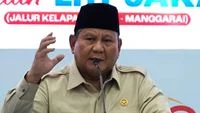
The Indonesian government is pressing forward with a strategic structural overhaul in environmental governance, spearheaded by President Prabowo Subianto’s directive to establish the National Peatland and Mangrove Management Agency (Badan Pengelolaan Gambut dan Mangrove Nasional, or BPGMN). This decisive policy move stems from extensive consultations with leading scientists, academic researchers, and environmental experts who presented empirical data underlining the critical vulnerability of Indonesia’s vast tropical wetlands.
Minister of Forestry Raja Juli Antoni revealed that the creation of the BPGMN is designed to deliver a rigorous, science-driven approach to ecosystem conservation. The agency’s primary mandate will center on preventing devastating forest and land fires (karhutla), preserving delicate carbon sinks, and restoring degraded ecosystems across vulnerable provinces. By elevating peatland and mangrove management to a dedicated, high-level institution reporting directly to the presidency, the administration aims to resolve systemic coordination failures that have historically plagued environmental management in the archipelago.
Chronology of Policy Formulation and Expert Consultations
The genesis of the BPGMN traces back to high-level dialogues initiated in late September. On Thursday, September 24, President Prabowo Subianto convened a closed-door meeting at the Merdeka Palace in Jakarta, hosting a carefully selected delegation of 22 prominent scientists, hydrologists, ecologists, and academic researchers. During this session, experts presented comprehensive datasets illustrating that existing administrative frameworks were insufficient to address the compounded threats of climate change, deforestation, and recurrent peatland drainage.
Responding directly to these urgent scientific recommendations, President Prabowo announced his decision to institute the specialized body. Following the presidential directive, Minister Raja Juli Antoni announced the policy during a subsequent press briefing. By Wednesday, September 30, the Ministry of Forestry formalized the implementation strategy, outlining a series of collaborative workshops designed to translate the scientists’ conceptual frameworks into actionable bureaucratic mandates.
These upcoming technical sessions will bring together the initial group of 22 academic advisors, specialized mangrove ecologists, and regulatory policy-makers from various ministries, state agencies, and regional governments. The collective objective is to draft comprehensive standard operating procedures (SOPs), define clear institutional boundaries, and structure the organizational hierarchy of the BPGMN. The synthesized outputs from these stakeholder workshops will subsequently form the core text of a Presidential Regulation (Perpres) that will legally establish and empower the new entity.
Structural Evolution: Distinguishing BPGMN from Its Predecessors
The establishment of the BPGMN represents a significant evolution in Indonesia’s institutional architecture for environmental restoration. It succeeds the former Peatland Restoration Agency ( Badan Restorasi Gambut, BRG), which was later expanded into the Peatland and Mangrove Restoration Agency (Badan Restorasi Gambut dan Mangrove, BRGM) established in 2016. However, the BRGM framework officially concluded its operational tenure at the end of December 2024.
According to Minister Raja Juli Antoni, the newly formulated BPGMN departs structurally and functionally from the defunct BRGM in several critical dimensions. Most notably, the administrative reporting line has been elevated. While the previous agency operated under the coordination of the Ministry of Environment and Forestry, the BPGMN will be positioned directly under the authority of the President of the Republic of Indonesia. This direct subordination is intended to grant the agency cross-sectoral leverage, enabling it to command compliance from regional authorities, agricultural conglomerates, and corporate plantation owners alike.
Furthermore, the operational philosophy of the BPGMN emphasizes professional technocracy over bureaucratic routine. The agency will be staffed primarily by independent scientists, environmental engineers, and specialized field professionals. To ensure its mandates are translated into tangible ecological recovery, the administration has committed to allocating a dedicated, substantial budget insulated from standard ministerial budgetary shifts, ensuring long-term financial stability for large-scale restoration projects.
Living Laboratories and Community-Driven Conservation Models
Rather than relying entirely on top-down administrative mandates, the Ministry of Forestry is actively looking to successful grassroots initiatives as structural templates for national replication. A prime focal point of this strategy is the community-managed peatland landscape in Tanjung Leban Village, located in the Bengkalis Regency of Riau Province.
Minister Raja Juli Antoni highlighted the Riau location as a functional "living laboratory" that demonstrates how traditional wisdom and modern ecological science can intersect successfully. For years, local communities in Tanjung Leban have pioneered sustainable peatland management techniques, most notably through integrated water management systems known locally as water sharing.
Through the strategic installation and maintenance of canal blocking infrastructure, local residents have managed to maintain the high water table required to keep carbon-rich peat soils saturated and fire-resistant, while simultaneously allowing agricultural and socio-economic activities to proceed without interruption. This delicate balance prevents the irreversible oxidation and subsidence that typically occur when peatlands are artificially drained for commercial cultivation.
The Ministry plans to use the empirical lessons learned from Tanjung Leban as a standardized training ground. Once the BPGMN is fully operational, its personnel will study these localized methodologies and adapt them for deployment across Indonesia’s six primary high-risk fire provinces. By turning successful community initiatives into nationally scalable policies, the government hopes to foster sustainable land-use practices that reconcile economic productivity with stringent environmental protection.
The Imperative of Multi-Stakeholder Collaboration
A recurring theme in the formulation of the BPGMN is the explicit recognition that state intervention alone cannot safeguard Indonesia’s vast carbon reserves. Peatlands and mangrove forests span millions of hectares across remote islands, making decentralized monitoring and multi-sectoral cooperation an absolute prerequisite for success.
The upcoming workshops coordinated by the Ministry of Forestry are structured to emphasize shared responsibility. Government agencies, scientific institutions, local indigenous communities, and private-sector entities—particularly corporations operating within the forestry, pulp and paper, and palm oil industries—must operate within a unified operational framework.
Corporate accountability remains a critical component of this holistic strategy. With commercial concessions frequently overlapping with carbon-dense peat domes and coastal mangrove belts, the BPGMN is expected to enforce stricter compliance mechanisms. Private enterprises operating near or within fragile ecosystems will be required to integrate canal blocking, hydrological monitoring, and firebreak maintenance into their standard corporate social responsibility and operational compliance protocols. The synergy between government oversight, corporate financing, scientific tracking, and grassroots vigilance forms the ideological cornerstone of the newly designed agency.
Broader Implications and Strategic Environmental Impact
The creation of the BPGMN carries profound domestic and international implications for Indonesia. Globally, Indonesia remains under intense scrutiny regarding its commitments under the Paris Agreement and international frameworks aimed at reducing greenhouse gas emissions from deforestation and land degradation (REDD+). Tropical peatlands store immense quantities of carbon; when dried and ignited, they release massive volumes of carbon dioxide and particulate smog into the atmosphere, causing severe regional health crises and contributing significantly to global climate change.
Domestically, the recurring cycle of forest and land fires has historically inflicted billions of dollars in economic losses, disrupted regional aviation and trade, and degraded public health across Sumatra and Kalimantan. By establishing an autonomous, presidentially-backed agency armed with robust scientific data and dedicated funding, the Indonesian government is signaling a shift from reactive firefighting to proactive landscape management.
However, the ultimate success of the BPGMN will depend heavily on the final provisions codified in the upcoming Presidential Regulation. Analysts note that clarity of jurisdiction, enforcement powers, and insulation from short-term political pressures will be vital. As the Ministry of Forestry moves forward with its 22 expert advisors to finalize the operational blueprints, the international conservation community and domestic stakeholders will be watching closely to see whether this new institutional architecture can effectively protect Indonesia’s irreplaceable wetlands for generations to come.