
The automotive landscape in Southeast Asia is undergoing a profound transformation as Vietnam’s premier electric vehicle (EV) manufacturer, VinFast, elevates Indonesia to the status of a primary strategic pillar in its global growth roadmap. During an exclusive engagement held at Vinpearl, Nha Trang, on November 18, 2026, VinFast Asia CEO Tapan Kumar Ghosh outlined an ambitious vision for the company, signaling that the Indonesian market is no longer just a sales destination, but a core component of the firm’s manufacturing and export strategy. This pivot underscores a broader shift in the regional automotive industry, where Indonesia is increasingly viewed as the nerve center for EV adoption and production capacity.
The Strategic Importance of the Indonesian Market
VinFast’s commitment to Indonesia is anchored in the country’s massive domestic market potential and its proactive government policies aimed at accelerating the transition to green mobility. According to Tapan Kumar Ghosh, the decision to prioritize Indonesia stems from a comprehensive assessment of the nation’s readiness to adopt sustainable transportation solutions. By embedding itself within the local ecosystem, VinFast aims to leverage Indonesia’s geographical advantages to facilitate a robust supply chain that can serve not only the local populace but also the wider ASEAN region and potential international markets.
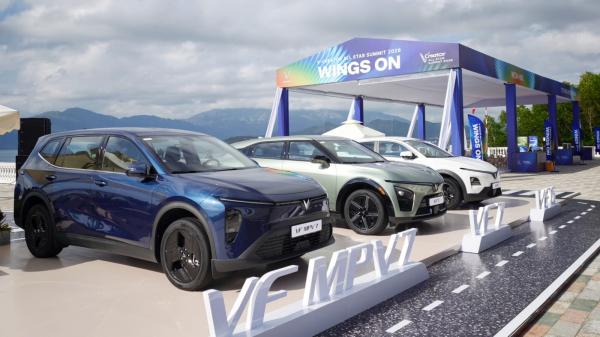
The company’s footprint in Indonesia has grown exponentially. Currently, the brand has introduced a diverse portfolio of seven four-wheeled electric vehicles, including the VF3, VF6, and VF7 models, alongside its green-focused mobility solutions such as the Herio Green and Limo Green series. This rapid deployment of diverse models indicates a multi-pronged approach designed to capture different market segments—from cost-conscious urban commuters to those seeking premium, high-tech electric mobility.
A Chronology of VinFast’s Regional Integration
The evolution of VinFast from a Vietnamese domestic champion to a regional powerhouse has been marked by a series of deliberate, calculated steps. The following timeline highlights the key milestones that have led to the current focus on Indonesia:
- 2017–2018: VinFast is established as part of the Vingroup conglomerate, launching its first internal combustion engine vehicles before pivoting decisively toward an all-electric future.
- 2022: The company announces the cessation of gas-powered vehicle production, a bold move that positioned it as the first traditional automaker to fully transition to an electric-only lineup.
- 2023: VinFast initiates its Southeast Asian expansion plan, conducting feasibility studies in Indonesia, the Philippines, and Thailand to identify manufacturing hubs.
- 2024: Formal market entry into Indonesia begins with the introduction of its signature SUV models and the establishment of local sales networks.
- 2025: Significant investments are pledged toward building local assembly facilities and infrastructure in Indonesia, aiming to comply with local content requirements (TKDN).
- Late 2026: VinFast officially names Indonesia and India as the dual pillars for its international volume growth, moving beyond simple vehicle imports to integrated local manufacturing.
Supporting Data and Market Dynamics
The strategic emphasis on Indonesia is supported by compelling market data. As one of the world’s largest automotive markets by volume, Indonesia’s push for "downstreaming"—a policy that encourages the processing of raw materials like nickel within the country—creates a perfect synergy with EV battery production. Nickel is a critical component of lithium-ion batteries, and Indonesia holds the world’s largest reserves of this metal.
Industry analysts observe that by localizing production, VinFast can effectively circumvent import tariffs and benefit from government subsidies designed to lower the price point of EVs for the Indonesian middle class. The "VF" series lineup is designed specifically to compete with established Japanese and Chinese incumbents that have long dominated the Indonesian market. By offering a combination of competitive pricing, advanced driver-assistance systems (ADAS), and a sophisticated battery-leasing model, VinFast aims to lower the barrier to entry for prospective EV buyers who have previously been deterred by the high cost of ownership associated with electric cars.
Insights from VinFast Leadership
During the briefing in Nha Trang, Tapan Kumar Ghosh emphasized that the company’s success in Vietnam serves as a blueprint for its international operations. "Indonesia, alongside India, represents the most significant opportunity for us to prove our global competitiveness," Ghosh stated. He noted that the company is currently evaluating the feasibility of scaling up production capacities in Indonesia to serve as a regional export hub.

This implies that vehicles manufactured in Indonesian facilities could eventually be shipped to other parts of Southeast Asia, thereby optimizing logistics and reducing the carbon footprint associated with long-distance vehicle transportation. The CEO further highlighted that VinFast’s business model is resilient because it integrates the entire EV ecosystem, including battery manufacturing and a proprietary charging network, which ensures a seamless user experience that is often lacking in fragmented markets.
Broader Implications for the ASEAN Automotive Sector
The entry and expansion of VinFast in Indonesia have significant implications for the regional automotive industry. First, it forces existing players—particularly the dominant Japanese manufacturers who have held a stronghold in Indonesia for decades—to accelerate their own electrification plans. The competition is expected to drive innovation, leading to a wider variety of electric models available to consumers at more competitive prices.
Second, the move solidifies Indonesia’s position in the global EV supply chain. With VinFast, Hyundai, and various Chinese manufacturers setting up local operations, Indonesia is rapidly evolving from a traditional consumer market into a manufacturing powerhouse. This shift is expected to create thousands of jobs, encourage technology transfer, and boost the local manufacturing sector’s capabilities in high-tech engineering and software development.
Third, the environmental impact of this expansion cannot be overstated. As the Indonesian government aims to achieve net-zero emissions by 2060, the rapid electrification of the transportation sector—which is a major contributor to air pollution in urban centers like Jakarta—is a top priority. VinFast’s presence provides the necessary infrastructure and product diversity to make this transition a reality rather than an aspirational goal.

Future Outlook and Challenges
While the outlook for VinFast in Indonesia is optimistic, the company faces significant challenges. Chief among these is the development of charging infrastructure across the archipelago. Unlike Vietnam, where the company has a strong, concentrated presence, Indonesia’s geography presents unique logistical hurdles. Furthermore, the company must continue to build brand trust in a market that is deeply familiar with legacy automotive brands.
To address these hurdles, VinFast has signaled that it will continue to invest in community-based charging solutions and partnerships with local energy providers. The company’s focus on "democratizing" electric vehicles—making them accessible to the general public—remains at the heart of its strategy. Whether through the introduction of smaller, more affordable city cars or the expansion of its electric motorcycle range, VinFast appears prepared to tackle the unique demands of the Indonesian commuter.
As the industry looks toward 2027 and beyond, all eyes will be on the production output of the planned Indonesian facilities. If VinFast can successfully leverage its Indonesian operations to drive down costs and maintain the high-quality standards that have defined its Vietnamese success, it is well-positioned to lead the EV revolution in Southeast Asia. The company’s journey from a nascent startup to a global contender is entering a critical chapter, one where the streets of Jakarta and the surrounding industrial corridors will play a starring role in the company’s quest for international prominence.
By strategically aligning its business goals with the national development priorities of Indonesia, VinFast is not merely selling cars; it is participating in the structural transformation of a major economy. This holistic approach, characterized by local production, market-specific product offerings, and long-term investment, suggests that VinFast is in the Indonesian market for the long haul, ready to navigate the complexities of one of the world’s most dynamic and promising automotive frontiers.