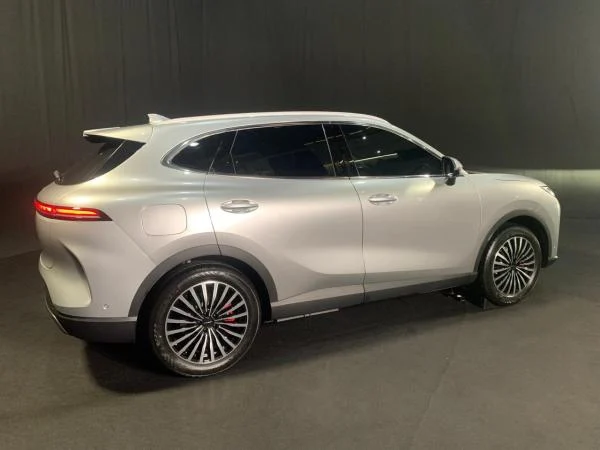
The Indonesian automotive market is on the cusp of a significant technological shift as Lepas, an emerging player in the electric mobility sector, prepares to debut its flagship model, the E6 EV. Scheduled for an official unveiling at the Gaikindo Auto Week (GAW) 2026, the vehicle represents a strategic attempt by the manufacturer to capture a growing demographic of tech-savvy, urban-dwelling consumers. By integrating a sophisticated suite of safety features and a robust battery architecture, the E6 EV seeks to address common concerns regarding range anxiety and vehicular safety in the burgeoning domestic EV ecosystem.
A New Contender in the Electric Arena
The Lepas E6 EV is not merely another electric car entering the market; it is designed as a technological centerpiece meant to demonstrate the company’s "LEX Platform." This proprietary architecture serves as the foundation for the vehicle, prioritizing three pillars: intelligence, efficiency, and safety. In a market where consumer skepticism regarding EV reliability persists, the emphasis on a dedicated platform signals a mature approach to vehicle engineering.
The dimensions of the E6 EV suggest a vehicle designed for the practicalities of modern urban life. Measuring 4,570 mm in length, 1,852 mm in width, and 1,694 mm in height, the vehicle occupies a segment that balances maneuverability in congested city traffic with the interior spaciousness required by young families and professionals. This physical footprint is critical in Indonesia’s major metropolitan areas, where parking efficiency and road navigation remain primary considerations for potential buyers.
Technical Prowess and Safety Integration
One of the most notable aspects of the Lepas E6 EV is its extensive safety technology. The inclusion of 16 distinct Advanced Driver Assistance Systems (ADAS) indicates that the manufacturer is positioning the vehicle as a premium-tier option within its price bracket. ADAS technologies, which include features like lane-keeping assist, adaptive cruise control, and automated emergency braking, have become increasingly standard in global markets. Their inclusion in the E6 EV aligns the model with international safety benchmarks.
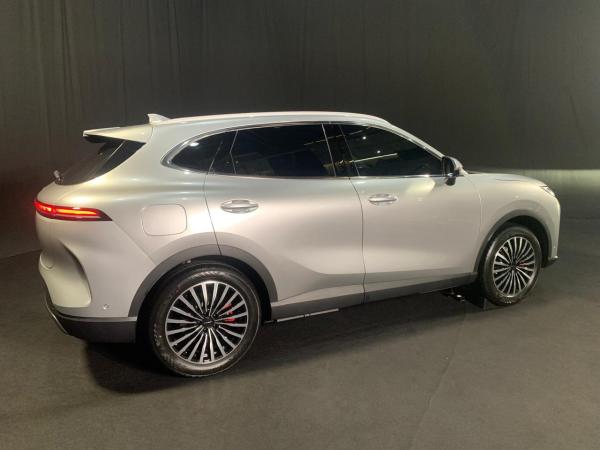
Furthermore, the vehicle boasts a 540-degree HD camera system. While standard 360-degree cameras are becoming common, the 540-degree configuration—which typically includes a view "under" the vehicle to monitor road surface conditions—offers a distinct advantage in navigating uneven terrain or identifying hidden obstacles. Coupled with a 67 kWh battery pack, the E6 EV provides a competitive range that is essential for long-distance travel, effectively bridging the gap between daily commuting and intercity trips.
Market Positioning and Demographic Targeting
Lepas has clearly defined its target audience for the E6 EV. The marketing strategy focuses on the "urban professional," a demographic characterized by high mobility, digital literacy, and a preference for sustainable transportation. By targeting segments such as entrepreneurs, creative industry workers, and young couples, Lepas is banking on the E6 EV’s aesthetic appeal and technological integration to stand out in an increasingly crowded showroom floor at GAW 2026.
Industry analysts suggest that this target group is less price-sensitive than the mass market and more focused on the "Total Cost of Ownership" and brand prestige. By positioning the E6 EV as a vehicle that facilitates a modern, connected lifestyle, Lepas is moving away from the "utility-only" perception of early electric vehicles.
The Broader Context: Indonesia’s EV Evolution
The entry of Lepas E6 EV into Indonesia occurs against a backdrop of national ambition. The Indonesian government has made significant strides in incentivizing the adoption of electric vehicles, primarily through tax breaks and the development of local battery manufacturing supply chains. However, the transition remains gradual.
Historical context provides a vital perspective on why the GAW 2026 launch is significant. For years, the Indonesian EV market was largely defined by pilot projects and luxury imports. Today, the shift is toward mid-market, high-technology vehicles that cater to the local infrastructure. The arrival of new platforms like the LEX architecture signals that manufacturers are no longer just "testing" the Indonesian market; they are investing in it.

As noted by industry observers, Indonesia’s journey toward full electrification is not without challenges. Infrastructure remains a key barrier, particularly the density of public charging stations outside the Jakarta metropolitan area. However, with the introduction of models like the E6 EV, which emphasize efficiency, the onus is now on energy providers to accelerate the rollout of fast-charging networks to support the increased demand.
Comparative Analysis and Industry Implications
When evaluating the E6 EV against existing competitors, the 67 kWh battery capacity places it in a strong position. Most entry-level EVs currently in the Indonesian market utilize smaller battery packs, often limiting their utility for extended travel. By offering a 67 kWh capacity, Lepas is providing a "sweet spot" for users who demand versatility.
Furthermore, the adoption of the LEX Platform suggests that the E6 EV will likely serve as the "parent" model for a broader range of vehicles. In the automotive industry, platform-sharing is the standard for profitability. By investing in the development of a modular architecture, Lepas is likely preparing to launch SUVs, crossovers, or smaller hatchbacks in the coming years, all built upon the same technical foundation. This creates a halo effect, where the initial success of the E6 EV builds brand loyalty that can be leveraged across future product lines.
Expert Insights on Future Technological Trends
The trend toward "software-defined vehicles" is evident in the E6 EV’s feature list. The integration of high-definition cameras and a suite of ADAS sensors suggests that the vehicle is ready for future over-the-air (OTA) updates. This capability is crucial, as it allows the manufacturer to improve the vehicle’s performance, safety, and user interface long after it has left the factory.
Market analysts highlight that for the Indonesian consumer, the "perceived value" of technology is increasing. Buyers are no longer looking for just an electric drivetrain; they are looking for a digital ecosystem that integrates with their smartphones and daily routines. The E6 EV appears to satisfy these requirements, placing the vehicle in direct competition with established international brands that have already dominated the local market for the past few years.

Conclusion: Preparing for GAW 2026
As the countdown to Gaikindo Auto Week 2026 begins, the anticipation surrounding the Lepas E6 EV continues to build. The event is expected to be a turning point for the brand, as it transitions from a newcomer to a market-ready manufacturer.
The success of the E6 EV will ultimately depend on three critical factors: the accuracy of its pricing strategy, the robustness of its after-sales service network, and the reliability of its technology in real-world Indonesian conditions. If Lepas can successfully deliver on the promises of the LEX Platform and provide a seamless ownership experience, the E6 EV could well become a fixture on Indonesian roads.
For now, the automotive community waits to see how the E6 EV will perform under the scrutiny of the public at GAW 2026. With the infrastructure for electric vehicles expanding and consumer interest at an all-time high, the timing for such a launch is optimal. The E6 EV is not just a car; it is a signal that the next phase of Indonesia’s automotive evolution—defined by intelligent, safe, and efficient electric mobility—has officially arrived. As the industry looks forward, the focus will undoubtedly shift to how quickly other manufacturers respond to this new standard of competition.