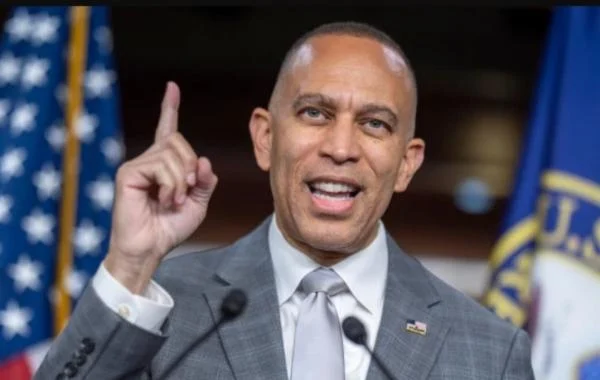
In a decisive move that signals a generational shift and a bold new direction for the Democratic Party, Hakeem Jeffries has been formally nominated by his caucus to serve as the Speaker of the United States House of Representatives. The nomination, finalized through a confidential ballot held on Wednesday, November 18, 2026, positions the veteran New York congressman to lead the lower chamber when the new Congress convenes in January 2027. This development marks a historic milestone in American governance, as Jeffries stands on the threshold of becoming the first African American Speaker in the history of the United States.
The internal party election saw Jeffries secure 251 votes, solidifying his mandate as the primary legislative architect for the Democrats. While the path to the Speakership appears clear within his own caucus, the political landscape remains complex. As the party looks toward the upcoming term, the transition represents more than just a change in leadership; it encapsulates the evolving priorities of a party grappling with the aftermath of a transformative election cycle and a shifting national mood.
A Historic Path to Leadership
Hakeem Jeffries, who has served as the House Minority Leader, has long been viewed as a rising star within the Democratic Party. His ascent is not merely a product of seniority but a reflection of his ability to navigate the disparate ideological wings of the party. If he successfully secures the gavel in the full House vote, he will ascend to the second position in the line of presidential succession, trailing only the Vice President.
The significance of this potential appointment cannot be overstated. For over two centuries, the office of the Speaker has been held exclusively by white men, with the exception of the most recent tenure by previous female leaders. A victory for Jeffries would shatter a significant glass ceiling, providing a symbolic and substantive shift in the representation of American leadership at the highest levels of federal power.
The Dynamics of the Caucus Vote
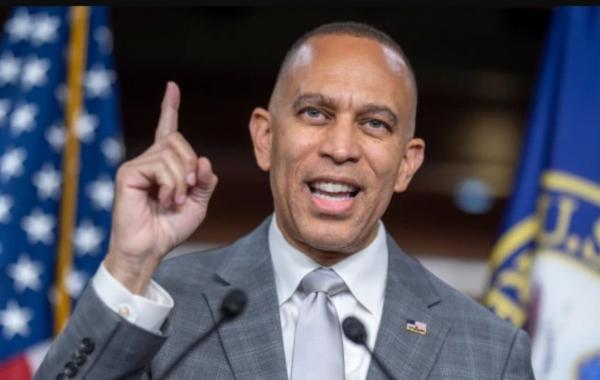
The nomination process was characterized by a show of force, yet it was not without its internal friction. While Jeffries garnered a robust 251 votes, the fact that 11 members of the Democratic caucus cast ballots against his nomination highlights the ongoing challenges of party unity.
Political analysts observe that these dissenting votes originate primarily from the progressive wing of the party. These members have expressed concerns regarding the ideological trajectory of the leadership. Specifically, there is a palpable anxiety among some progressives that the party’s leadership might pivot toward a more centrist strategy in a bid to appeal to moderate voters, potentially at the expense of the populist, reform-oriented policies that gained traction during the November 3, 2026, midterm elections.
The opposition from seven specific progressive members serves as a warning shot to the leadership. These lawmakers are seeking concrete commitments regarding the party’s legislative agenda, particularly concerning economic populism, healthcare expansion, and climate policy. For Jeffries, the immediate challenge will be to balance the pragmatism required to govern in a divided legislative environment with the need to retain the enthusiasm of the party’s most active and ideologically driven base.
Chronology of Recent Political Shifts
To understand the current state of the Democratic Party, one must look back at the tumultuous events of late 2026. The political landscape was irrevocably altered by the midterm elections, which saw a significant swing in public sentiment.
- November 3, 2026: The midterm elections take place, resulting in a surprising victory for the Democratic Party. Voters, citing concerns over the economic fallout and the foreign policy entanglements of the previous administration, handed the Democrats control of the House.
- November 6, 2026: Donald Trump, in a rare admission, acknowledges the electoral defeat of the Republican Party. Analysts link this loss to the fallout from the Iran-led conflicts and the resulting economic instability that dominated the latter half of the year.
- November 10, 2026: Following the defeat, the Republican leadership, including former President Trump, shifts its tactical focus toward disrupting the Democratic agenda rather than engaging in policy debate, signaling a hostile legislative session ahead.
- November 18, 2026: The Democratic caucus meets to hold its leadership elections, resulting in the overwhelming, though contested, nomination of Hakeem Jeffries as the party’s choice for Speaker.
Contextualizing the Challenges Ahead
The role of Speaker in the 120th Congress will be inherently difficult. Jeffries is set to lead a caucus that is hungry for reform but deeply cautious about the legislative gridlock that has characterized Washington for the better part of a decade.

The economic context is equally challenging. The nation is currently grappling with the long-term repercussions of the global conflicts that defined the 2026 election cycle. The "Iran factor," which influenced voters’ decisions to punish the Republican Party for its handling of international crises, will now become a central headache for the new Speaker. Jeffries must navigate a foreign policy environment where the U.S. role in global security is being scrutinized by a weary public.
Furthermore, the pressure from the progressive wing to implement bold, structural changes to the American economy—such as wealth redistribution initiatives and aggressive corporate regulation—will clash with the institutional reality of a narrowly divided Congress. If Jeffries leans too far to the left, he risks alienating the moderate coalition that helped secure the House majority. If he stays too close to the center, he risks a revolt from the progressive faction that is currently demanding a seat at the table.
Broader Implications for the American Political System
The nomination of Jeffries serves as a bellwether for the future of American partisan politics. We are seeing a transition from the era of "personality-driven" politics—which defined the Trump years—back toward a more traditional, institutionalist approach. Jeffries, known for his disciplined messaging and methodical approach to legislative strategy, embodies this shift.
However, the institutionalist approach is not without its critics. In an era where the electorate is increasingly polarized and disillusioned with the "Washington establishment," Jeffries will have to prove that his leadership style can deliver tangible results. If the public perceives that the legislative branch is merely engaging in partisan maneuvering while domestic issues like inflation and social inequality persist, the current Democratic majority may find itself as fragile as its predecessor.
Moreover, the international community is watching. As the U.S. navigates the role of global leader in a post-conflict, post-election environment, the stability of the House of Representatives is a crucial component of global financial and diplomatic confidence. A smooth transition to a Jeffries speakership would send a message of continuity and predictability to foreign allies.

Conclusion: The Road to January 2027
As the nation looks toward January 2027, the elevation of Hakeem Jeffries to the status of Speaker-designate represents a pivotal moment in the American experiment. He is a leader who understands the mechanics of the House, the demands of his caucus, and the weight of the historical precedent he is poised to set.
The dissent within his own ranks is not necessarily a sign of impending failure; rather, it is a symptom of a healthy, albeit fractious, party that is actively debating its future. The coming months will be a period of intense negotiation as Jeffries attempts to reconcile the various interests within the Democratic tent.
For the American public, the next few years will be defined by whether this new leadership can bridge the divide, address the economic concerns that brought them to power, and effectively manage the complex international realities that continue to shadow the nation. Hakeem Jeffries is now the face of that endeavor, and his tenure, should it proceed as planned, will likely define the political legacy of the late 2020s. The democratic process has yielded its choice, and the work of governance—with all its inherent compromises and high-stakes decisions—is about to begin in earnest.