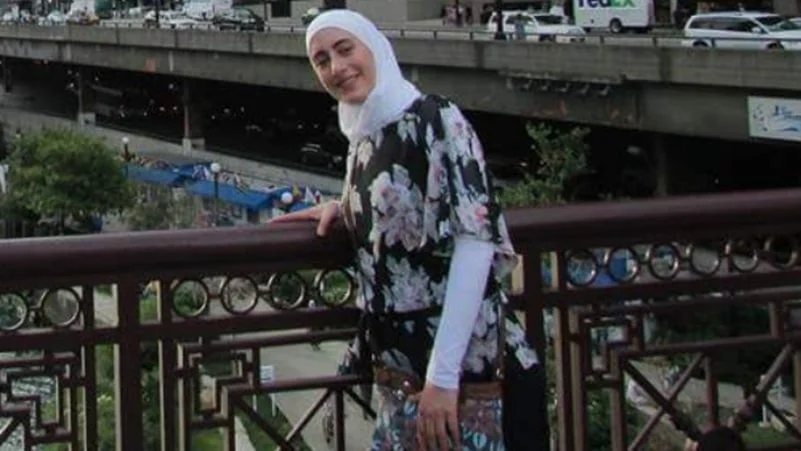
The United States government, through the Department of State’s Rewards for Justice (RFJ) program, has officially announced a bounty of up to $5 million for information leading to the resolution of the case involving Layla Shweikani, a dual American-Syrian citizen and humanitarian worker who was abducted and subsequently disappeared in Syria in 2016. This significant financial incentive underscores Washington’s persistent efforts to hold the perpetrators of human rights abuses accountable within the ongoing Syrian conflict, a war that has claimed hundreds of thousands of lives and resulted in the disappearance of tens of thousands of individuals.
The announcement marks a renewed focus on the fate of Shweikani, whose life as a dedicated volunteer providing aid to civilians in the besieged enclave of Eastern Ghouta ended under brutal circumstances in the custody of the Syrian state.
The Life and Humanitarian Mission of Layla Shweikani
Layla Shweikani was not a combatant; she was a humanitarian. Born in the United States, Shweikani possessed a deep connection to her Syrian heritage, which drove her to return to the region in 2015. Her mission was to alleviate the suffering of civilians trapped in Eastern Ghouta, a Damascus suburb that had become a primary battleground between the Syrian government forces of Bashar al-Assad and various opposition factions.
During the height of the siege, Shweikani worked tirelessly to distribute food, medical supplies, and basic necessities to families displaced by constant shelling and starvation tactics. Her work placed her in the crosshairs of a regime that historically viewed humanitarian aid in opposition-held areas as a form of logistical support for "terrorist" elements. Despite the inherent dangers, Shweikani remained committed to her role, believing that civilian lives took precedence over political considerations.
Chronology of an Abduction and Execution
The timeline of Shweikani’s disappearance reveals a harrowing sequence of events that highlights the systemic nature of detention in Syria:
- 2015: Shweikani arrives in Syria to facilitate aid projects in Eastern Ghouta.
- February 2016: Shweikani is apprehended by Syrian security forces while operating in the area. Her detention is carried out without formal charges or due process.
- February – December 2016: For ten months, Shweikani is held incommunicado in various detention facilities. Reports corroborated by human rights organizations indicate that she was subjected to severe physical and psychological torture, a common practice within the Syrian state’s security apparatus intended to extract confessions or information regarding opposition networks.
- Late 2016: Shweikani is transferred to a military court, a move often synonymous with the finalization of a death sentence in the Syrian judicial system, which lacks independence from the executive branch and intelligence agencies.
- December 28, 2016: According to credible intelligence and documentation, Shweikani is executed at the Saydnaya Military Prison.
The Saydnaya Facility: A Symbol of State-Sanctioned Violence
The mention of Saydnaya Military Prison is significant. Often referred to as "the slaughterhouse" by human rights investigators and survivors, Saydnaya is perhaps the most notorious detention center in Syria. Amnesty International and other international watchdogs have documented systemic extrajudicial killings, torture, and mass graves at the site.
Shweikani’s execution at Saydnaya fits a pattern of state behavior that has been documented in thousands of "Caesar photos"—the leaked images of detainees who died in government custody. The fact that the U.S. government is now issuing a reward for information regarding her case suggests that Washington is seeking to build a comprehensive evidentiary file, likely for potential future international legal proceedings or as part of a strategy to exert maximum diplomatic pressure on the Assad regime.
The Rewards for Justice Program and U.S. Policy
The Rewards for Justice program, established in 1984, has traditionally been used to target high-profile terrorists, such as those responsible for the 1998 U.S. embassy bombings or key figures in Al-Qaeda and ISIS. By applying this mechanism to the case of Layla Shweikani, the U.S. Department of State is effectively signaling that it views the state-sponsored abduction and murder of American citizens as a matter of national security and international criminal justice.
The $5 million reward serves two purposes: first, it encourages whistleblowers, defectors, or individuals within the Syrian security apparatus to come forward with specific details about who ordered her arrest, who administered the torture, and who signed the execution order. Second, it serves as a deterrent and a public rebuke of the Syrian government, keeping the issue of the "disappeared" in the international spotlight at a time when many nations are considering a normalization of diplomatic relations with the Assad regime.

Legal and Diplomatic Implications
The international legal landscape regarding the Syrian conflict has been shifting. In recent years, European courts—particularly in Germany—have utilized the principle of universal jurisdiction to prosecute former Syrian intelligence officials for crimes against humanity. The information gathered through the RFJ program could provide the "missing links" needed for prosecutors in other jurisdictions to connect high-ranking officials to the deaths of specific victims like Shweikani.
The Syrian government has consistently denied allegations of torture and mass execution, labeling such reports as "Western propaganda" or the work of "terrorist sympathizers." However, the U.S. move to put a price on information suggests that the American intelligence community has verified the circumstances of Shweikani’s death beyond a reasonable doubt and is now moving to the phase of identifying individual perpetrators.
Humanitarian Impact and the Crisis of the Missing
Shweikani’s case is one of tens of thousands. According to the Syrian Network for Human Rights (SNHR), more than 100,000 people have been forcibly disappeared in Syria since 2011, with the vast majority believed to be in the custody of the Syrian government. The psychological toll on the families of these victims is immense, as they live in a state of perpetual uncertainty, neither able to mourn nor able to hope for a return.
By highlighting Shweikani’s story, the United States is also advocating for the thousands of nameless victims whose fates remain unknown. Human rights organizations have long called for a dedicated international mechanism to address the issue of the missing in Syria, a call that has gained traction at the United Nations level but has faced stiff resistance from Russia and other allies of the Assad government.
Analysis: What the Bounty Means for the Future
The announcement of a $5 million reward is a calculated maneuver. It is unlikely that an insider will walk into a U.S. embassy to claim the reward tomorrow; however, the move creates a "permanent record" of the crime. In the intelligence and legal community, such bounties keep files open and ensure that the statute of limitations for crimes against humanity does not effectively expire due to public or political neglect.
Furthermore, it sends a message to the international community that the United States has not abandoned the victims of the Syrian war. As geopolitical shifts occur—such as the recent regional re-engagement with Damascus—the U.S. position serves as a moral and legal anchor, asserting that there can be no true resolution to the Syrian crisis without accountability for the atrocities committed against civilians, whether they are Syrian nationals or American citizens.
Conclusion: A Pursuit of Justice
The case of Layla Shweikani is a somber reminder of the human cost of the Syrian conflict. A woman who sought to provide aid and comfort to those in need was ultimately consumed by the very machinery of violence she aimed to mitigate. The U.S. government’s decision to offer a $5 million reward is more than just a financial incentive; it is a commitment to the truth.
As the international community continues to grapple with the aftermath of the Syrian war, the search for those responsible for the deaths of individuals like Shweikani remains a priority for those who believe in international law and human rights. While the road to justice is long and fraught with political obstacles, the persistent effort to document these crimes and identify the perpetrators is a necessary step toward ensuring that the victims are not forgotten and that the impunity enjoyed by their tormentors is eventually challenged.
The Department of State has encouraged anyone with information—no matter how small or seemingly insignificant—to reach out through the official Rewards for Justice channels, which are designed to protect the anonymity of informants. In the shadows of the Syrian detention system, the light of such investigations is often the only hope that families have for eventual closure. The case of Layla Shweikani remains open, and with the new bounty, the pressure on those involved in her tragic end has significantly intensified.