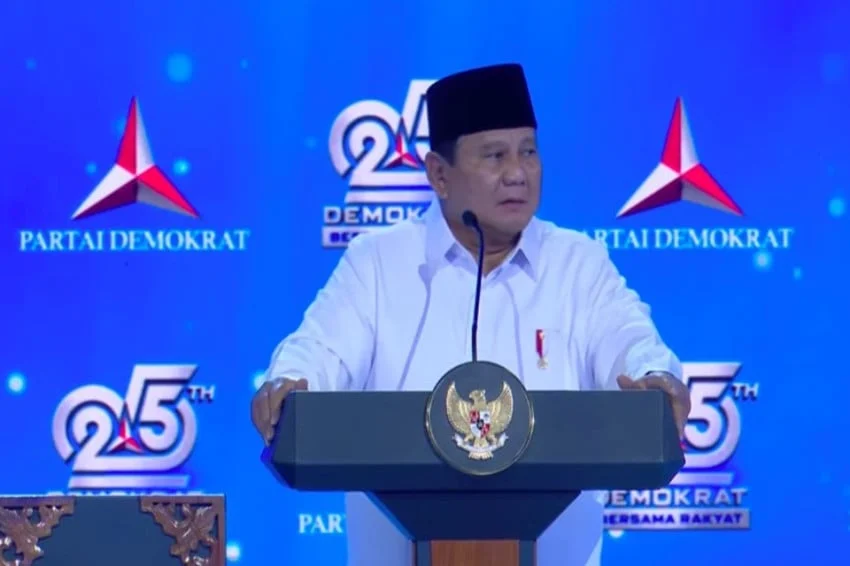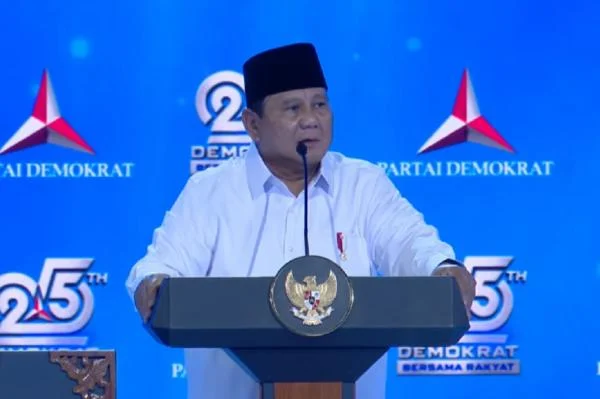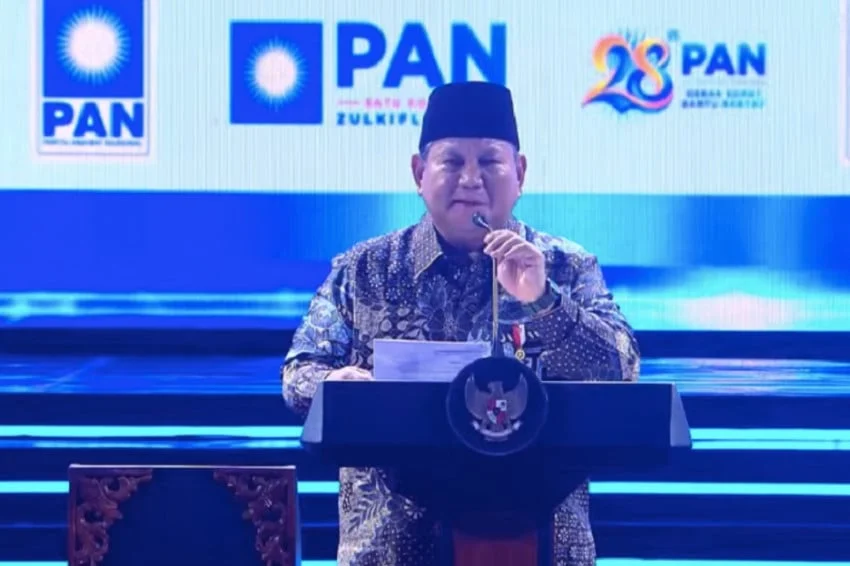
JAKARTA — Indonesian President Prabowo Subianto delivered a comprehensive and cautionary address on modern geopolitical dynamics, information warfare, and the latent threats facing contemporary democratic systems during the grand celebration of the National Mandate Party’s (PAN) 28th anniversary. Speaking before thousands of loyal cadres, political elites, and party supporters at the Jakarta International Convention Center (JICC) in Senayan, Jakarta, on Friday, September 18, 2026, the head of state emphasized that the nature of modern conflict has fundamentally shifted. Rather than relying on traditional troop deployments and kinetic warfare, adversaries can now destabilize nations by weaponizing digital platforms and disseminating disinformation through social media channels.
The high-profile event served not only as a milestone commemoration for one of Indonesia’s prominent political parties but also as a platform for the president to articulate broader concerns regarding national resilience, economic sovereignty, and the protection of democratic institutions from external and internal manipulation.
The Evolution of Warfare in the Digital Age
Addressing the audience inside the sprawling JICC auditorium, President Prabowo turned a portion of his address toward strategic security concepts, drawing attention to how technological advancements have revolutionized conflict. He noted that contemporary warfare no longer necessitates the physical mobilization of military divisions across borders to subjugate a sovereign nation.
"Brothers and sisters, we must realize that warfare today does not always require sending troops," President Prabowo stated during his speech. He specifically highlighted the digital ecosystem as a primary battleground, explaining that national stability can be severely undermined by corrupting social media networks with fabricated narratives, falsehoods, and psychological operations designed to fracture societal cohesion.
This perspective aligns with contemporary security studies regarding hybrid warfare and cognitive domain operations. In an era where populations are hyper-connected via smartphones and digital platforms, the manipulation of public perception has become a potent and cost-effective tool for state and non-state actors alike. By flooding information networks with divisive content, bad actors can manufacture social unrest, erode trust in public institutions, and influence electoral outcomes without firing a single conventional bullet.
Safeguarding Democracy from Economic Coercion
Transitioning from external security threats to domestic governance, Prabowo issued a stark warning regarding the integrity of Indonesia’s democratic processes. He cautioned that democratic systems remain vulnerable to systemic subversion through the infusion of illicit capital and concentrated economic power.
"We must be careful because democracy can be hijacked. Democracy can be bought by those with massive economic power, those with abundant wealth, and especially those whose money is obtained through illicit means," Prabowo emphasized.
The president’s remarks strike at a persistent challenge within emerging democracies: the monetization of politics. The unchecked influence of "dark money"—funds derived from corruption, organized crime, or unverified transnational sources—poses a direct threat to the principle of one-person-one-vote. When financial moguls or illicit syndicates can bankroll political campaigns, sway public opinion through paid digital armies, or purchase policy influence, the foundational tenets of representative governance risk being hollowed out from within.
The caution serves as a timely reminder for regulatory bodies, law enforcement agencies, and civil society organizations in Indonesia to remain vigilant against financial malfeasance, particularly as the nation continues to navigate its complex political landscape following recent electoral cycles.
Background and Context of PAN’s 28th Anniversary
The commemoration of the National Mandate Party’s 28th anniversary was marked by high political symbolism. Founded in the wake of the 1998 Reformation movement—a pivotal juncture that transitioned Indonesia from authoritarian rule to a multiparty democracy—PAN has long positioned itself as a reformist and nationalist-religious party.
The event at the JICC gathered key figures from across the political spectrum, including cabinet ministers, coalition leaders, and regional representatives. President Prabowo’s presence at the anniversary celebration underscored the close strategic alliance between his administration and PAN, a founding member of the current government coalition.

Earlier in the proceedings, Prabowo reflected on his enduring political alliances and the loyalty of his political comrades. In a warmly received remark, he expressed gratitude for standing alongside steadfast allies through decades of political contestation, noting, "I am here in the midst of loyal comrades-in-arms." This sentiment reinforced the narrative of solidarity and political stability that the ruling coalition seeks to project amidst global economic uncertainties and domestic policy implementations.
Global and Regional Implications of Information Warfare
President Prabowo’s commentary on social media manipulation arrives at a time when governments worldwide are grappling with the regulatory and security challenges posed by artificial intelligence, deepfakes, and unchecked digital content.
In Southeast Asia, where internet penetration has surged exponentially over the past decade, the rapid dissemination of unverified information has occasionally led to localized tensions, polarization during election cycles, and heightened susceptibility to foreign influence operations. Cybersecurity experts have repeatedly pointed out that social media algorithms, designed to maximize user engagement, often inadvertently amplify sensationalist, polarizing, or false content, making populations fertile ground for cognitive manipulation.
By highlighting this vulnerability, Prabowo’s administration signals a growing policy focus on digital sovereignty and national cybersecurity. Protecting the digital realm is no longer viewed merely as a technical challenge for IT departments, but as a core pillar of national defense. This encompasses strengthening domestic data infrastructure, promoting digital literacy among citizens, and establishing robust regulatory frameworks to counter foreign interference and disinformation campaigns.
Analytical Perspectives on Political Finance and Democratic Resilience
Political analysts and governance watchdogs have weighed in on the implications of Prabowo’s warnings regarding the commercialization of democracy. Academic observers note that while Indonesia has made remarkable strides in conducting peaceful, transparent elections since the turn of the century, the high cost of campaigning remains a structural vulnerability.
When candidates must secure vast sums of capital to fund media campaigns, logistics, and voter outreach, the temptation to rely on donors with questionable backgrounds or vested interests increases significantly. This dynamic can lead to regulatory capture, where elected officials feel obligated to serve the narrow economic interests of their financial backers rather than the broader public welfare.
Prabowo’s public acknowledgment of these risks at a major partisan gathering is viewed by some analysts as an attempt to establish a normative baseline against illicit political funding. However, civil society organizations emphasize that rhetoric must be matched by rigorous enforcement of campaign finance laws, enhanced transparency in political donations, and stringent auditing by election oversight bodies such as the General Elections Commission (KPU) and the Election Supervisory Agency (Bawaslu).
The Intersection of National Defense and Public Literacy
As traditional notions of defense expand to encompass non-kinetic domains—including economic security, food and energy independence, and cyber defense—Indonesia’s national security strategy is undergoing a quiet evolution.
Prabowo’s remarks suggest that national resilience in the 21st century relies as heavily on the critical thinking and media literacy of the general population as it does on conventional military readiness. When citizens are equipped to critically evaluate information encountered online, the efficacy of hostile disinformation campaigns diminishes. Conversely, an uninformed or hyper-polarized populace becomes an unwitting instrument for external adversaries seeking to sow discord from within.
Furthermore, the emphasis on protecting democratic institutions from the distorting effects of illicit wealth highlights the intrinsic link between clean governance and national security. Corruption and financial crime are increasingly recognized not just as legal infractions, but as strategic vulnerabilities that compromise state sovereignty.
Conclusion and Future Outlook
President Prabowo Subianto’s address at PAN’s 28th anniversary served as a multifaceted message encompassing security, governance, and democratic preservation. By reframing modern conflict around the realities of digital manipulation and information warfare, the president underscored the shifting nature of threats to Indonesian sovereignty. Simultaneously, his sharp critique of economic hijacking in democratic processes serves as a foundational challenge for political parties, lawmakers, and citizens alike.
As Indonesia continues to assert its position as a major regional power and a stable democracy on the global stage, navigating the dual challenges of digital-era security and political integrity will remain paramount. The administration’s focus on building both physical and digital resilience points toward a comprehensive approach to statecraft—one that recognizes that the defense of the nation begins as much on the screens of its citizens as it does on its borders.