The landscape of higher education in Indonesia has long been shaped by the dynamic interplay between state institutions and private foundations, with religious organizations playing a foundational role in the nation’s intellectual development. Among these, the Muhammadiyah movement stands out as a preeminent force, operating dozens of universities, colleges, and polytechnics across the archipelago. The strength of this vast educational ecosystem was brought into sharp focus during a major milestone celebration in Surakarta, Central Java, where high-ranking government officials gathered to honor the trajectory of one of the movement’s flagship institutions.
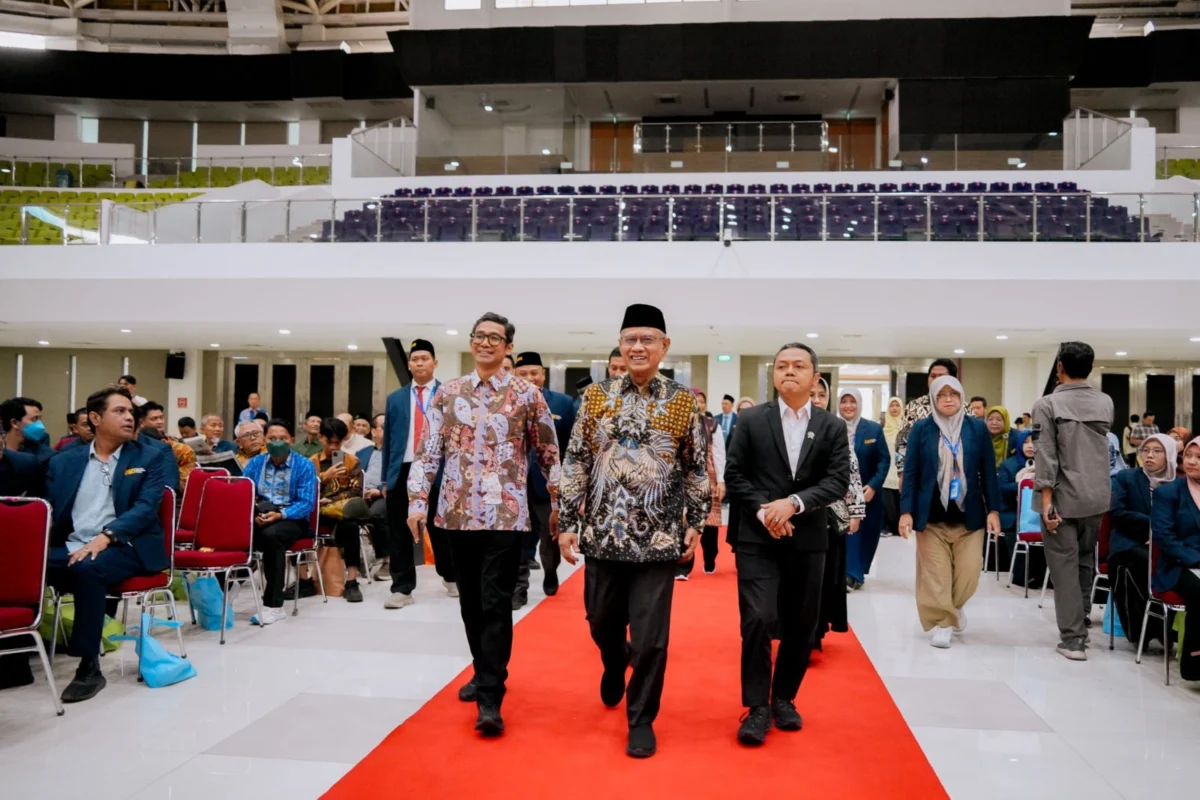
Deputy Minister of Primary and Secondary Education of the Republic of Indonesia, Fajar Riza Ul Haq, delivered a comprehensive and reflective address during the grand celebration of the 68th anniversary of Universitas Muhammadiyah Surakarta (UMS). Speaking before a packed audience at the Edutorium KH Ahmad Dahlan on Saturday, October 24, the Deputy Minister dissected the structural elements that have allowed UMS and its sister institutions under the Perguruan Tinggi Muhammadiyah ‘Aisyiyah (PTMA) banner to achieve national prominence and sustained institutional growth. His remarks not only celebrated a local academic milestone but also offered a broader blueprint for private higher education management in the world’s largest archipelagic nation.
Celebrating Excellence: UMS at the Pinnacle of Private Higher Education
The 68th anniversary celebration served as a moment of stocktaking for UMS, an institution that has evolved from modest beginnings into a regional and national powerhouse of higher learning. In his keynote address, Deputy Minister Fajar drew special attention to the university’s current status as one of the premier private higher education institutions in Indonesia. This recognition is not merely a product of institutional self-praise; it reflects consistent performance across various national accreditation metrics, research output, community engagement, and graduate employability indexes managed by the Ministry of Education, Culture, Research, and Technology.
Fajar noted that the ascent of UMS to the top tier of private universities in Indonesia is inextricably linked to the broader trajectory of the PTMA network, which continues to march toward a shared vision of progress, innovation, and global competitiveness. The core driver behind this success, according to the Deputy Minister, lies in the cultivation of a deeply rooted academic culture that has been meticulously built and preserved over decades. Unlike institutions that prioritize rapid expansion over qualitative depth, the Muhammadiyah educational philosophy has consistently balanced institutional scalability with rigorous intellectual standards.
The Pillars of PTMA: Academic Freedom and Democratic Dialectics
Drawing from his personal background as an alumnus of UMS—having commenced his studies at the university during the turbulent socio-political transition of 1998—Fajar provided an insider’s perspective on the foundational pillars that sustain PTMA institutions. He emphasized that the preservation of academic freedom is the primary catalyst that allows these campuses to thrive amidst the shifting dynamics of modern higher education.
"This academic freedom necessitates the growth of differing spaces for thought, as well as democratic dialectics of ideas," Fajar told the audience of academics, students, alumni, and community leaders. He elaborated that campuses within the Muhammadiyah network possess a robust intellectual tradition underpinned by an unyielding academic culture, inclusive ownership structures, and transparent governance models.
By fostering an environment where critical inquiry is encouraged rather than suppressed, PTMA institutions have managed to position themselves as safe harbors for diverse viewpoints. This governance approach ensures that administrative oversight does not suffocate scholarly debate, creating a symbiotic relationship between institutional stability and intellectual liberation.
Historical Continuity and the Evolution of Campus Infrastructure
Reflecting on his undergraduate years starting in 1998, Fajar shared poignant recollections of how UMS maintained an unwavering institutional focus on student cadre development (kaderisasi) even during periods of intense national upheaval. The late 1990s in Indonesia were characterized by economic crisis, political reform, and sweeping social changes that tested the resilience of universities nationwide. According to Fajar, the ability of UMS to navigate these historical headwinds stemmed directly from its systematic approach to nurturing the next generation of intellectual and organizational leaders.
This deliberate focus on human capital development found its physical manifestation in the rapid and strategic infrastructural expansion of the campus. Fajar observed that the physical growth of UMS—exemplified by modern lecture halls, advanced research laboratories, and expansive facilities like the Edutorium KH Ahmad Dahlan—is not merely a real estate achievement. Rather, it represents a tangible commitment to supporting the academic agendas and extracurricular needs of the entire academic community.
"And I think the most important thing is how an institution has a collective memory. And that collective memory can be read from era to era," Fajar remarked, underscoring the continuity that links the founding vision of UMS to its present-day modernization efforts.
Muhammadiyah as the Tent of the Nation and the Intellectual Laboratory
As he concluded his reflective oration, the Deputy Minister cast his gaze toward the broader sociopolitical horizon, urging Muhammadiyah to remain steadfast in its historical identity as a unifying force within Indonesian society. He invoked the philosophical ideals frequently articulated by prominent Muhammadiyah luminaries, including the late intellectual giant Buya Syafi’i Maarif and the current Chairman of the Muhammadiyah Central Leadership, Haedar Nashir.
Central to this vision is the concept of Muhammadiyah as the Tenda Bangsa—literally translated as the "Tent of the Nation"—functioning as an inclusive home for all segments of Indonesian society, transcending ethnic, religious, and political divides. To keep this grand spirit alive at the grassroots level, Fajar argued that every campus operating under the auspices of Muhammadiyah and ‘Aisyiyah must consciously transform itself into an intellectual home and a laboratory for progressive thought.
"We want Muhammadiyah to be a big house, to become the tent of the nation. Therefore, at the micro level, university institutions must become intellectual homes, laboratories for thoughts whose dynamic ideas are not left to polarize, but are managed well by the staff and university leadership," Fajar concluded.
Broader Implications for Indonesian Higher Education
The insights shared by Deputy Minister Fajar Riza Ul Haq at the UMS anniversary event carry significant implications for the broader discourse on higher education reform in Indonesia. As the nation grapples with the challenges of the Fourth Industrial Revolution, globalized knowledge economies, and domestic polarization, the model of governance exhibited by PTMA institutions offers valuable lessons for both public and private universities.
By demonstrating that institutional growth can be achieved without sacrificing ideological inclusivity or academic freedom, Muhammadiyah universities serve as a stabilizing counterweight in the national education sector. Furthermore, the emphasis on rigorous internal cadre development ensures that graduates not only possess technical competencies but also ethical grounding and social responsibility.
As UMS steps into its 69th year and the wider PTMA network continues to expand its footprint—with numerous campuses establishing international linkages and advancing research capabilities—the challenge ahead will be to maintain these foundational values. The convergence of state recognition, exemplified by high-level ministerial participation, and internal institutional reflection underscores the enduring relevance of Muhammadiyah’s educational mission in shaping the intellectual and moral fabric of modern Indonesia.