The Central Leadership of Muhammadiyah, one of Indonesia’s largest and most influential Islamic organizations, formally welcomed a high-ranking Palestinian delegation at its headquarters in Central Jakarta. The diplomatic engagement underscored Indonesia’s enduring civil society commitment to the Palestinian cause, addressing contemporary geopolitical realities, ongoing humanitarian concerns, and long-term prospects for regional peace in the Middle East.
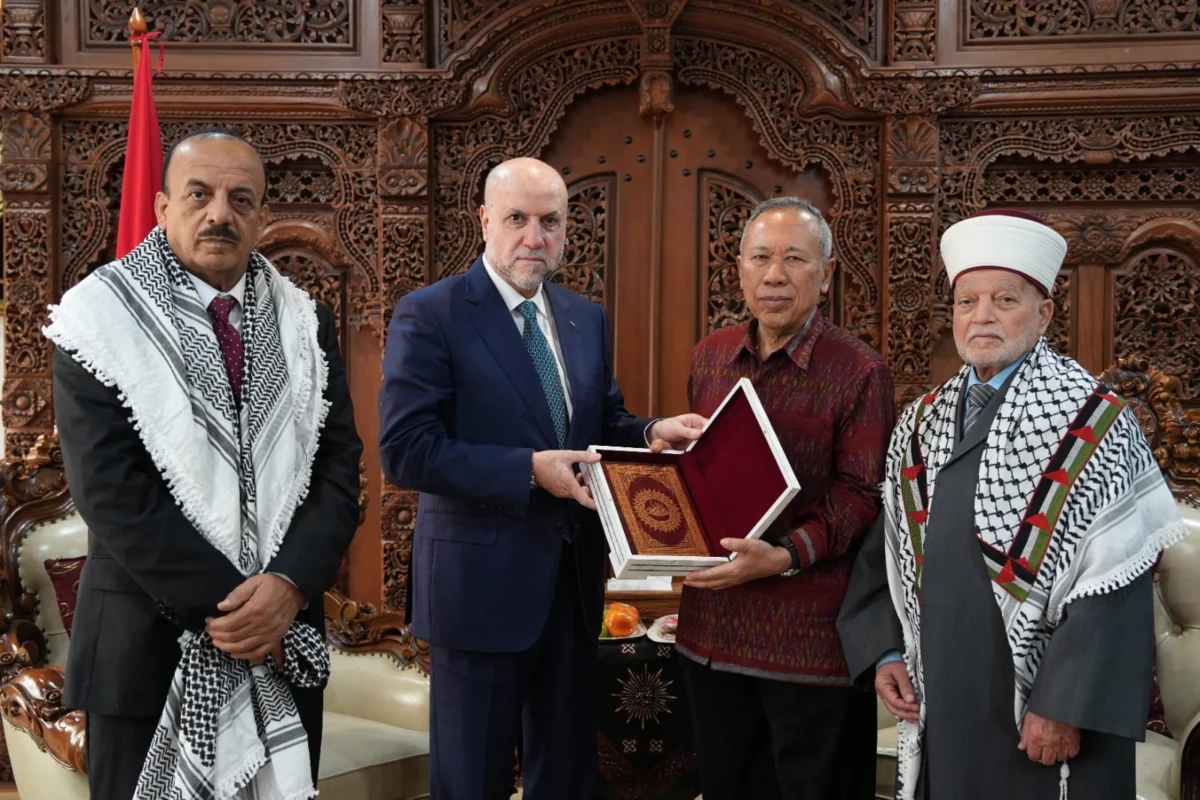
The visiting Palestinian delegation was led by Mahmoud Sidqi Al-Habbash, the Advisor for Religious Affairs to the President of the Palestinian Authority. He was accompanied by the Ambassador of the State of Palestine to Indonesia, Abdulfattah A.K. Al-Sattiri, and the revered Imam of the Al-Aqsa Mosque, Sheikh Mohammad A.M. Hussein. The distinguished guests were officially received on behalf of the Central Leadership of Muhammadiyah by Syafiq A. Mughni, a prominent senior leader of the organization, alongside other central board members.
This high-profile meeting comes at a critical juncture in Middle Eastern diplomacy, marked by escalating humanitarian crises, shifting international alliances, and ongoing debates regarding the efficacy of various regional peace frameworks. By engaging directly with Muhammadiyah—an organization boasting tens of millions of members, extensive educational and healthcare networks, and a long history of philanthropic intervention—the Palestinian leadership sought to reinforce bilateral solidarity and explore expanded avenues for cooperation.
Comprehensive Dialogue on Regional Geopolitics and Humanitarian Realities
The discussions held at the Muhammadiyah headquarters spanned a wide array of topics, moving from immediate humanitarian realities on the ground to broader macroeconomic and geopolitical strategies affecting the Palestinian territories. According to Syafiq A. Mughni, the Palestinian representatives provided a detailed, firsthand assessment of the current situation in Palestine and the wider Middle East, while explicitly outlining their expectations for continued engagement with Indonesian civil society.
"They visited the central office of Muhammadiyah to convey several pieces of information regarding the current situation in Palestine, or the situation in the Middle East in general, and the expectations they have conveyed to Muhammadiyah," Syafiq stated following the conclusion of the talks.
Throughout the dialogue, the Palestinian delegation expressed profound gratitude for the sustained humanitarian, educational, and advocacy efforts that Muhammadiyah has spearheaded over the years. From disaster relief and scholarship programs for Palestinian students to vocal international advocacy, Muhammadiyah has consistently positioned itself as a leading non-governmental actor in Indonesia supporting Palestinian self-determination. The visiting officials emphasized their desire to see these collaborative bridges maintained and strengthened in the face of ongoing adversities.
"They expressed appreciation for what Muhammadiyah has done so far and want that cooperation to continue continuously," Syafiq added, highlighting the mutual commitment to deepening institutional ties between Indonesian civil society and Palestinian authorities.
Scrutinizing Contemporary Peace Initiatives: The Abraham Accords and Board of Peace
A particularly significant portion of the closed-door discussions was dedicated to analyzing recent diplomatic frameworks and international mechanisms designed to address the Israeli-Palestinian conflict and regional integration. Specifically, the participants engaged in a critical evaluation of the Abraham Accords—the series of normalization agreements brokered between Israel and several Arab states—as well as discussions surrounding the concept of a "Board of Peace" and other emerging multilateral structures.
The inclusion of these topics reflects the growing urgency among Palestinian leadership to counter diplomatic isolation and ensure that regional normalization processes do not sideline the core aspirations of Palestinian statehood. Syafiq noted that the exchange offered deep insights into how Palestinian authorities perceive these shifting diplomatic paradigms.
"We also discussed several issues that have recently been widely discussed by people, for example regarding the Abraham Accords and the Board of Peace. They have quite interesting views, and then we deeply understand their thoughts," Syafiq explained.
However, the assessment shared during the meeting regarding the tangible outcomes of these modern diplomatic architectures was notably sober. Based on the evaluations presented by the Palestinian delegates, Muhammadiyah concluded that the plethora of newly formed international committees, diplomatic boards, and regional pacts have thus far failed to produce any meaningful improvements for the daily lives of Palestinians living under occupation or blockade.
"From that conversation, it is clear that what has been done by these aforementioned bodies is not yet visible. The situation remains the same as it was before these bodies existed. So, we perhaps cannot expect much from what kinds of actions can be delivered by such institutions," Syafiq remarked, signaling a realistic appraisal of top-down diplomatic initiatives that lack direct enforcement mechanisms or genuine commitment to justice.
The Historical Role of Muhammadiyah in Palestinian Solidarity
To fully contextualize the significance of this high-level meeting, it is essential to examine the historical trajectory of Muhammadiyah’s involvement in international diplomacy and humanitarian aid. Founded in 1912 by Ahmad Dahlan in Yogyakarta, Muhammadiyah has long transcended its domestic role as an educational and social welfare provider, frequently engaging in global solidarity campaigns, particularly concerning anti-colonial movements and humanitarian crises in the Muslim world.
Over the past few decades, Indonesia has maintained a steadfast foreign policy stance supporting Palestinian independence, rooted historically in the 1955 Bandung Asian-African Conference and the foundational principles of the nation’s constitution, which mandates the abolition of colonialism worldwide. While the Indonesian government conducts its diplomatic relations through official state channels, civil society organizations like Muhammadiyah and Nahdlatul Ulama (NU) play an indispensable complementary role in grassroots mobilization, public diplomacy, and humanitarian resource allocation.
Muhammadiyah’s contributions to Palestine have taken multiple forms:
- Humanitarian Assistance: Through its humanitarian wing, the Muhammadiyah Disaster Management Center (MDMC) and Lazismu (National Alms Institution), the organization has consistently raised and channeled substantial financial aid for medical supplies, food security, and infrastructure rebuilding in Gaza and the West Bank.
- Educational Diplomacy: Muhammadiyah universities across Indonesia have frequently offered scholarships to Palestinian students, enabling them to pursue higher education in fields such as medicine, engineering, and social sciences, thereby investing in the future human capital of an independent Palestinian state.
- Public Advocacy and Intellectual Discourse: Through seminars, press statements, and policy papers, Muhammadiyah intellectuals have continuously framed the Palestinian struggle not merely as a localized territorial dispute, but as a universal human rights issue demanding global moral accountability.
Implications of the Visit for Future Civil Society Diplomacy
The visit by Mahmoud Sidqi Al-Habbash, Ambassador Abdulfattah A.K. Al-Sattiri, and Sheikh Mohammad A.M. Hussein carries several important implications for the future of international solidarity networks involving Indonesia and the Middle East.
First, it highlights the growing strategic importance of non-state actors in sustaining transnational advocacy when formal state-level peace processes stall. With multilateral institutions often gridlocked by geopolitical rivalries and vetoes in the United Nations Security Council, Palestinian authorities increasingly rely on faith-based and civil society networks in nations with massive Muslim populations, such as Indonesia, to maintain global public awareness and grassroots pressure.
Second, the skeptical stance shared by Muhammadiyah and the Palestinian delegation regarding frameworks like the Abraham Accords reflects a broader regional consensus that normalization agreements delinked from a definitive resolution to the Palestinian issue fail to deliver sustainable stability. By publicly articulating this skepticism, Muhammadiyah reinforces its role as an independent voice that prioritizes substantive justice over superficial diplomatic theater.
Finally, the meeting lays the groundwork for practical, future-oriented cooperation. While macro-political solutions remain elusive, the reaffirmation of ties between Muhammadiyah and Palestinian representatives ensures that humanitarian pipelines, educational exchanges, and moral support mechanisms will remain robust and operational.
As the geopolitical landscape of the Middle East continues to undergo rapid and unpredictable transformations, the partnership between Indonesian civil society institutions and Palestinian leadership stands as a resilient pillar of cross-border solidarity. Through continued dialogue, rigorous analysis of regional peace initiatives, and sustained humanitarian commitment, Muhammadiyah demonstrates its enduring dedication to the pursuit of peace, justice, and self-determination for the Palestinian people.