Every year on September 9th, Indonesia observesNational Sports Day, widely known as Hari Olahraga Nasional (Haornas). This significant annual observance serves as both a commemoration of the country’s rich athletic history and a forward-looking catalyst for public health, community engagement, and national unity. The roots of this nationwide celebration trace back to a critical juncture in Indonesian history: the staging of the inaugural National Sports Games, or Pekan Olahraga Nasional (PON), in Solo, Central Java, in 1948. Over the decades, Haornas has evolved from a historical milestone into a comprehensive policy framework and cultural movement aimed at embedding physical fitness into the daily lives of citizens while bolstering the nation’s broader socio-economic landscape.
As Indonesia prepares for the observance of the 43rd Haornas on Wednesday, September 9, 2026, sports administrators, government officials, and communities across the archipelago continue to reflect on the transformative power of athletics. Beyond the quest for podium finishes and international medals, modern interpretations of Haornas emphasize grassroots participation, sports tourism, infrastructure development, and the holistic well-being of the population.
The Historical Genesis: Defiance and Diplomacy Through Sport in 1948
The narrative of National Sports Day is inextricably linked to the struggle for international recognition following Indonesia’s proclamation of independence in 1945. In 1948, the young republic sought to make its debut on the global sporting stage by participating in the XIV Olympic Games in London. However, the international community had not yet widely recognized Indonesia’s sovereignty, creating insurmountable administrative hurdles for the nation’s athletes. Lacking formal membership in the International Olympic Committee (IOC) and facing logistical barriers imposed by Dutch colonial remnants and international protocols, the contingent was barred from participating under the Indonesian flag.
Refusing to let the suppression of diplomatic recognition silence the nation’s athletic aspirations, Indonesian sports pioneers—led by figures within the Sports Association of the Republic of Indonesia (URI)—pivoted inward. They decided to organize a domestic multi-sport event that would demonstrate the nation’s capability, unity, and resilience.
Thus, the first-ever Pekan Olahraga Nasional (PON) was inaugurated in Solo (Surakarta), Central Java, running from September 9 to September 12, 1948. The event brought together hundreds of athletes from various regions across Java and beyond, competing in diverse disciplines despite severe post-independence economic constraints and ongoing military threats. The opening date of this historic gathering, September 9, permanently etched itself into the national consciousness as the foundational spark for what would later become National Sports Day.
Institutionalization and Legal Framework: From Solo to Surakarta’s Sriwedari
While the spirit of September 9, 1948, resonated deeply within the national sporting community, it took nearly 35 years for the date to be officially codified as a national observance. The formal establishment of Hari Olahraga Nasional took place on September 9, 1983, under the administration of President Soeharto.
The official proclamation was made during a momentous ceremony to inaugurate the comprehensive restoration and modernization of the historic Sriwedari Stadium in Surakarta—the very city that hosted the inaugural PON. The event was designed to signal a renewed commitment by the government to revitalize sports infrastructure and foster a culture of physical fitness across a rapidly growing population.
To solidify this national day in the legal architecture of the republic, the government subsequently issued Presidential Decree (Keputusan Presiden or Keppres) Number 67 of 1985 concerning National Sports Day. This legal instrument formally designated September 9 of each year as Haornas. The decree aimed to institutionalize sustained state support for athletic training, encourage grassroots sports development, and cultivate a systematic approach to nurturing talent from regional levels up to international arenas.
Evolution of Haornas: Broadening the Scope Beyond Medals
In contemporary times, the Ministry of Youth and Sports (Kemenpora) has continually redefined the objectives of Haornas to address modern societal challenges. While elite sports achievements—such as Olympic gold medals, Asian Games triumphs, and world championships—remain vital sources of national pride, contemporary sports policies place an equally heavy emphasis on "sports for all" (sport for development).
According to Ministry guidelines, Haornas serves as an annual reminder that physical activity is a fundamental pillar of national character-building, discipline, and social cohesion. In an era marked by sedentary lifestyles and non-communicable health crises, public health campaigns tied to Haornas stress the necessity of regular physical exercise for citizens of all age groups.
Furthermore, the economic dimensions of sports have taken center stage in recent years. Modern sports administration views physical culture not merely as an expenditure, but as a dynamic driver of the national economy. Government initiatives increasingly leverage sporting events to stimulate local commerce, hospitality, and tourism.
High-ranking officials, including the Minister of Youth and Sports, have repeatedly highlighted how the systematic development of sports yields profound multi-sectoral benefits. The integration of sports with tourism—often termed "sport tourism"—has emerged as a lucrative strategy. Events ranging from international marathons and surfing championships to regional multi-sport spectacles like the upcoming PON 2028 in Sumba Timur and the anticipated Beach PON in Ancol, Jakarta, demonstrate how athletic competitions can transform regional economies and upgrade infrastructure.
Strategic Investments and Infrastructure Challenges
Realizing the full potential of Indonesian sports requires robust institutional backing and capital investment. In alignment with the forward-looking ethos of Haornas, sports authorities have increasingly emphasized the need for world-class training facilities and talent academies. Recent policy discussions within the Ministry of Youth and Sports have highlighted multi-trillion-rupiah funding requirements necessary to construct integrated training centers and regional sports academies capable of scouting and nurturing young talent systematically.
These investments are designed to transition Indonesia from an opportunistic medal-contender into a systematic powerhouse in international sports science, sports medicine, and athlete management. By bridging grassroots community engagement with elite high-performance training, Indonesia aims to create a sustainable pipeline of athletes who can consistently excel on the global stage.
Economic and Health Implications: A Holistic National Vision
The ongoing evolution of National Sports Day underscores a broader paradigm shift: sports as a catalyst for public health and economic resilience. From a public health perspective, cultivating a national culture of regular physical activity directly combats rising rates of obesity, cardiovascular diseases, and diabetes. By encouraging schools, workplaces, and local communities to actively participate in Haornas activities, the state fosters a healthier, more productive workforce.
Economically, the commercialization of sports events, the expansion of the domestic sports apparel and equipment market, and the boom in sport tourism generate thousands of jobs and support micro, small, and medium-sized enterprises (MSMEs). When regions host major sporting showcases, hospitality sectors flourish, transportation networks are modernized, and local cultural assets gain international exposure.
Observing Haornas 2026: Engaging the Next Generation
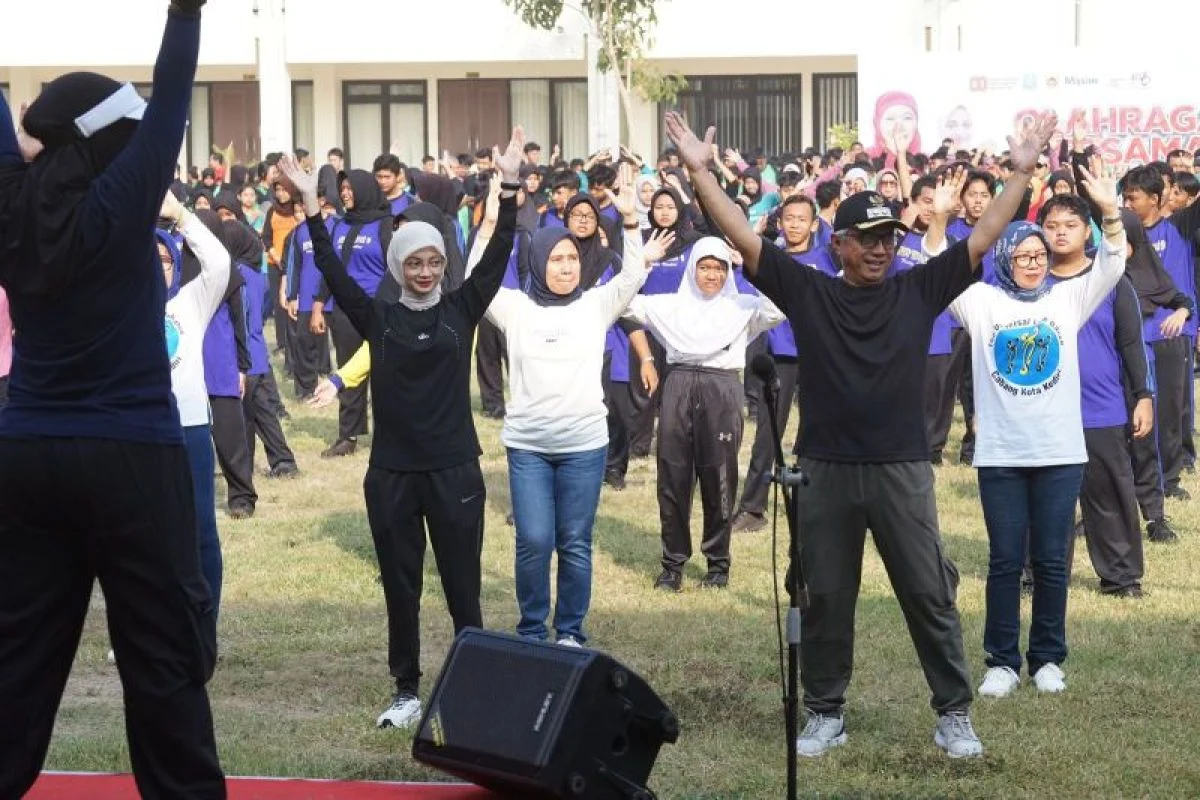
As the nation observes the 43rd anniversary of Haornas on September 9, 2026, the focus remains firmly on community participation and institutional continuity. Across the archipelago, schools, government offices, private corporations, and community groups mark the day through synchronized calisthenics, fun runs, inter-village tournaments, and public health workshops.
Citizens are encouraged to embrace the spirit of Haornas by integrating physical activity into their daily routines, supporting local and national athletes, and introducing children to the joys of movement and fair play.
More than seventy-eight years after athletes gathered in war-torn Solo in 1948, the core message of National Sports Day remains unchanged: sports belong to everyone. It is a unifying language that transcends social stratification, a guarantor of public health, and a testament to the enduring resilience of the Indonesian nation. Through every stride, goal, and collective workout, Haornas continues to inspire the republic to move forward with discipline, strength, and shared pride.