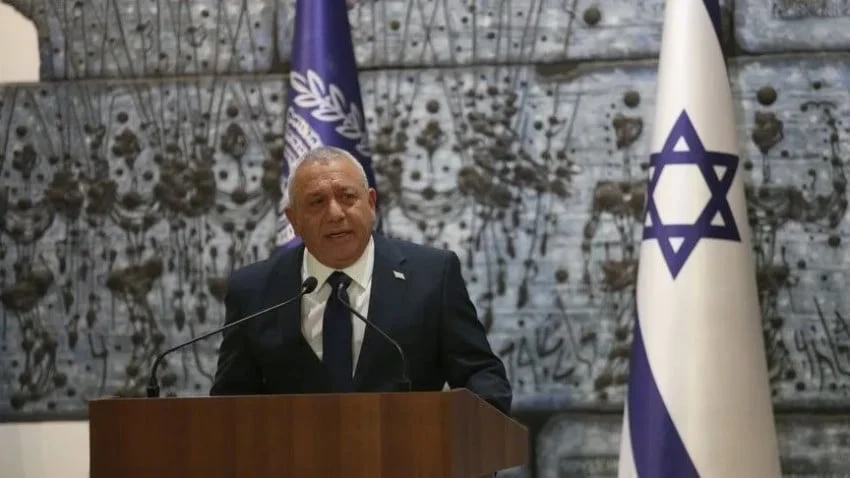
The political landscape in Israel has reached a critical juncture following a series of contentious statements made by Gadi Eisenkot, a prominent political figure currently tasked with exploring the formation of a new government. In a strongly worded public statement released via social media, Eisenkot directly challenged the rhetoric employed by outgoing Prime Minister Benjamin Netanyahu during the recent election cycle. The accusations center on allegations that Netanyahu and his political allies orchestrated a campaign of delegitimization against Israel’s Arab population, characterizing the discourse as both "racist and violent" in nature. This development highlights the deep-seated societal and political fractures within the nation as it grapples with the complexities of coalition-building in a fragmented parliament.
The Core Accusation and Political Context
The friction stems from the highly polarized nature of the most recent election, held on October 27. Eisenkot, who led a four-party alliance to a significant, albeit insufficient, showing of 48 parliamentary seats, utilized his platform to criticize the incumbent leader. He argued that the vitriol directed toward the Arab minority—who constitute approximately 21 percent of Israel’s total population—was a calculated political maneuver designed to consolidate the right-wing and religious voting base.
"The prime minister of Israel is the prime minister for all citizens, including those who did not vote for him," Eisenkot asserted in his post on X (formerly Twitter). He further emphasized that the Arab citizenry is an integral part of the nation’s historical and social fabric, and that efforts to marginalize them for electoral gain constitute a direct assault on the foundational principles of the Israeli state.
The tension between Netanyahu’s Likud-led bloc and the emerging coalition led by figures like Eisenkot represents a clash of ideologies. While Netanyahu has long relied on a nationalist platform to maintain power, his opponents argue that such rhetoric risks irreparable damage to domestic social cohesion.
Chronology of the Recent Election Cycle
The path to the current political stalemate began well before the October 27 polling day. The following timeline outlines the key developments leading to the present state of uncertainty:
- Mid-2023: Increasing legislative gridlock led to the collapse of the previous governing coalition, necessitating a return to the polls.
- September 2023: The official campaign period commenced, marked by a surge in inflammatory rhetoric regarding security, identity, and the role of Arab parties in future coalitions.
- October 27, 2023: Israel conducted its parliamentary elections. The results saw the right-wing/religious bloc, spearheaded by Benjamin Netanyahu, secure 53 seats, while the opposition alliance led by Gadi Eisenkot secured 48 seats.
- Early November 2023: Following the inconclusive results, the President of Israel officially tasked Gadi Eisenkot with the mandate to explore potential coalition partners to form a government, given his status as a key challenger to the status quo.
- Mid-November 2023: Eisenkot issued his formal statement criticizing the election campaign, signaling a deepening divide between the major political camps.
Electoral Data and Parliamentary Dynamics
The mathematics of the Israeli Knesset remains the primary obstacle for both Eisenkot and Netanyahu. To secure a functioning government, a coalition must command a minimum of 61 seats out of the 120-seat legislature.
The current distribution of power reveals a significant shift in political influence:
- Netanyahu’s Bloc: 53 seats (primarily composed of Likud and allied right-wing/ultra-Orthodox factions).
- Eisenkot’s Alliance: 48 seats (a coalition representing a mix of centrist, liberal, and secular interests).
- Arab Parties: 19 seats. These parties, representing the interests of the Palestinian Arab minority in Israel, achieved a record-breaking performance in this election.
The 19 seats held by the Arab parties have effectively turned them into the "kingmakers" of the current cycle. However, their inclusion in any governing coalition remains a point of intense controversy. Many right-wing parties refuse to sit in a government supported by, or inclusive of, these factions, while Eisenkot’s call for inclusivity suggests a potential paradigm shift in how the Arab minority might be integrated into the legislative process.
Analysis of the Rhetoric and Societal Impact
The accusations leveled by Eisenkot are not merely about political rivalry; they touch upon the core definition of Israeli democracy. Political scientists have noted that the "delegitimization" of Arab voters is a tactic used to mobilize the "base" by creating a sense of existential threat.
When a leader of a major political bloc publicly condemns this behavior, it suggests that the political center is increasingly uncomfortable with the populist tactics of the nationalist right. However, the implication of this conflict is that the Israeli public remains deeply divided. The normalization of anti-Arab sentiment during campaign seasons has historically been linked to increased civil unrest and a decrease in political participation among Arab citizens, though the recent election saw the opposite effect, with record turnout among that demographic.
Furthermore, the diplomatic implications are significant. Israel’s international partners, particularly in the West, have often expressed concerns regarding the treatment of minorities within the country. A shift toward more inclusive rhetoric—or, conversely, a deepening of the exclusionary rhetoric—will likely influence Israel’s standing on the global stage and its relationships with regional neighbors.
Official Responses and Counter-Narratives
While Benjamin Netanyahu has not issued a direct, personal response to Eisenkot’s specific claims, his office has consistently maintained that his campaign rhetoric was intended to address security concerns and ensure the stability of the state. Supporters of Netanyahu often argue that the Arab parties have historically held positions that are fundamentally at odds with the "Zionist character" of the state, thereby justifying their exclusion from government coalitions.
Conversely, representatives from the Arab parties have welcomed Eisenkot’s statement as a long-overdue recognition of their status as legitimate citizens. They have argued that for decades, they have been subjected to rhetoric that paints them as a "fifth column," and that such language has served to justify discriminatory policies in housing, education, and economic development.
Broader Implications for the Future of Governance
The task of forming a government under these circumstances is exceptionally difficult. If Gadi Eisenkot fails to build a 61-seat majority, Israel may be forced into yet another election cycle, which would be the latest in a series of snap elections over the past several years. This continued cycle of political instability has been criticized by financial analysts and local business leaders, who argue that it hampers long-term economic planning and infrastructure development.
The controversy also forces a national debate on the nature of the "State of Israel." Is it a state that serves all of its citizens equally, or is it a state primarily for its Jewish majority, where others are considered perpetual outsiders? Eisenkot’s stance leans heavily toward the former, positioning his platform as a rejection of the ethno-nationalist model that Netanyahu has championed.
As the deadline for the government mandate approaches, the pressure on all parties to compromise will intensify. If no coalition can be formed, the country will likely face a period of continued caretaker governance, which limits the ability of the executive branch to pass meaningful legislation or address the underlying social tensions that Eisenkot highlighted.
Conclusion
The accusations brought forward by Gadi Eisenkot represent more than just a clash between political rivals; they reflect a critical turning point in the Israeli identity crisis. The intensity of the rhetoric used during the October 27 election has left a scar on the national discourse, one that is unlikely to heal quickly. As the country remains deadlocked, the question of how Israel balances its identity as a democratic state with its nationalist aspirations remains the central theme of its current political drama. Whether a government is formed in the coming weeks or the nation returns to the polls, the debate over the role and rights of its Arab citizens has become an unavoidable feature of the Israeli political landscape.